

Standoff Glass Balustrade
STANDOFF FRAMELESS GLASS
a sheet of glass at the landing — the only hardware visible is the cylinder against the fascia
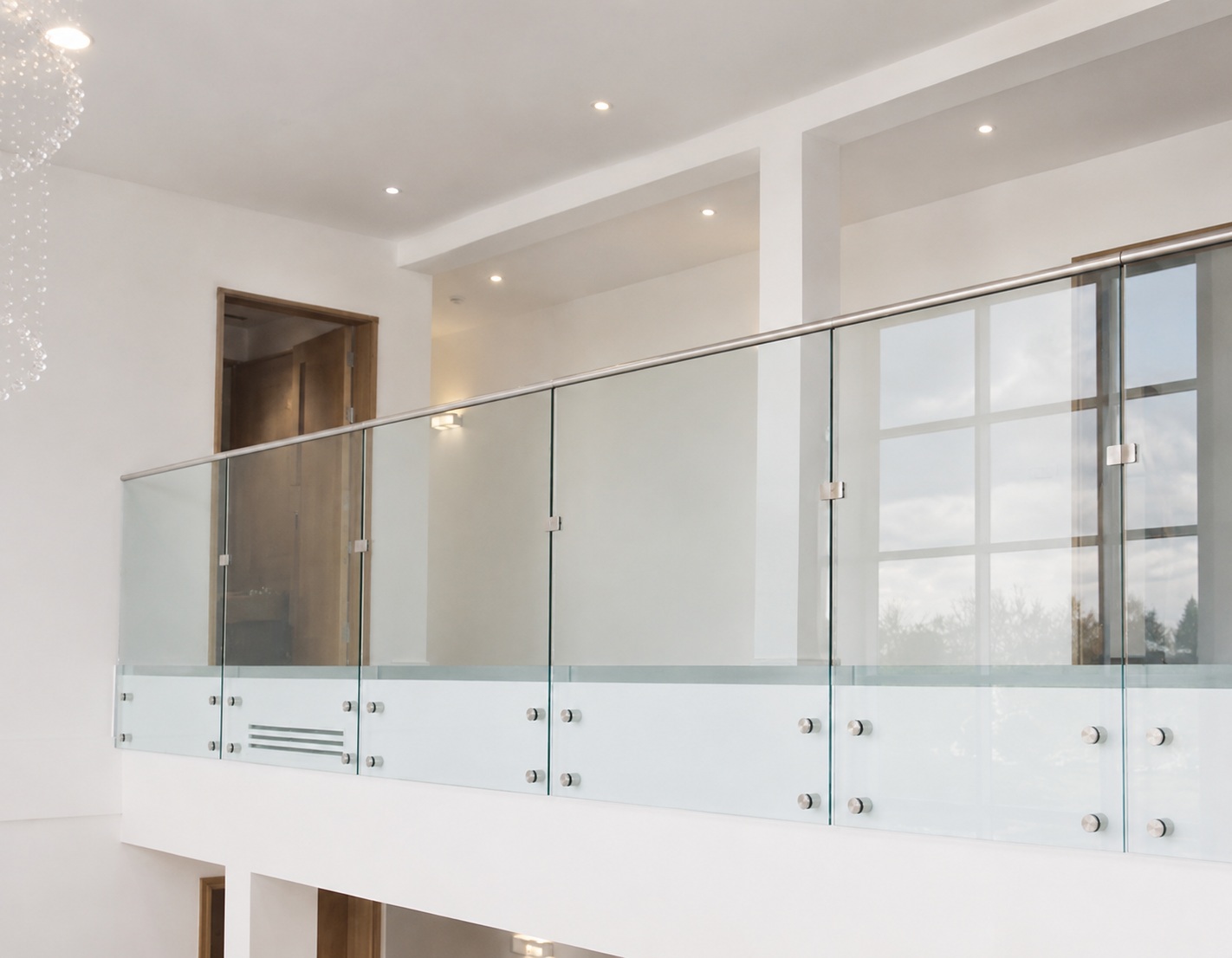
The only hardware visible is the cylinder against the fascia — a sheet of glass at the landing. Standoff glass railing is the fascia-mounted version of frameless glass. Stainless side-mount pins bolt through the fascia or wall face. The glass panel cantilevers horizontally outward, or upward when wall-mounted as a guardrail. The panel locks to the hardware through a clearance hole drilled in the tempered glass. Most face-mount glass systems show four cylinders per glass panel — two pairs through the panel face — with the base and cap finishes matched. Owners ask for standoff hardware when "fascia mounted standoffs glass railing" is the architectural detail and a base channel won't suit the substrate. Designed in Guangdong, standoffs precision-bored and glass tempered in our owned workshop, then crated for export to your site.
Villa & Country Home
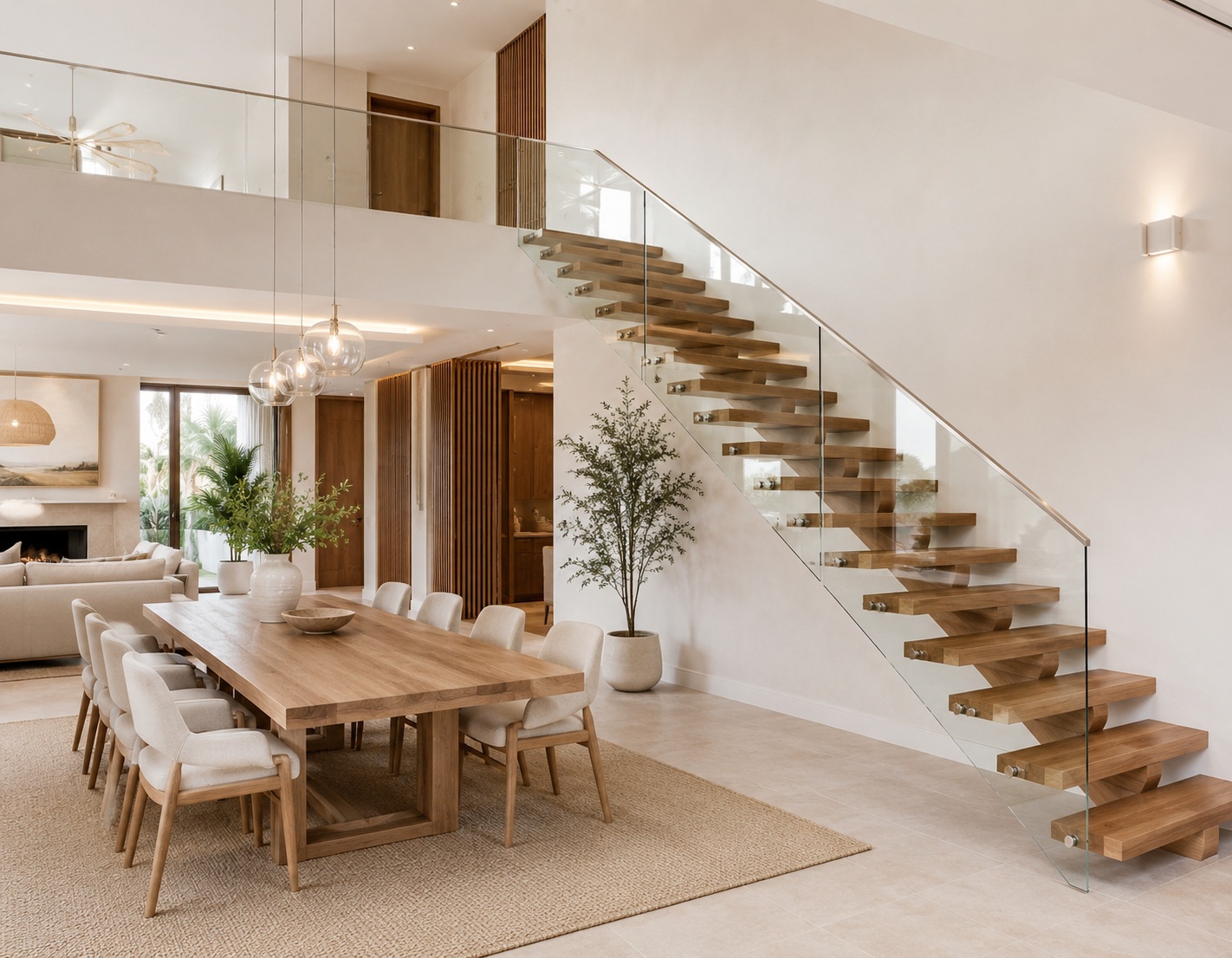
Villa stair landings, gallery balcony edges, and gallery-style mezzanines use face-mount glass with mirror-polished or black PVD-coated cylinders against a stone fascia. The visible hardware count is four small cylinders per panel — less than spigot, less than baluster, less than channel. Low-iron glass keeps the view colorless.
New Home Build
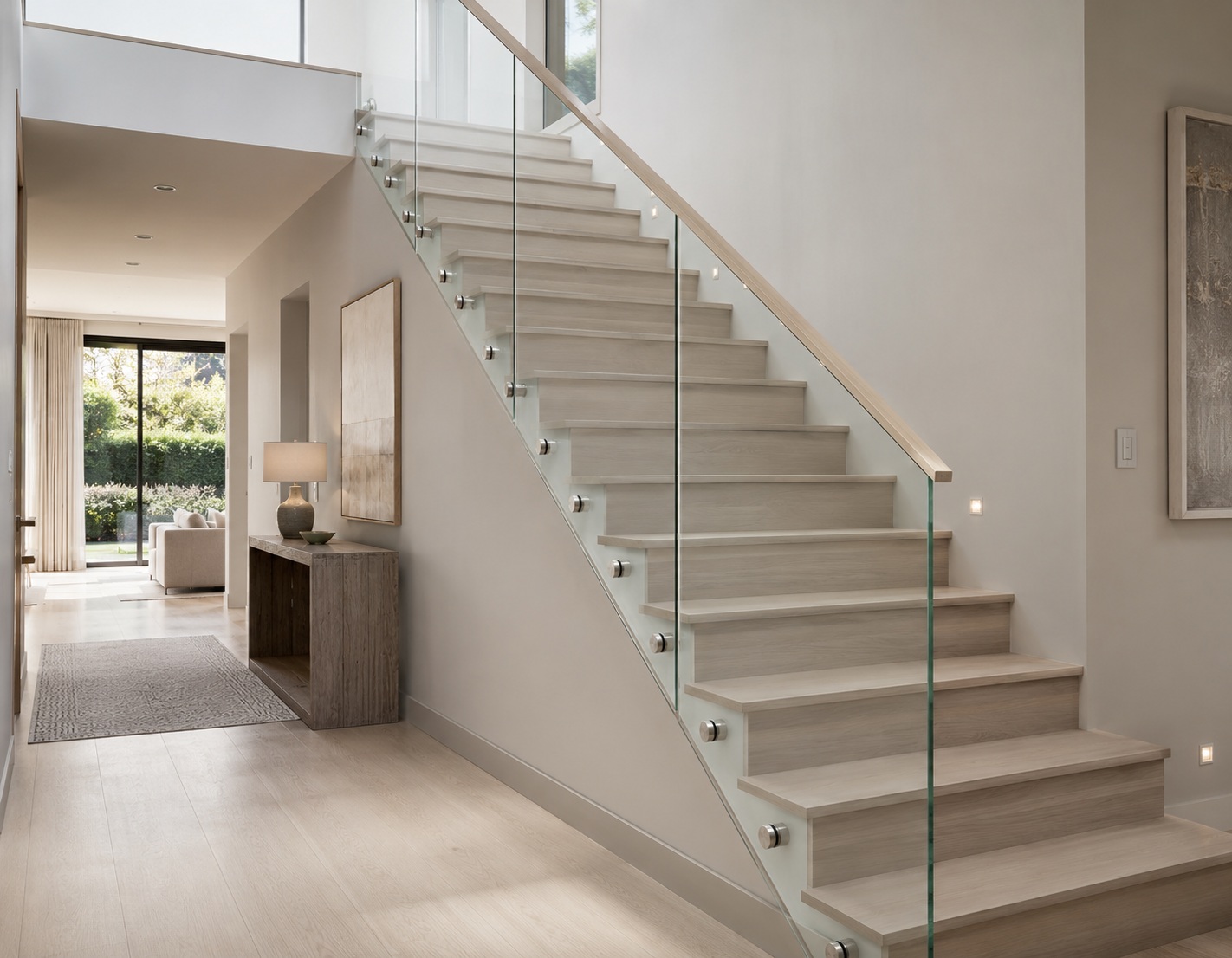
On a new-home raised deck rebuild the deck cap won't always hold a top-mount channel. Side-mount pins then go through the rim joist or a side-mount steel angle. Wall-bracket glass mounts work as upstairs-loft guards or stairwell mezzanine guards. The bolt-back hits a stud or steel backing plate.
Apartment & Condo
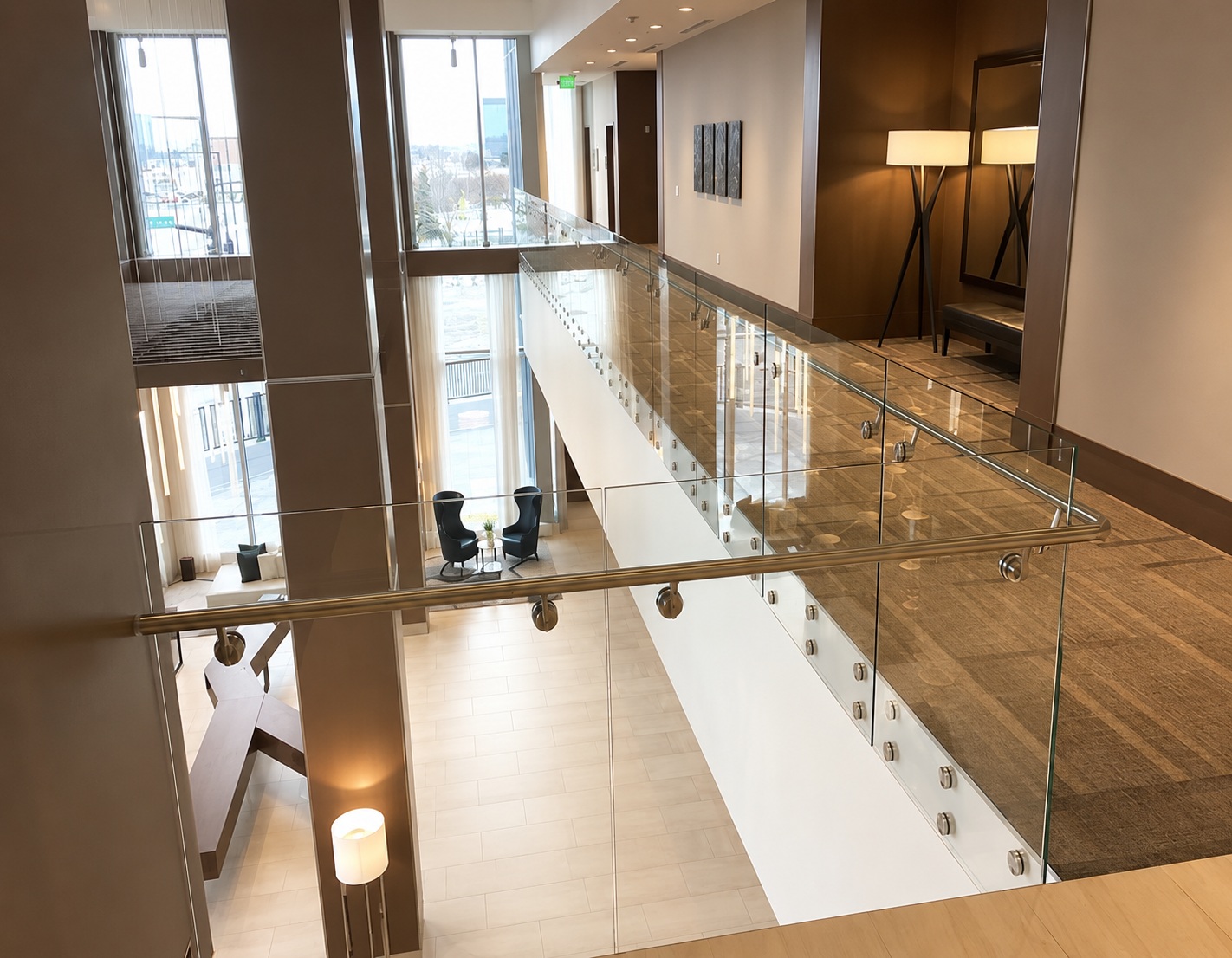
For apartment or condo balcony edges where the slab geometry doesn't accept a top-mount channel, standoff glass is a common detail. Brushed stainless cylinders against a concrete fascia is the most-quoted finish. The side-mount schedule includes a bolt-back load reference your engineer of record reviews.
Batch Renovation & Multi-Unit Development
When mid-rise balcony fascias repeat across a tower development, cantilever glass fixings deliver the floating look. The glass panel reads as floating off the fascia — no base channel interrupting the slab edge. Visible hardware is one cylinder, repeated unit after unit.
Standoff Glass Balustrade Range
| Standoff Type | Mount Substrate | Cap Finish | Best For |
|---|---|---|---|
| Round Fascia Standoff | Concrete or steel fascia | Brushed or satin stainless | Mezzanines, balcony edges |
| Square Side-Mount Profile | Stone-clad fascia, steel beam | Brushed or black PVD | Contemporary tower facades |
| Wall-Mount Glass Standoff | Stud wall with steel plate | Mirror or satin | Stair landings, loft guards |
| Glass Handrail Side-Mount Pin | Vertical wall, stair side | Brushed, satin, or mirror | ADA wall handrail with glass panel |
About Our Standoff Glass Railing
For the homeowner who chose a fascia-mount glass detail at the architect's recommendation, and the trade buyer executing it. Double Building Materials makes standoff hardware and matching tempered glass panels for the fascia-mounted balustrade look. The format suits sites where the channel won't fit the substrate and the spigot detail isn't right for the slab. Through-bolt glass hardware comes in round and square cylinders, brushed and mirror finish. CRL-compatible cap-and-base spacing means a project drawn against CR Laurence standoff hardware drops onto our parts without panel re-drilling. Side-mount pin handrails and face-mount glass pins ship from the same line. Cap and base finishes pair so the visible cylinder reads as one piece.
Each kit includes the standoff bodies, gasket bearings, cap covers, and through-bolt fasteners. The kit also ships with the panel cut-and-drill schedule and tempered glass panels pre-drilled to the standoff hole spacing. Send the fascia detail (concrete slab edge, exposed steel beam, stone-clad wall, or stud-and-plate wall). The engineering team turns the detail into a standoff installation drawing with bolt-back loads. Glass railing with standoffs reads as one of the most architectural-forward frameless glass formats. The panel cantilevers outward and the only hardware visible is the cylinder against the fascia. Square through-bolt fixings are the contemporary spec; round is the most-asked choice. Standoff installation works from the drawing. The installer drills the fascia to the bolt-back schedule, threads the standoff bodies, drops the pre-drilled glass on, and caps. After delivery, your contractor or installer handles fitting. We provide an assembly guide and a step-by-step video. Where local installation is available in your region, we help you find a vetted installer.
Spec Snapshot — Standoff Glass Railing
A plain-language summary of what owners typically choose before sending a fascia detail. Final dimensions and code references come from the shop drawings.
How to Spec Standoff Glass Railing for Your Project
The owner view: what to measure, what to send, and how to settle the substrate and hardware questions before we draw.
- Measure the fascia run. Length along the slab edge, exposed beam, or fascia wall where the cylinders will sit — that sets the standoff count and the panel layout.
- Send the fascia detail. Tell us the substrate (concrete slab edge, exposed steel beam, stone-clad wall, stud-and-plate wall) — it changes the anchor.
- Pick round or square. Round is the most-asked choice and the visual default; square is the contemporary spec when the fascia detail calls for it.
- Decide the glass source. Workshop-drilled panels for the fastest path to a clean install, or cylinder-only with a panel cut-and-drill schedule for your local fabricator.
- Tell us if it's CRL-drawn. If the architect specified against CR Laurence parts, send the original drawing — we confirm the panel layout works against our hardware.
- Send it through. We return shop drawings with the bolt-back schedule and a glass cut sheet. Your local engineer can sign off, and your installer can drill the fascia, thread the standoff bodies, and drop the glass on as drawn.
Frequently Asked Questions
What hardware finish options do you offer for the caps?
Brushed stainless, satin stainless, mirror-polished, and black PVD coating. Cap and base ship in matching finish so the visible cylinder reads as one piece against the fascia. Custom finishes (bronze plating, color anodizing on aluminum equivalents) are available on request.
Are your fittings CRL-compatible if the architect drew the project against CR Laurence parts?
Yes. The cap-to-cap spacing and through-bolt clearance hole pattern matches CRL profiles. Glass panels drilled to a CRL panel cut sheet drop onto our cylinder bodies without re-drilling. Send the original drawing — we'll confirm the panel layout works against our hardware.
What substrates can the hardware bolt back to?
Concrete fascia, exposed steel beam, structural masonry, stud-and-steel-plate walls, and stone-clad fascias with a structural backing layer. The bolt-back schedule on the shop drawings calls out the anchor type per substrate. We'd rather you tell us the substrate before we draw — it changes the anchor.
Can the glass panels be drilled at the workshop, or do I need a local glass shop?
Either. Most kits ship with the panels drilled at the workshop to the hardware hole spacing — fastest path to a clean install. If your local fabricator is supplying the glass, we ship the cylinder bodies and accessories plus a panel cut-and-drill schedule for your fabricator.
Standoff vs spigot — which suits my project?
Spigot mounts through the deck cap from above. Standoff mounts through the fascia from the side. If the slab edge is exposed (mid-rise balcony, museum mezzanine, mall walkway), standoff is the cleaner detail. If the deck cap is the install surface (pool surround, terrace), spigot wins.
Explore Related Collections