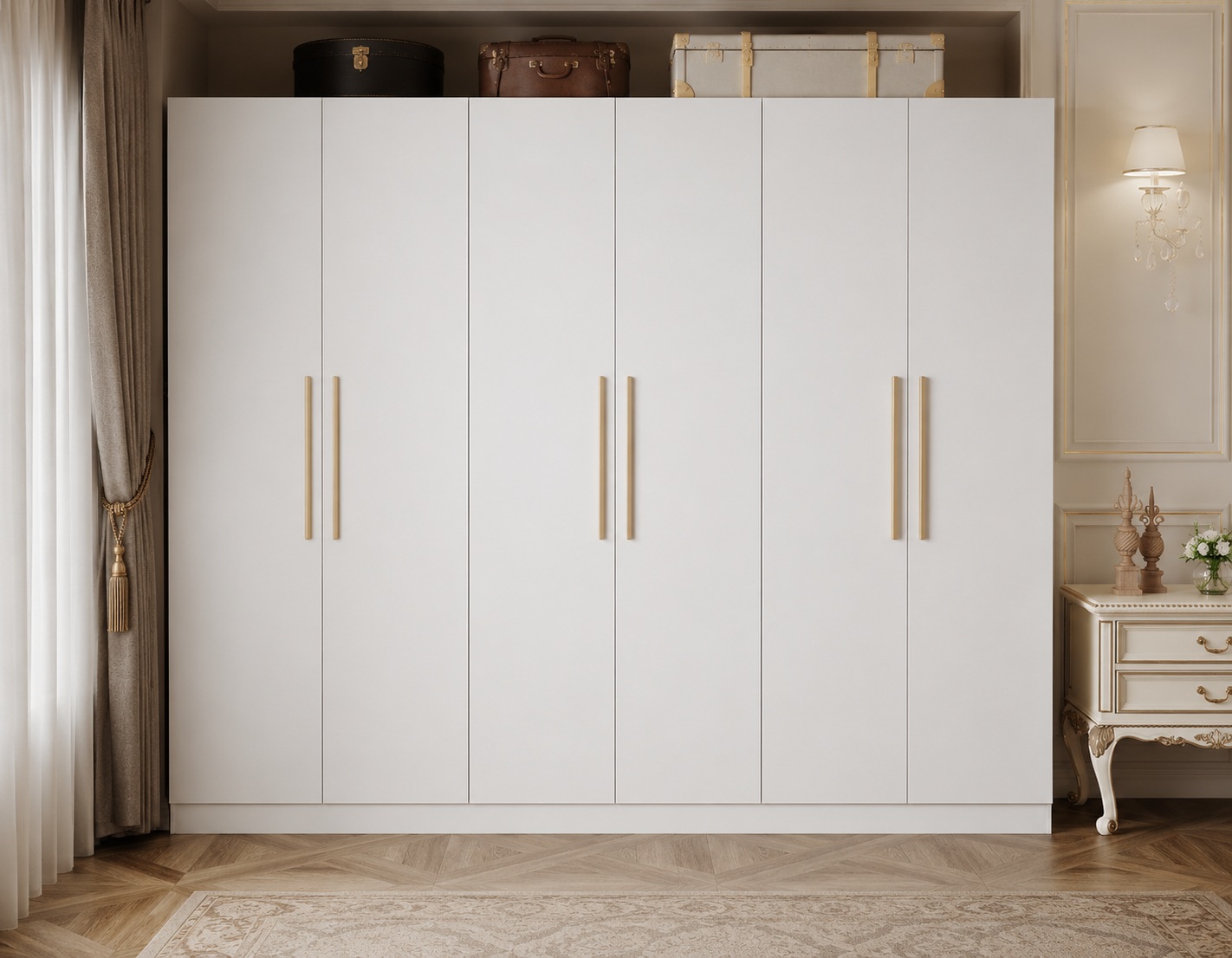


Closet/Wardrobe
WALK-IN · REACH-IN · SLIDING-DOOR · BUILT-IN
Built Around the Room, Drawn to Your Wardrobe
The first space you open every morning — and the last one before bed. Before measuring, take stock of your wardrobe: long-hanging dresses and coats versus short-hanging shirts, folded shelves versus drawers, shoes, ties and belts, jewelry. Built-in closet systems and freestanding wardrobes — walk-in, reach-in, and sliding-door configurations. Shop drawings for our built-in storage systems work to your room dimensions, ceiling height, and what you actually own. Every internal storage carcase ships labeled by run and sequence, ready for the installer to assemble against a finished wall.
VILLA & COUNTRY HOME
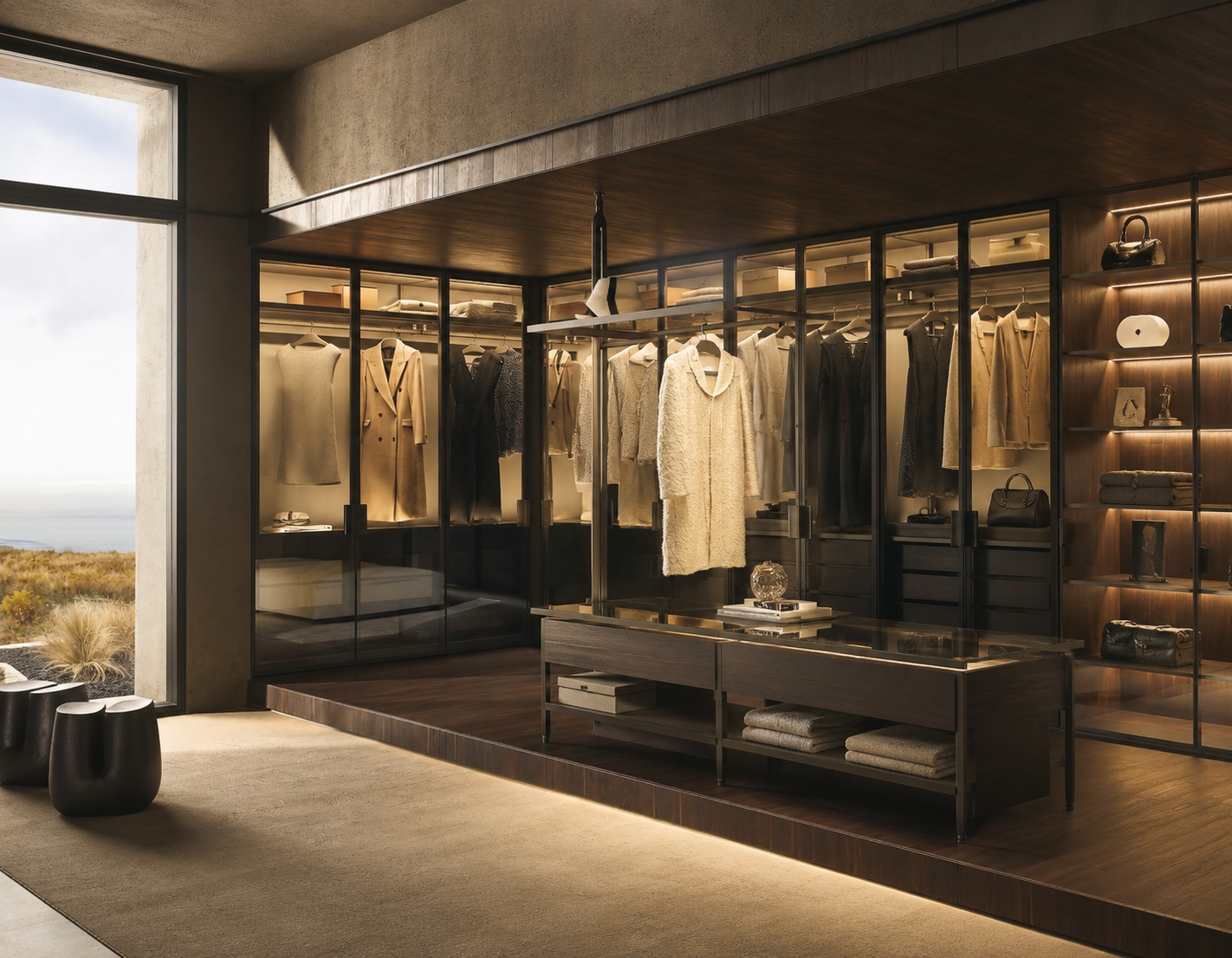
Statement walk-in closets, dressing rooms, dual master suites, shoe rooms. Custom millwork walk-in storage rooms with island drawers, mirrored makeup vanity, lit jewelry display, glass-front shoe display, handbag shelves, and full-height garment storage cabinets. Built as a coordinated millwork package with the master bath, often in the same wood species and finish as the bedroom paneling.
NEW HOME BUILD
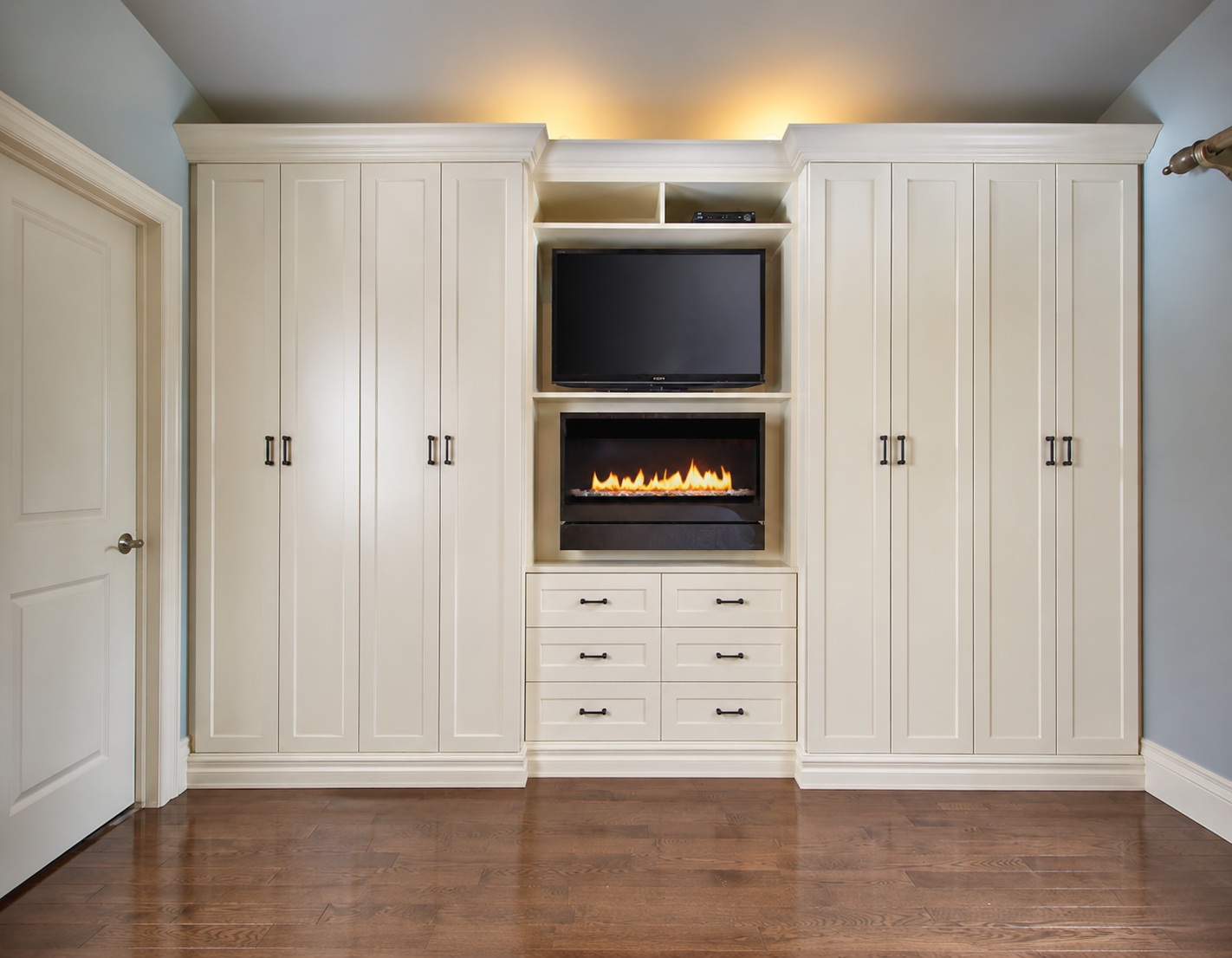
Master bedroom walk-ins, kids' reach-ins, hall and linen closets in new builds. Built-in storage systems sized to the actual room — not a one-size-fits-all kit from a big-box retailer. Sliding mirror doors for shallow rooms; hinged doors with handle hardware where wall depth allows. Drawer banks with felt-lined jewelry trays, valet rods, tie-and-belt racks, pull-out laundry hampers — all specified box-by-box at the drawing stage.
APARTMENT & CONDO
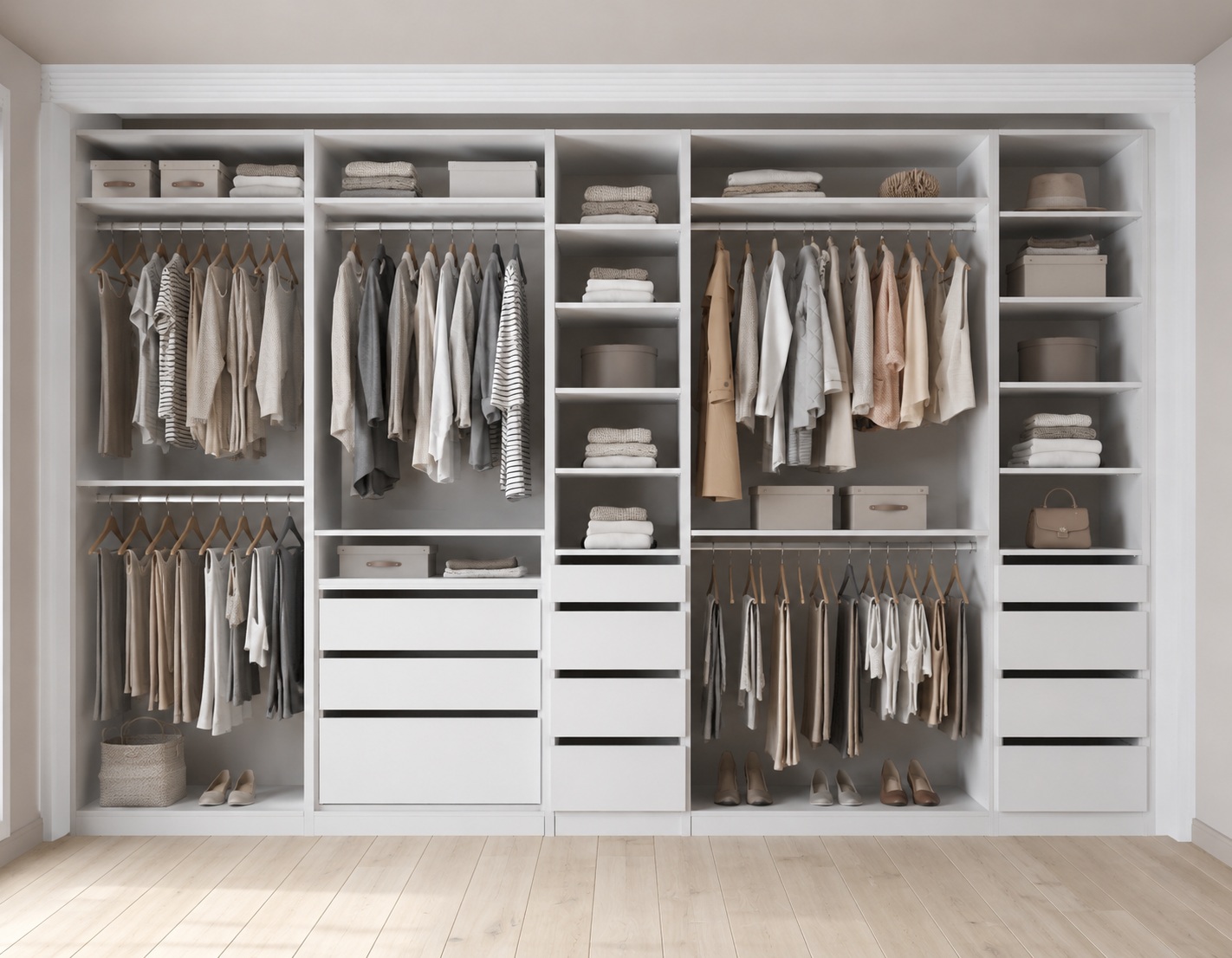
Apartment bedrooms, condo reach-ins, owner-occupied unit upgrades. Reach-in and small walk-in cabinetry systems built around the standard closet footprint of your apartment. The alcove drawing matches the existing baseboard and ceiling height. Modular components — double-hang, long-hang, drawer stack, shoe shelf — combine to fit each layout. Sliding mirror doors are the volume choice for shallow rooms.
BATCH RENOVATION & MULTI-UNIT DEVELOPMENT
Hotel suite closets, serviced-apartment wardrobes, build-to-rent unit closets across a portfolio. Repeat-unit storage systems shipped flat-pack with a uniform finish across hundreds of suites. Same melamine or painted-MDF finish run across the development for handover consistency. Built to take daily housekeeping — durable shelf edges, hanging rods sized for full-load coat racks, soft-close drawer slides rated for high-cycle use.
Closet & Wardrobe — Configuration Overview
| Configuration | Door Type | Interior Mix | Best-for Room |
|---|---|---|---|
| Walk-In Closet | Open / hinged barn-door | Hang + drawers + shoe shelves | Master suites, villa dressing rooms |
| Reach-In Built-In | Sliding mirror / lacquer | Hang + shelf + 1 drawer stack | New home build & apartment bedrooms |
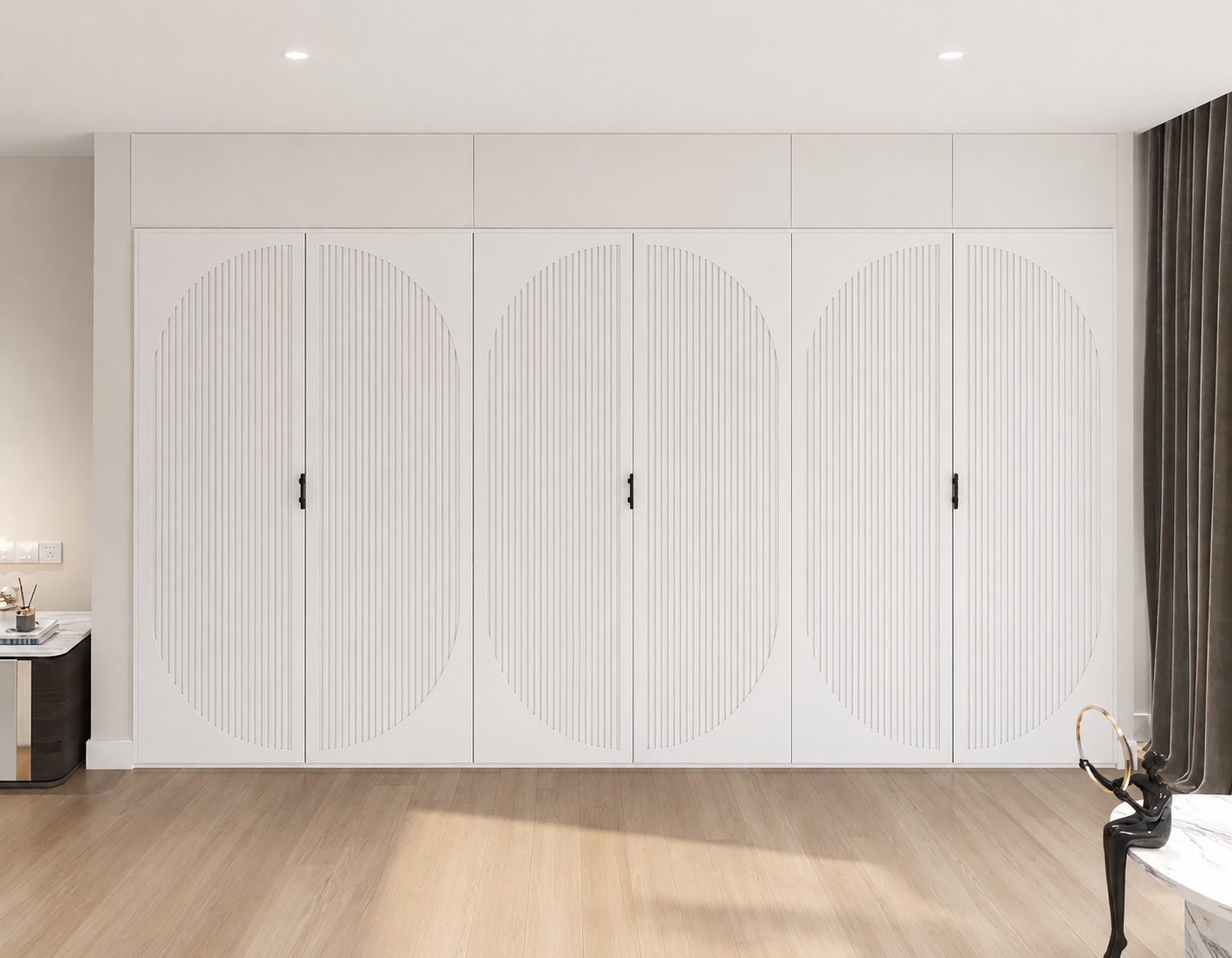
| Sliding-Door Wardrobe | Sliding panel (no swing space) | Modular hang / shelf | Batch renovation, narrow bedrooms |
| Freestanding Wardrobe | Hinged 2- or 3-door | Hang + shelf | Apartments & retrofit rooms |
| Linen / Pantry Closet | Hinged solid panel | All shelves + pull-out baskets | Hallways, butler's pantries |
| Island Closet (Walk-In) | No door (open) | Drawer island + glass top | Villa walk-in dressing rooms |
Spec Snapshot
Melamine or painted-MDF carcases with adjustable shelves on metal pins. Hanging rods (chrome, brushed nickel, or matte black). Soft-close drawer slides as standard, full-extension where the layout allows. Door options: solid panel, mirror sliding, lacquered glass, frosted, or open-front for walk-ins. Add-ons: motion-sensor LED rods and shelf strips, felt-lined jewelry trays, valet rods, pull-out hampers, tie / belt racks.
How to Spec for Your Project
Take stock of the wardrobe first: rough counts of long-hanging items, short-hanging, folded shelves, shoes, jewelry, ties, and belts. Then send a sketch of the room with wall length, ceiling height (note any slope), window and outlet position, and existing baseboard. Pick door type (sliding mirror for shallow rooms, hinged paneled for walk-ins) and finish. Add LED sensor rods or jewelry inserts at order stage so the wiring is in before the cabinet is sprayed.
About Our Closet & Wardrobe Production
A closet or wardrobe system is built-in or freestanding clothing storage — hanging rods, shelves, drawers, and shoe racks. Each system sizes to the room and to what you actually own. Walk-in, reach-in, sliding-door, and freestanding configurations; built around inventory first, room dimensions second.
A good closet system is the result of taking an inventory before you take a measurement. The number of long-hanging items (dresses, coats) versus short-hanging (shirts, jackets) determines how much double-hang space versus single-long-hang you need. The folded-clothes count drives drawer versus shelf ratio. The shoe count and the heel-height mix determine how deep and how tall the shoe shelf has to be. We start every storage drawing by asking those questions. The room measurement comes second. There's no point making a beautifully fitted built-in that doesn't fit what you'll actually put inside it. Designed in our Guangdong workshop and crafted by a millwork team that has been doing this for 25+ years.
Once the inventory and the room sit on paper, we draw the cabinetry in CAD with every shelf, rod, drawer, and door labeled. Any special items get noted — jewelry inserts, valet rods, motion-sensor LED rod, pull-out hamper, fold-down ironing board. The workshop builds each box, fits the doors and hardware, tests sliding-door tracks under load on our floor, then disassembles for flat-pack ocean freight. Glass and mirror panels travel on a dedicated pallet with foam protection. An assembly guide and a step-by-step video walk through the sequence from wall-anchor down to the last drawer pull. Our engineering team reaches you on WhatsApp at +86 185 8907 5949 during install. After delivery, your contractor or installer handles fitting; where local installation is available in your region, we can help you find a vetted installer.
Related ranges: Compare Vanity Cabinets → · Explore Bar Cabinets → · Browse All Cabinetry →
Frequently Asked Questions
Do walk-in closet systems include drawer hardware?
Yes. Every drawer ships with full-extension soft-close slides as standard. Specialty inserts — felt-lined jewelry trays, watch-roll pads, tie / belt racks, divided sock and underwear inserts — are options at the drawing stage. We'll bench-test every drawer in our workshop before disassembly to confirm action and travel.
Can built-ins be built around an existing window or sloped ceiling?
Yes — these are the most common villa requests. Send a room sketch with window position, ceiling height (and slope angle if any), HVAC vents, and outlets. We draw the cabinetry to wrap the window with a low cabinet under or display shelves around it. The upper sections step down to follow a sloped ceiling. The sequence of components is sized at the drawing stage so nothing has to be field-trimmed.
Sliding versus hinged doors — which suits which room?
Sliding doors save the swing space in front of the unit, so they suit shallow bedrooms and small unit plans. Hinged doors give you full-width access to the interior. They suit walk-in entries and any layout where you'll regularly need both sides open at once. Mirror sliding doors are the common choice for batch-renovation hotel suites and apartment portfolios; hinged paneled doors are the typical owner choice in master suites.
How is a storage system packed for ocean freight?
Cabinet panels and shelves ship flat-pack, labeled by run and sequence. Drawer boxes ship pre-assembled with slides attached. Doors are wrapped separately; mirror and lacquer-glass doors travel on a dedicated pallet with foam and corner protection. Hardware is packed with each unit. An assembly guide ships with the container.
Do you provide drawings my local engineer can stamp?
Yes. Shop drawings reference the relevant code families for the United States, Australia, and Canada (IRC, IBC, AS 1657, AS 1288, NCC, CSA). For storage systems the review usually covers wall-anchor loads for tall built-ins and any anti-tip requirements. A licensed engineer in your jurisdiction handles final stamping.
Explore Related Collections