

Freestanding Wardrobe | Custom by DBM Factory
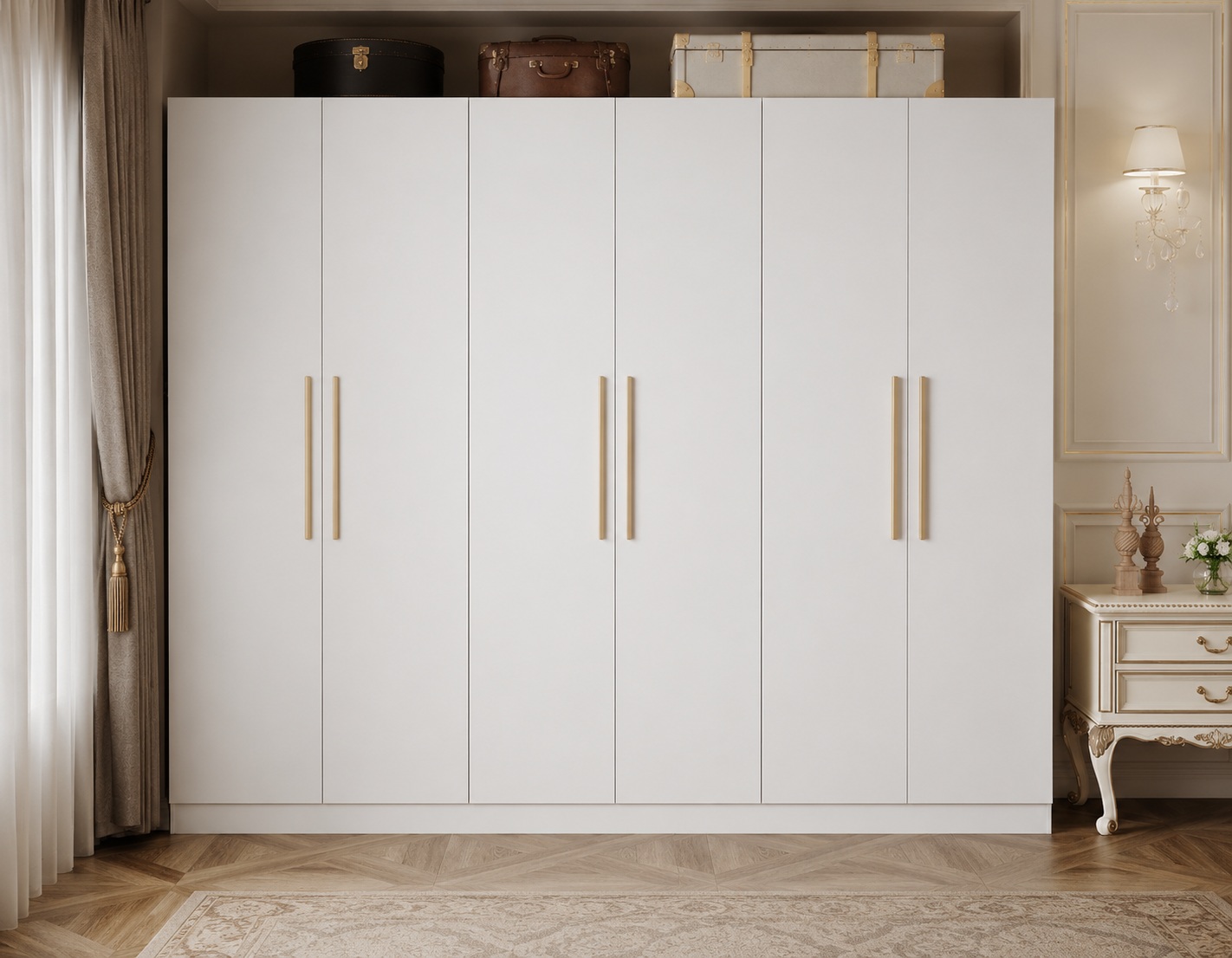


Freestanding Wardrobe
A freestanding wardrobe stands on its own feet. It reads as a piece of furniture rather than joinery — the kind with a top, sides, and a finished back. The kind that moves with you if the bedroom changes or the lease ends. Useful in rented apartments, vacation homes, and rooms where building-in is not the right call.
We design and produce each freestanding wardrobe around your project. Share the room dimensions, a furniture reference, and the wardrobe height you want. We turn it into a working drawing and build the cabinet ready for shipment.
Furniture-Grade Build, Bedroom Scale
Wood Species — Oak / Walnut / Pine
Solid oak or walnut for a piece that should last across moves and renovations. Pine where the wardrobe should read lighter and more relaxed — common in vacation and country-house bedrooms.
Finish — Stain / Paint / Wax
Natural stain to keep the grain reading. Painted finishes — ivory, sage, soft black — where the wardrobe should be a statement piece. Hand-wax on solid oak for a softer, more traditional finish.
Hardware — Pulls / Knobs / Latches
Brass cup pulls or ceramic knobs for traditional palettes. Slim leather or matt black pulls for contemporary rooms. Old-style swing latches where the piece should feel period-correct.
Internal Config — Hang / Shelf / Drawer Mix
A long-hang section on one side, shelves and a drawer bank on the other — the common split for a single-piece wardrobe. Internal layout set on the working drawing rather than as a standard kit.
Where It Fits — Four Common Project Types
Renovation Refresh
The old built-in pulled out and a freestanding piece brought in instead. The room opens up, and the wardrobe can be moved or sold separately later. Painted finishes match a refreshed bedroom palette without re-cutting plaster.
Apartment Bedroom
Rental or owner-occupied apartments where building-in is not an option. The wardrobe reads as a chosen piece of furniture rather than carpentry — useful when the room layout is likely to change in a few years.
Vacation Residence
A bedroom in a holiday house or second home where the wardrobe should feel relaxed rather than architectural. Pine or lightly painted oak with cup pulls keeps the room reading as a retreat.
Heritage New Home
A traditional-style new build where standing furniture suits the room better than fitted joinery. Solid hardwood with period hardware lets the wardrobe sit comfortably against panelled walls or wainscoting.
From Sketch to Site — Three Stages
Share the room dimensions, a furniture reference, and the height you want — that’s enough to start. We turn it into a working drawing for the freestanding wardrobe, covering the door layout, hardware positions, and the internal hang-shelf-drawer split.
The wardrobe is fully assembled and photographed in our Guangdong workshop before being taken apart for shipping. Each panel, drawer, and hardware kit comes labeled, so on-site assembly is straightforward — typically bolt-and-cam, not site-cutting.
Wooden crates built for ocean freight, packed in the order your installer will assemble. Shipped to 60+ countries — including the USA, Australia, the EU, and across Asia.
After delivery, your contractor or installer handles fitting. We provide an assembly guide and a step-by-step video. Where local installation is available in your region, we can help you find a vetted installer.
Freestanding Wardrobe
When You Cannot Touch the Wall — A Standing Wardrobe for a Rental or Heritage Room.
Some rooms cannot accept a built-in at all. A rental tenancy forbids drilling the wall, or a protected heritage interior keeps original plaster and panelling that nobody should disturb. The owner still needs proper hanging and drawer storage, but a fitted wardrobe is simply off the table here.
Owners reach us looking for a piece that stands entirely on its own. It has to read as considered furniture, not a flat-pack box, and it has to come apart again when the lease ends or the room changes. So the brief is specific. They want a wardrobe that holds a full configuration of storage while resting on the floor alone, leaving every wall untouched.
Why a Standing Piece Suits the No-Fix Room.
The constraint is the untouchable wall, and a freestanding wardrobe answers it directly. The piece carries its own structure, with a finished top, sides, and back, so it needs no fixing into the surface behind it. The original plaster or panelling stays exactly as it was, which is the whole point in a rental or a protected room.
That self-supporting build is what makes it movable. The wardrobe stands as a single object, so it can shift along the wall, cross to another room, or leave with the owner when the tenancy ends. A built-in would belong to the building; this belongs to the person who bought it.
The trade-offs stay honest, as always. A standing wardrobe shows a small gap where the floor or wall runs out of true, and a tall freestanding piece needs thought about stability on an uneven surface. Where the room is square and level, the wardrobe sits flush; where the old floor dips, we plan for it. We work the detail through against your real room, well before any panel is cut.
How the Wardrobe Settles Into an Old Room.
The Uneven Floor Comes First.
An old room rarely offers a level floor. A period boardroom dips toward the centre, or a tiled surface runs slightly out of true. We build the wardrobe on adjustable feet hidden behind a kick, so the installer can level the piece on the spot without packing timber underneath. The doors then hang square and close evenly, whatever the floor does below.
The Standing Stability Comes Next.
A tall wardrobe needs to stand steady without anchoring into a wall it must not touch. We hold the overall height and proportion so the piece stays stable on its own base, and we keep the heavier storage low in the configuration. Where house rules allow a single discreet bracket, we detail a removable fixing that leaves only a small repairable point rather than a drilled carcass.
The Finished Back Comes Last.
A freestanding piece may not always sit against a wall. It can divide a room or stand near a window, so the back is on show and has to be finished, not raw board. We specify a proper finished back and a clean return on every exposed side, so the wardrobe reads as a furniture piece from any angle in the room.
What Coordination Looks Like for a Standing Wardrobe.
Drawing-First Coordination begins with the room dimensions and the height you want. We confirm the floor area, the ceiling clearance, and the doorways the wardrobe must pass through on the way in before anyone cuts a panel. A standing piece leaves no tolerance for a guess, so the working drawing settles the proportion, the internal configuration, and the access route on paper first. We return it for you to check against the real room.
Trial Assembly Before Packing then stands the complete wardrobe upright on our Guangdong workshop floor. We assemble the carcass, hang the doors, set the adjustable feet, and confirm the finished back and exposed sides read cleanly. Then we dismantle the piece, label every panel, drawer, and hardware kit, and record the sequence it follows back together under your roof.
Export-Ready Crating packs the components so a flat-pack wardrobe fits through ordinary doorways and up tight stairs, then assembles in the room itself. The finished faces and the exposed back are protected for the long ocean passage. The shipment lands sorted, ready to lift, position, and assemble straight against the drawing.
What to Send Us About Your Room.
The room dimensions give us the envelope: the floor space for the wardrobe and the ceiling height above it. Tell us the height you want the piece to reach, and note the doorways and any stairs it has to travel through to get there. A photo of the spot, and the floor if it looks uneven, helps us plan the levelling.
One more note completes the picture. Tell us whether the back will be on show, whether the room rules allow any fixing at all, and roughly what the wardrobe has to hold. From there we turn your notes into a working drawing and a freestanding wardrobe ready to ship.
After delivery, fitting is on your side. On site, your contractor or installer handled fitting directly from our drawings, with our assembly guide and step-by-step video to follow — or use your own local installer where needed.
Chat on WhatsApp →Compare the Walk In Closet System → · see the Reach In Closet System → · browse the full Closet & Wardrobe range → · or explore all our cabinetry →