

Wrought Iron Stair Railing | Custom by DBM Factory


Wrought Iron Stair Railing
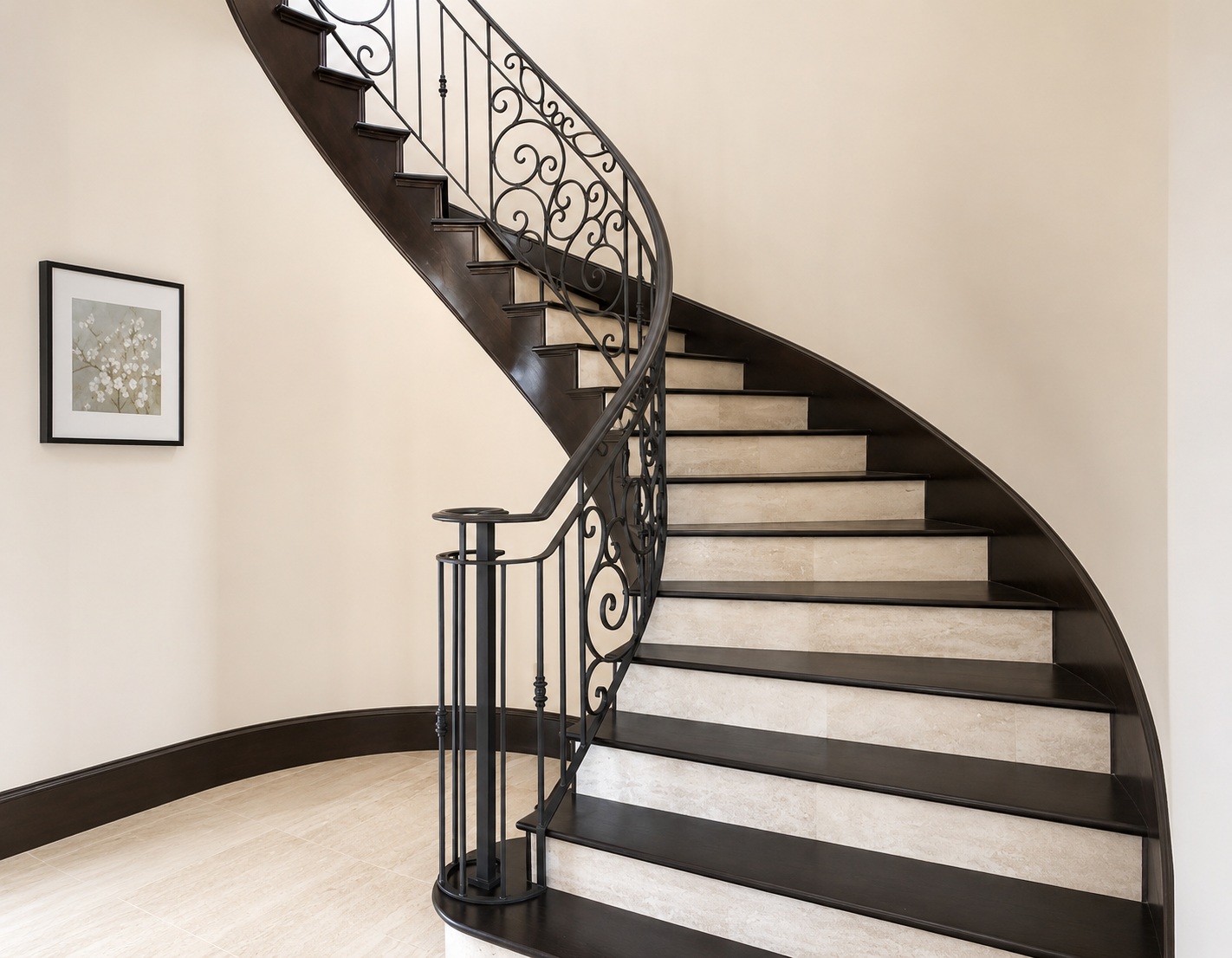
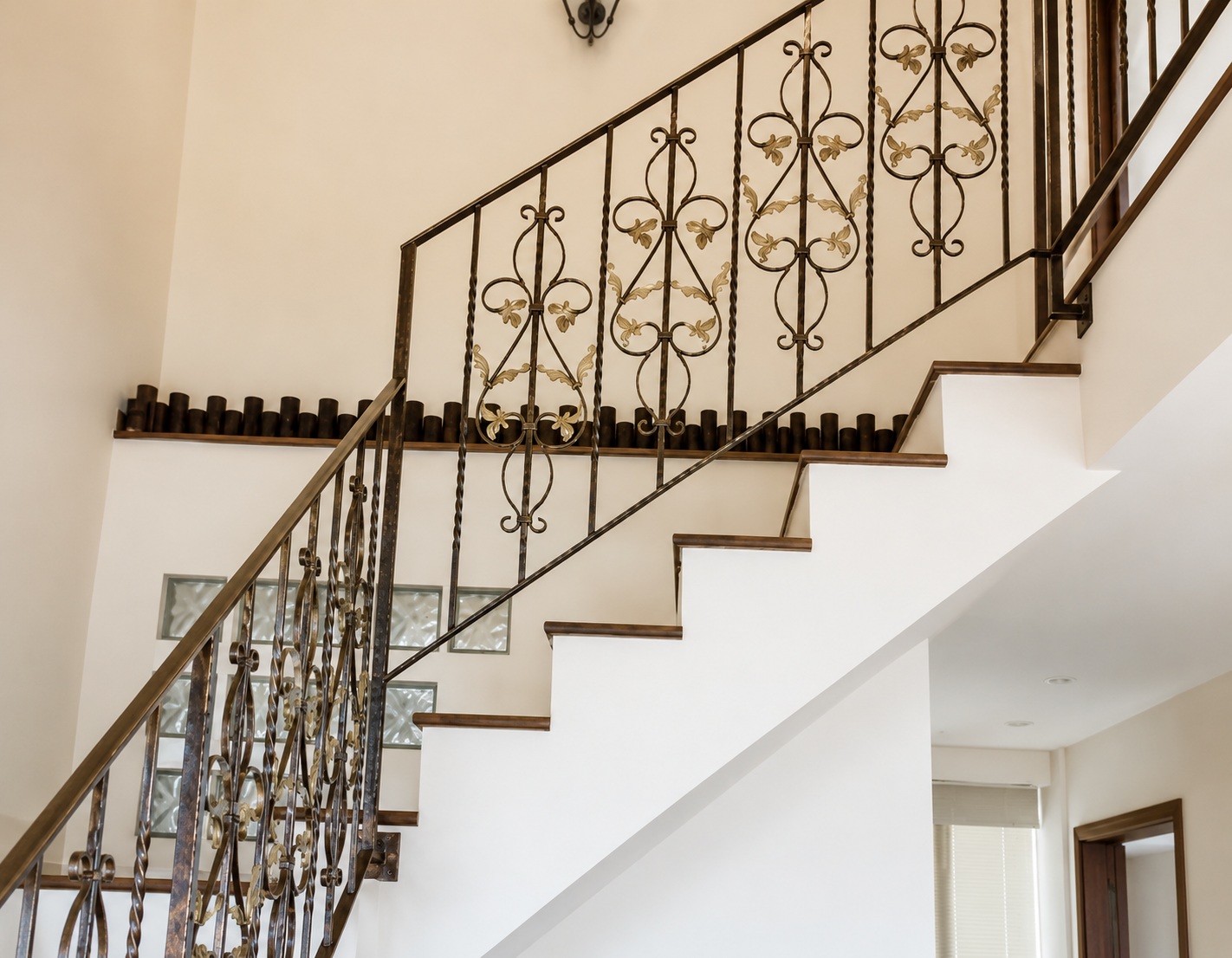
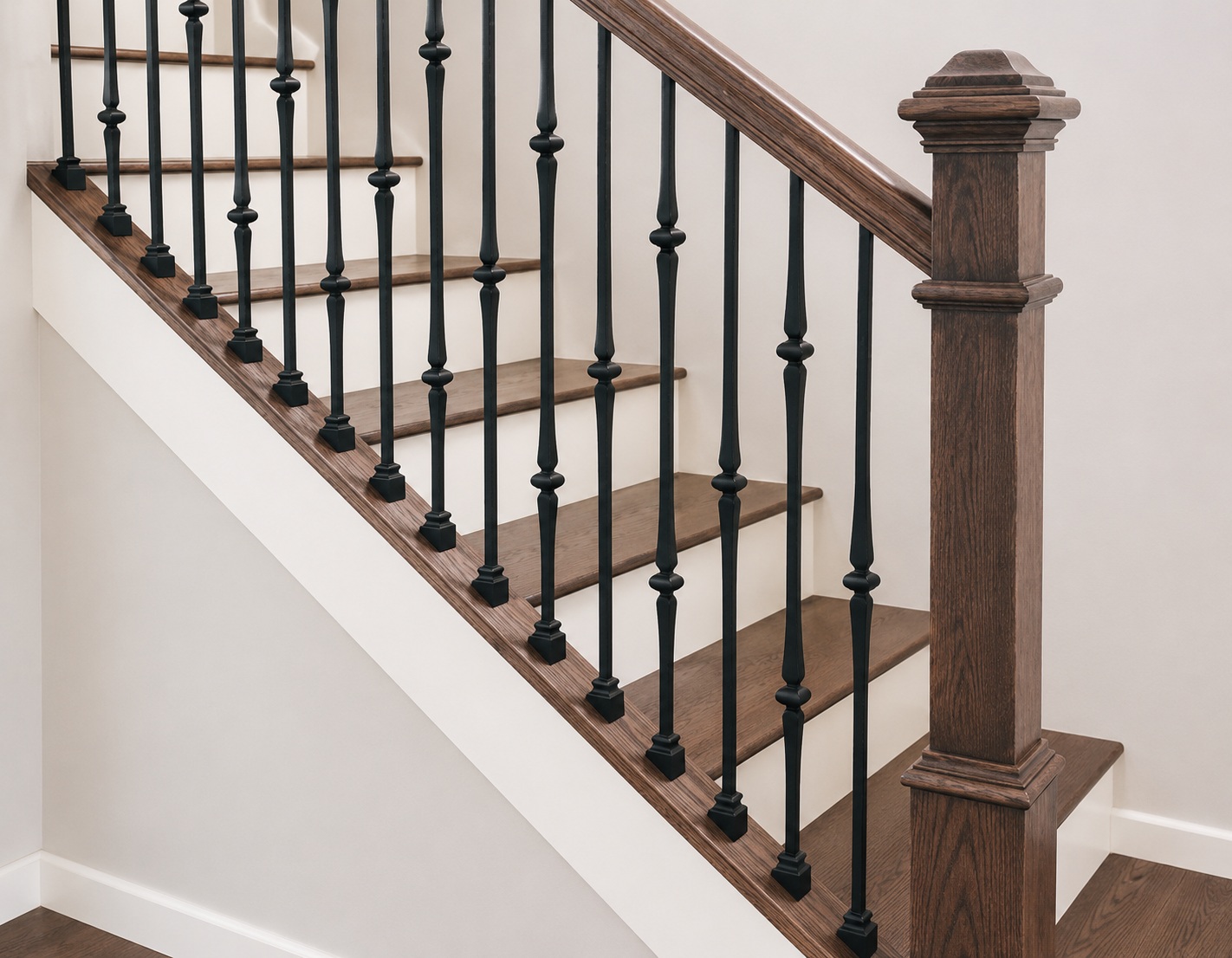
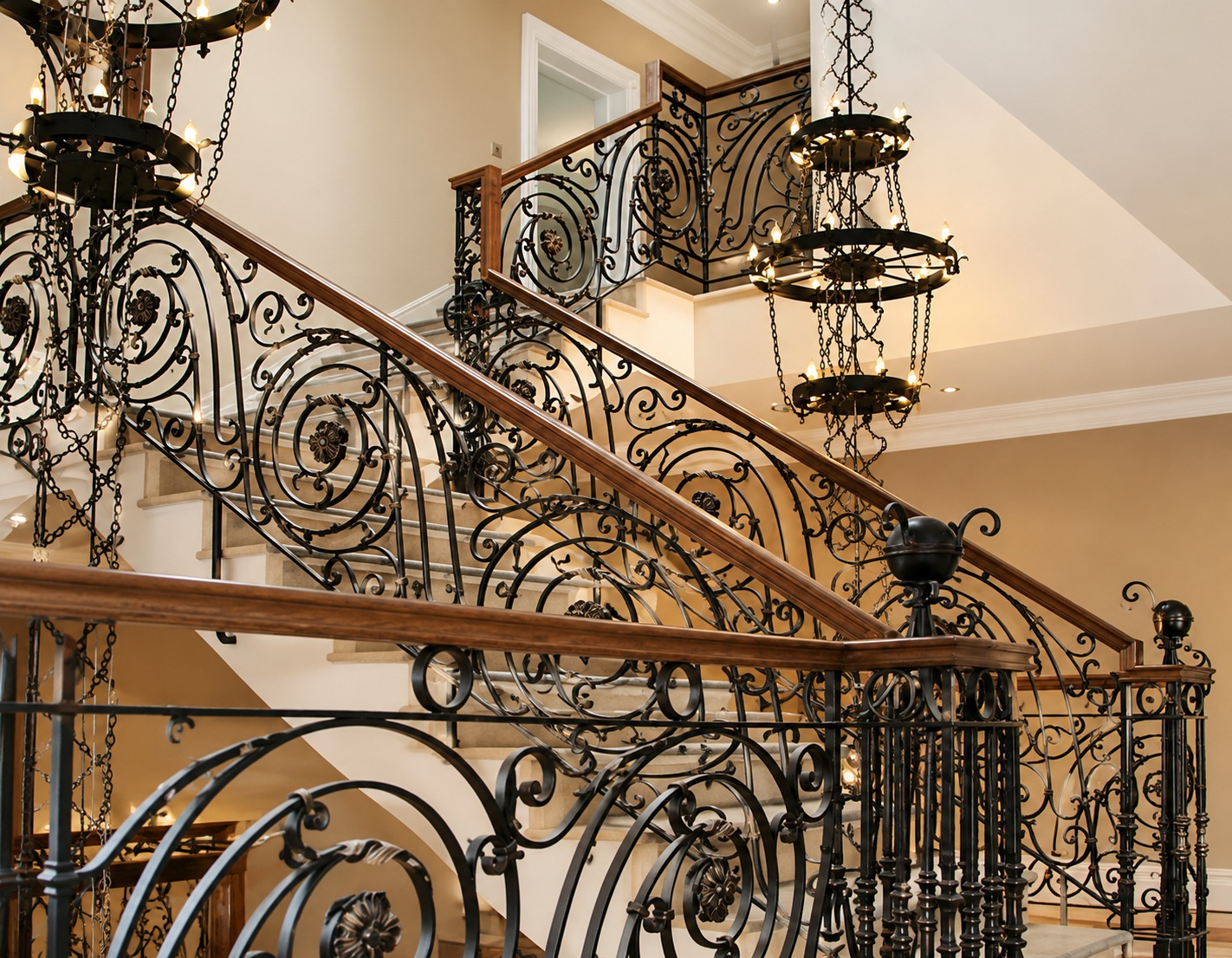
Wrought iron on a stair brings heritage detail into the home. The forged pickets, the gentle scroll work, the wood-capped top rail — together they read as crafted, not catalogued. It is the railing for a staircase that wants to feel like the heart of the house, not a code item.
DBM designs and produces each iron stair railing around your project. Share a sketch, a photo of the staircase, or a heritage reference. We turn it into a working drawing, then build the panels, newel posts, and handrail ready for shipment.
Choose the Right Iron Build for Your Stair
Forged Style — Plain / Scroll / Basket
Plain square pickets for the quiet traditional look. Scroll-and-knuckle work for the heritage staircase that wants the craft to show. Basket pickets where the railing reads as feature, not background.
Powder-Coat Finish — Matte Black / Bronze / Custom
Matte black is the workhorse interior finish. Antique bronze and oil-rubbed bronze warm the railing where the wood floor and stair treads carry a richer tone. Custom RAL color is available where the palette is set.
Picket Pattern — Spacing & Profile
Picket spacing typically meets common residential guard rules where the staircase serves a home. We draw the layout to the rise and run on your stair, so the pattern stays even across landings.
Newel Post Detail — Square / Turned / Box
Square iron newel for the clean traditional reading. Turned newel where the staircase carries a more ornate character. Box newel with a wood cap pairs well with stained wood treads and a wood handrail above the iron.
Where Wrought Iron Stair Railing Fits — Four Common Project Types
Heritage Villa
The main staircase rising from the entry hall. Scroll-and-knuckle pickets in matte black with a stained oak handrail keep the staircase reading as a heritage feature. The detail holds even when the rest of the home leans more contemporary.
Traditional New Home Build
A new build that wants the staircase to feel like it has always been there. Plain square pickets and a turned newel keep the look honest; the wood handrail finishes the warmth. Drawn in from the architect’s stair plan so the spacing lands clean across the rise.
Historic Apartment & Loft Conversion
Brownstone, warehouse loft, brick-walled apartment renovation. The iron railing answers the building’s own materials — brick, timber beams, cast-iron columns — and ties the new stair to the building’s history.
Boutique Residence & Restoration
Heritage restoration, small boutique hotel residence, owner’s private wing. Where the brief is to repair, replicate, or carefully extend an existing iron stair, we work from photos and measurements to match the pattern.
From Sketch to Site — Three Stages
Share a stair sketch, a CAD plan, or a photo of the existing flight — that’s enough to start. We turn it into a working drawing covering picket pattern, newel placement, handrail height, and how the railing meets the landing.
Panels, newels, and handrail are trial-fit and photographed in our Guangdong workshop before crating. Each part comes labeled, so on-site work is typically bolt-up and finish touch-up — not field-welding the panels.
Wooden crates built for ocean freight, packed in the order your installer will assemble. Shipped to 60+ countries — including the USA, Australia, the EU, and across Asia.
After delivery, your contractor or installer handles fitting. We provide an assembly guide and a step-by-step video. Where local installation is available in your region, we can help you find a vetted installer.
Wrought Iron Stair Railing
When the Old Iron Pattern Has to Be Matched, Not Replaced.
A period home often keeps part of its original ironwork. One flight survives intact, yet a second run has gone, or several forged balusters have rusted past saving. The owner wants the missing section made again, drawn to look as though it always belonged on the stair.
Owners reach us at this exact point, when a new run has to meet an original one. A plain catalogue panel beside a hand-forged period rail reads as wrong at once. So the brief is not a fresh design exercise; it is a faithful copy of a decorative pattern that already lives on the surviving stair.
Why a Match Earns Its Place Over a Fresh Design.
The eye reads the junction first. Where new ironwork meets the original, any drift in the scrollwork, the twist, or the picket spacing shows under the hand and in raking light. A faithful copy keeps the whole flight reading as one continuous run, so the repair hides in plain sight.
There is honest reasoning behind the choice, too. The original ornamental pattern carries the heritage character the owner bought the house for, and a redesign would throw that away. So we reproduce the surviving detail rather than improve on it, because the value here sits in the exact match.
A full match is the typical path when a clear period pattern remains. Where almost nothing survives, a close cousin drawn from our existing forge tooling may suit the run better, and we say so plainly. We settle which scenario applies from your photos, well before any iron is cut.
How We Read an Existing Pattern From What You Send.
The Surviving Detail Comes First.
A clear photo of one sound baluster carries most of the story. We trace the scroll geometry, the twist, and the picket profile, then set them out on the working drawing. A ruler or a tape laid against the ironwork in the photo fixes the true dimension, so the copy lands at the correct scale rather than a guess.
The Weathered Finish Comes Next.
Decades of paint and corrosion give the original iron a particular depth of tone. A bright modern black next to it can look raw, so we offer a darker, hand-rubbed finish set closer to the aged metal. The new section then reads as part of the original installation, not a fresh patch bolted in later.
The Junction Itself Comes Last.
A repair meets the original stair at a set point, often a landing or a newel post. We draw the new run to terminate cleanly into that junction, so the two halves align at the handrail and the picket spacing carries through continuously. Where the original newel stays, we detail the new panel to bolt against it, with no field welding on your stair.
What Coordination Looks Like for a Pattern Match.
Drawing-First Coordination begins with your photos and a few key measurements. We confirm the pattern, the picket spacing, and the run length before any iron is cut, because a copy leaves no room to drift. We send the drawing back for you to check the match against the ironwork still on the stair. That sign-off on paper protects the whole run.
Trial Assembly Before Packing then stands the new section upright on our Guangdong workshop floor. We compare it against the reference photos, apply the chosen finish, and review the scrollwork and twist turn by turn. Then we take it apart and label each part, so the work on your stair stays an ordered bolt-up.
Export-Ready Crating packs the matched parts in the order your installer will set them against the original run. We protect the finish for the long ocean passage, and seat the heavy newel posts low in the crate. The shipment arrives sorted, ready to lift and fit straight against the surviving ironwork.
What to Send Us About the Existing Stair.
A few clear photos of the surviving iron give us the most to work from. Shoot one baluster straight on, then the whole flight, and the landing where the new run will join. Lay a tape or a ruler against the iron in one shot, so we can read the true size.
One more note helps us finish the picture. Tell us the length of the missing run, the rise of the staircase it follows, and how weathered the original finish looks today. From there we turn your photos into a working drawing and a matched section ready to ship.
After delivery, fitting is on your side. On site, your contractor or installer handled fitting directly from our drawings, with our assembly guide and step-by-step video to follow — or use your own local installer where needed.
Chat on WhatsApp →Compare the Outdoor Wrought Iron Railing → · see the Interior Wrought Iron Railing → · browse the full Wrought Iron Railing range → · or explore all our railings →