

Coastal Bar Cabinet | Custom by DBM Factory


Coastal Bar Cabinet
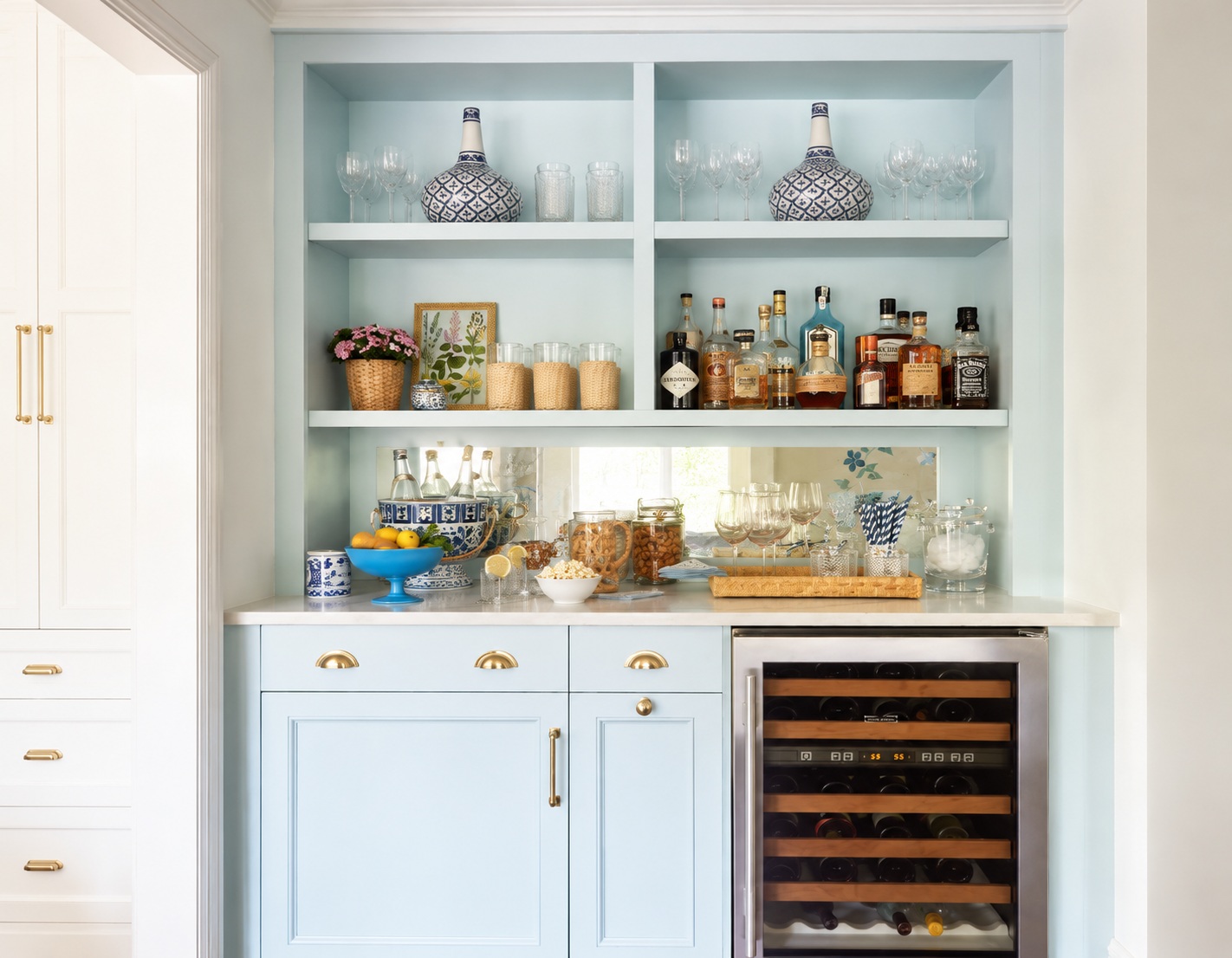
A coastal bar cabinet is the same hosting station, built for the air it lives in. Seaside homes carry humidity that swells unsealed plywood. Salt pits exposed hardware. Pool spray finds its way back into the lounge. The materials shift accordingly — marine plywood at the carcass, coastal-suited finishes at the face, sealed hardware throughout.
We design and produce each coastal bar cabinet around your project. Share a sketch, a room photo, or a design reference. We turn it into a working drawing, fabricate the cabinet to the materials and finish you choose, and prepare everything for shipment.
Choose the Right Build for Your Setting
Marine Plywood Core — Carcass
Marine-grade plywood at the carcass takes the humidity swing a coastal property sees through the seasons better than standard cabinet board. Edges sealed to keep moisture out at every cut.
Coastal Finish — UV & Salt-Air
Marine-grade lacquer or hard-wax oil at the face, chosen to handle the higher UV load and salt content of coastal air. White and washed-tone finishes are the common pick in beachfront homes.
Sealed Hardware — Stainless or Coated
Marine stainless hinges, runners, and pulls where the budget allows. Powder-coated alternates where the look needs to match a darker palette. Standard nickel-plate is not a fit on the coast and we avoid it on this build.
Drainage & Ventilation — Per Drawing
Sink drain routing and back-of-cabinet ventilation gaps are set on the working drawing so moisture does not pool in the carcass. Detail varies with whether the cabinet sits indoor-but-coastal or in a covered outdoor lounge.
Where It Fits — Four Common Project Types
Coastal Villa
Villa properties on the coast where the entertaining room opens directly to the deck. Marine plywood and salt-air-rated finishes keep the cabinet looking new across years of windows-open weekends.
Beachfront Residence
Homes directly on the sand or the seafront where the air carries the most salt. Washed-tone finishes and stainless hardware throughout. The cabinet built knowing the doors will stay open most of the season.
Resort Property
Owner-operated coastal resort homes where the bar serves guests across changing seasons. The build is sized for the property’s booking pattern, with sealed hardware throughout because no one wants to swap hinges between bookings.
Vacation Home
Second homes on the coast where weeks pass between visits. The marine-grade build holds together through closed-up months when humidity sits in the room — ready when the owner returns.
From Sketch to Site — Three Stages
Share a sketch, room photo, or design reference — that’s enough to start. We turn it into a working drawing for the cabinet. The drawing covers marine plywood layout, finish, sealed hardware schedule, drainage and ventilation details your installer will need.
Carcass, doors, shelving, glass rack, and hardware are fully assembled and photographed in our Guangdong workshop before being taken apart for shipping. Each component comes labeled, so on-site assembly is straightforward — typically bolt-together, not site-fabricated.
Wooden crates built for ocean freight, lined to protect finished surfaces, packed in the order your installer will assemble. Shipped to 60+ countries — including the USA, Australia, the EU, and across Asia.
After delivery, your contractor or installer handles fitting. We provide an assembly guide and a step-by-step video. Where local installation is available in your region, we can help you find a vetted installer.
Coastal Bar Cabinet
Under Cover, in Open Air — a Poolside Lounge Bar by the Sea.
A coastal home spends its best hours outdoors. The pool sits a few steps from the lounge, a veranda runs along the back, and the folding doors join the two into a single living area. The bar occupies exactly that threshold. It serves the pool deck through warm afternoons and the lounge on cooler evenings, yet it remains in open air across every season.
Owners usually reach us about a bar for a covered terrace rather than a sealed interior room. A roof or a deep eave shelters it from the worst of the weather. Yet the sides remain open, so the salt drifts in, the sun reaches the counter, and a driven rain still finds the exposed face. The brief itself is straightforward. They want a bar that lives outdoors under cover and retains its finish after a demanding coastal season.
Why the Covered Open-Air Spot Is Its Own Case.
A sealed indoor bar occupies steady, conditioned air. A fully exposed bar absorbs the entire assault of sun and rain. The covered poolside bar sits between those extremes, and that intermediate position is precisely what complicates the specification. The roof intercepts the direct rain, so it is not a fully outdoor build, yet the open sides admit the coastal air, so it is hardly an indoor one either.
So the construction answers the genuine exposure rather than the nominal category. Where the eave runs deep and the bar tucks well back, the conditions ease toward an indoor-but-coastal situation. Where the bar sits near the open edge, the spray and the sun press considerably harder, and the build leans toward a fully exterior configuration. Its position on the terrace effectively sets the whole specification.
The trade-offs stay honest, as ever. A bar pushed to the open edge catches the view but takes more weather, while one set deeper stays protected but further from the pool. A roll-down screen or a closing front buys shelter at the cost of the open feel. We weigh all of this against where the household actually gathers.
How the Bar Shifts With Its Spot on the Terrace.
Deep Under the Eave vs Near the Edge.
How far the bar sits under cover changes everything about its protective skin. Positioned deep under a wide eave, the bar stays largely dry and reads close to an interior piece. Pushed toward the open edge, it meets blown rain and direct sun, so the surface specification escalates accordingly. We assess the genuine exposure of the chosen position and specify the faces to suit it, rather than treating every coastal bar identically.
Splash From the Pool Itself.
A bar a few steps from the water contends with splash and wet feet alongside the salt air. The lower cabinet meets that water first, so we elevate the base clear of a wet deck and route any drainage away from the carcass. The counter is detailed to shed water rather than pool it. The bar then shrugs off a poolside afternoon instead of absorbing it.
The Doors-Open Season.
On a coastal home the doors stay open for months at a stretch, so the interior air and the sea air circulate freely. A bar on that threshold encounters the same salty humidity whether it counts as inside or out. We build it to the harsher of the two conditions, so it retains its finish through the long open season and the closed-up weeks between visits alike.
What Coordination Looks Like for a Poolside Bar.
Drawing-First Coordination starts with where the bar truly sits under the roof. We pin down the eave line, the open edges, and the distance to the pool before we cut anything. Any water supply, drain, or power across the terrace gets marked on the same drawing. The working drawing resolves the exposure on paper first, so the build matches the real spot.
Trial Assembly Before Packing then stands the whole bar upright on our Guangdong workshop floor. We fit the sink and any bays, apply the coastal finish, and check that the lifted base and the draining counter sit right. Then we take the unit apart and label each part for transport. The build on your terrace becomes an ordered bolt-together job rather than open-air guesswork.
Export-Ready Crating wraps the coastal finishes against knocks and salt spray for the long ocean leg ahead. We seat the heavy base low and pack the parts in the order your installer will raise them. The crate lands ready to open and stack, even on a breezy deck.
What to Send Us About Your Terrace.
A photo of the covered spot and a quick view of the pool beside it tell us a great deal. Mark where the bar will sit and how far it tucks under the roof or eave. Then note how close the open edge and the water sit to that spot.
One more line helps us read the exposure. Tell us how near you are to the sea and whether the doors stay open most of the year. From there we turn your notes into a working drawing and a bar ready to ship.
After delivery, fitting is on your side. On site, your contractor or installer handled fitting directly from our drawings, with our assembly guide and step-by-step video to follow — or use your own local installer where needed.
Chat on WhatsApp →Compare the Home Wet Bar Cabinet → · see the Back Bar Cabinet → · or browse the full Bar Cabinet range → and all our cabinetry →