

Black Kitchen Cabinets | Custom by DBM Factory


Black Kitchen Cabinets
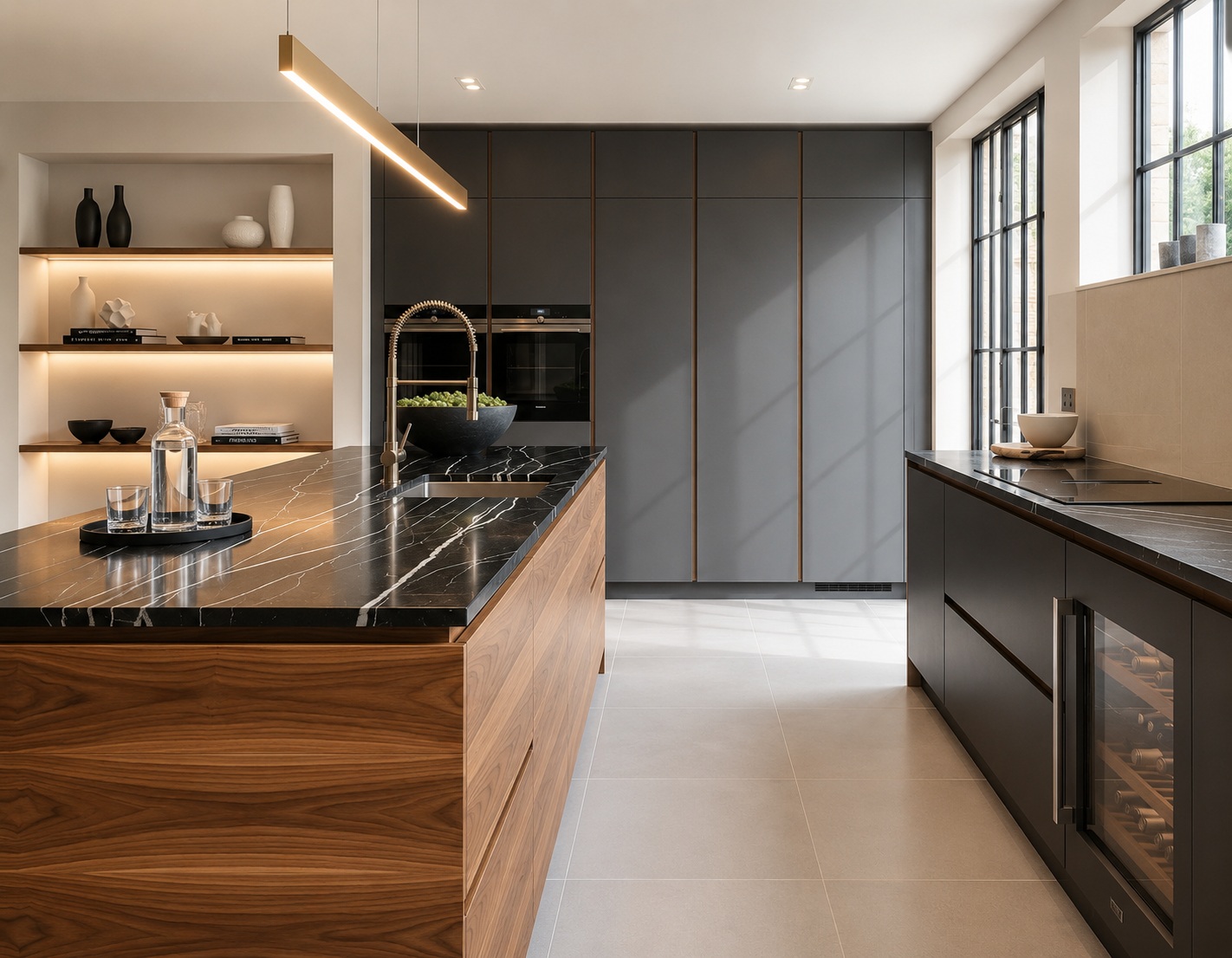
A black kitchen makes a quiet statement. Matte black across the run frames the counter and the room beyond it. The cabinets recede into shadow during the day and define the kitchen at night. It is the kitchen for the owner who wants the cooking space to feel deliberate, not background.
DBM designs and produces each black kitchen run around your project. Share a kitchen plan, an elevation, or a reference picture. We turn it into a working drawing, then build the boxes, doors, and trim ready for shipment.
Choose the Right Black Kitchen Build
Matte vs Satin Black — Finish Choice
Matte black reads softer and hides daily wear; the kitchen feels more architectural and less reflective. Satin black picks up some light and reads more like lacquer — richer at night, more interactive with the room.
Door Style — Slab / Shaker / Reeded
Slab flat-panel doors for the calm modern black run. Shaker for the transitional black kitchen that wants some structure. Reeded or fluted doors where the black face needs texture and shadow to come alive.
Hardware — Brass / Stainless / Hidden
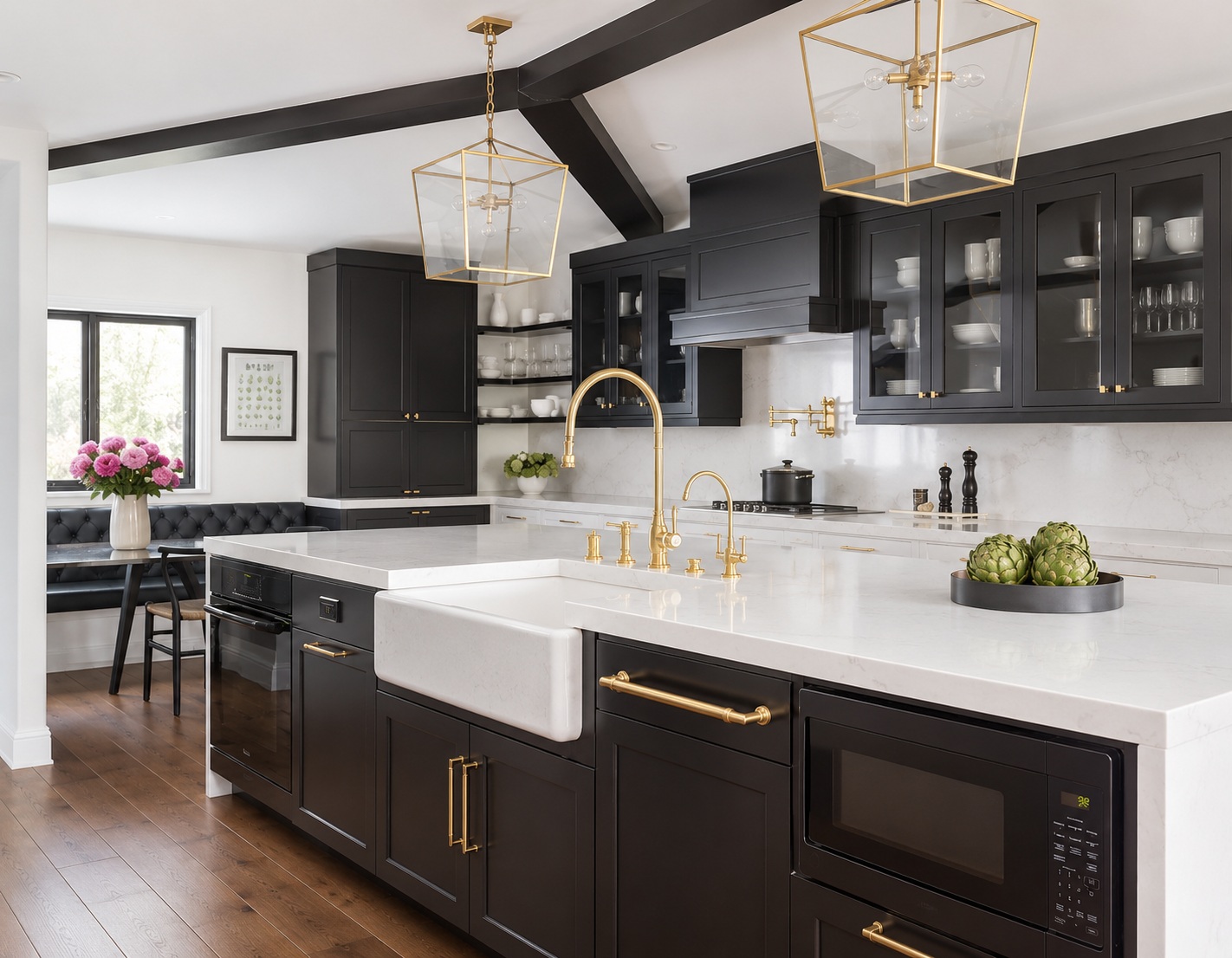
Brass against matte black is the warm classic pairing. Stainless or brushed nickel for the cool, architectural reading. Hidden grip detail along the top of the door where the black face should stay unbroken.
Counter Pairing — White Stone / Wood / Black
A pale stone counter is the strongest contrast and the most photographed pairing. A warm wood counter softens the black face. An all-black counter takes the kitchen full monochrome — the most dramatic move.
Where Black Kitchen Cabinets Fit — Four Common Project Types
Modern Villa
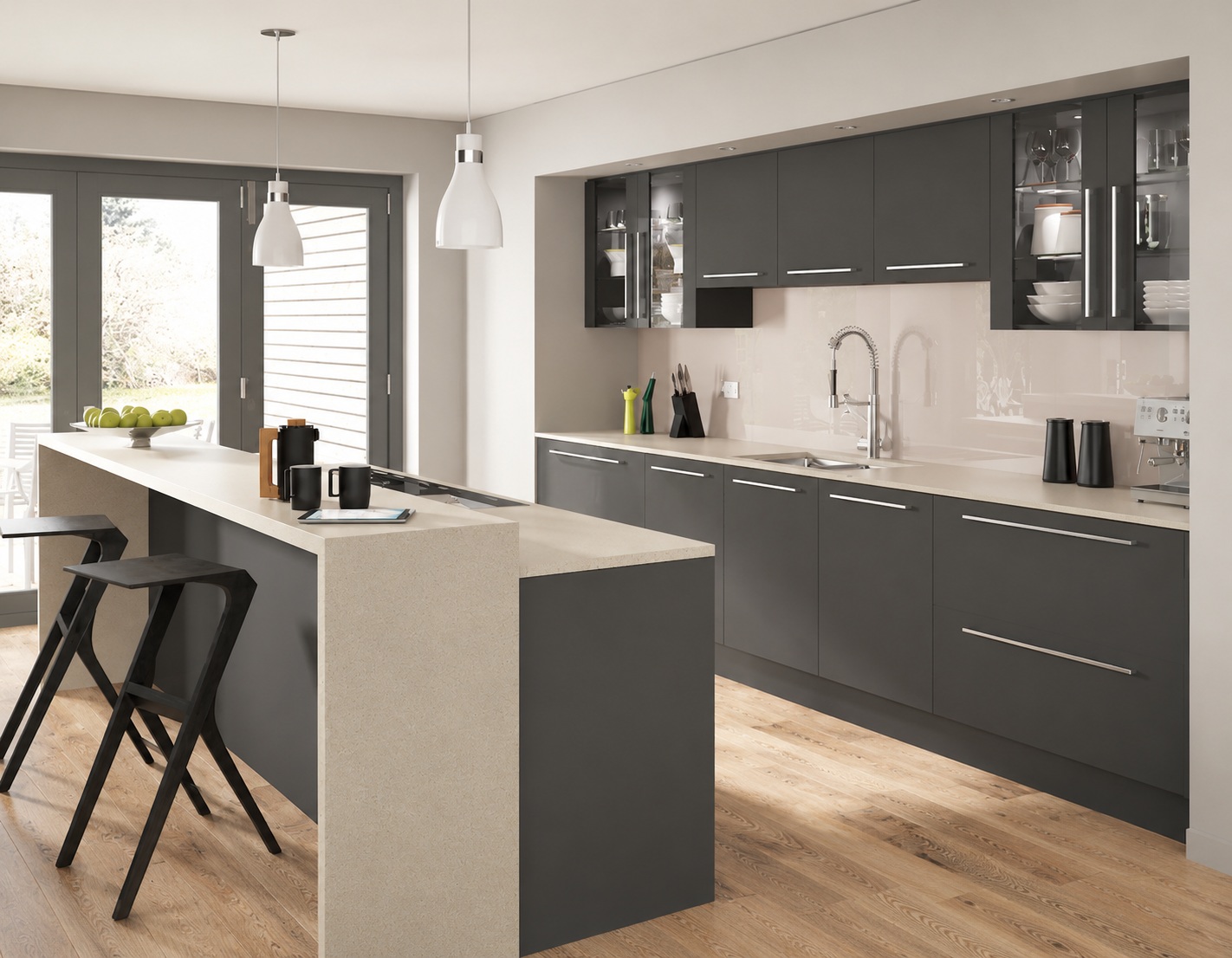
A larger modern villa kitchen where matte black carries across the perimeter and a pale stone island sits in the centre. The contrast holds the room together across a long open plan.
Contemporary New Home Build
A new build with a strong contemporary brief. Black slab cabinets and a single pale counter set the kitchen as a quiet, considered space. The open plan runs into the dining and the living.
Apartment Minimalist
A smaller apartment where the black kitchen recedes into one disciplined wall. Hidden hardware and a matte finish keep the kitchen reading as architecture rather than a busy room.
Boutique Residence
A custom apartment refit, owner’s top-floor kitchen, small boutique residence. Where the kitchen should feel one-off and considered, and the black palette carries a strong design idea rather than a default choice.
From Sketch to Site — Three Stages
Share a kitchen plan, an elevation, or a photo of the room — that’s enough to start. We turn it into a working drawing covering cabinet box sizes, door layout, drawer split, and how the run meets walls and appliances.
Boxes, doors, and trim are trial-fit and photographed in our Guangdong workshop before crating. Each part comes labeled and finish-protected, so on-site work is typically setting and adjusting rather than field-fabricating.
Wooden crates built for ocean freight, packed in the order your installer will set the kitchen. Shipped to 60+ countries — including the USA, Australia, the EU, and across Asia.
After delivery, your contractor or kitchen installer handles fitting. We provide an assembly guide and a step-by-step video. Where local installation is available in your region, we can help you find a vetted installer.
Black Kitchen Cabinets
When Black Is the Feature, Not the Whole Kitchen — Anchoring a Two-Tone Run.
A dark kitchen rarely arrives all at once across every wall. Far more often the black lands on one element — the island, a tall bank of larders, or the run beneath a window — while the rest of the room stays pale. The black becomes the deliberate weight in the space, the part the eye settles on first.
Owners usually reach us with that feature already in mind, yet the placement still open. They know they want one strong dark element rather than a fully dark room. What they are weighing is which part of the kitchen should carry the colour, and how that dark face will actually behave once the room is lit and lived in.
Why Placement Decides More Than the Colour.
A dark face pulls the eye, so where it sits sets the whole balance of the kitchen. Concentrated on the island, the colour anchors the centre and leaves the perimeter calm and bright. Carried instead across a tall larder bank, the same colour builds a single architectural wall that the lighter cabinets frame.
The reason to place rather than flood the colour is mostly spatial. A fully dark run can close a smaller kitchen in, since the surfaces absorb the light rather than return it. Holding the dark to one considered element keeps that visual weight controlled, so the room still feels open while the feature still reads bold.
So the early conversation maps the contrast before it confirms the finish. We discuss which element should carry the weight, how the paler cabinets sit around it, and where the eye should land on entering. Only afterwards does the working drawing fix the two-tone layout.
How a Dark Feature Behaves Once the Room Is Lived In.
The Colour Shifts With the Light.
A dark face never reads as a single fixed colour. Under bright daylight it flattens into a firm graphic edge, while under a warm evening lamp it deepens and softens. We choose the sheen against both the daylight the room receives and the artificial lighting above it, because the same panel can look chalky or rich depending on what falls across it. A matte surface settles the colour down, and a satin one lets it catch the light and gain depth at night.
The Two-Tone Junction Has to Resolve.
Where the dark element meets the pale cabinets, the junction is exactly where a two-tone kitchen succeeds or looks unfinished. We detail that change of colour at a natural break — an end panel, a corner, or a clean counter line — so the transition reads as a decision rather than an accident. The working drawing sets where the dark stops and the light begins, before any panel is sprayed.
Marks and Dust Show More on a Dark Face.
A dark surface reveals fingerprints, fine dust, and the daily wipe more readily than a pale one. A matte or lightly textured finish hides that everyday handling far better than a high-gloss black, and a hidden grip along the door edge cuts the number of touch points altogether. We steer the finish and the hardware toward the upkeep the household will realistically keep up, so the feature still looks deliberate a year in.
What Coordination Looks Like for a Two-Tone Kitchen.
Drawing-First Coordination begins by fixing where the dark sits and where it stops. We settle the feature element, the surrounding pale run, and the exact two-tone junction beside the floor levels and the appliance positions. The sheen is chosen here too, against the room’s light, so the colour suits the space before any panel is cut. You review and approve that layout before production begins.
Trial Assembly Before Packing then stands the dark feature and its paler neighbours upright on our Guangdong workshop floor. We confirm the fit, check the finish across the two tones under our own lighting, and review the junction one cabinet at a time. Then we take it apart, bag the hardware, and label every box, so the kitchen installs as an ordered set.
Export-Ready Crating afterwards protects the dark faces, which show a knock or a scuff more than a pale panel, across the long ocean passage. We wrap the feature panels carefully and seat the heaviest boxes low for a stable lift. The crate then arrives ready to open, sort, and set straight against the working drawing.
What to Send Us About Your Kitchen.
A kitchen plan or a quick photo of the room gives us a solid starting point. Mark which element you picture in the dark colour — the island, a larder bank, or a particular run — and how the paler cabinets sit around it. Add the worktop and any appliances that have to work with the feature.
One more note helps us choose the finish. Tell us how the room is lit, both by daylight and in the evening, and how much daily upkeep the household wants to take on. From there we turn your notes into a working drawing and a kitchen ready to ship.
After delivery, fitting is on your side. On site, your contractor or installer handled fitting directly from our drawings, with our assembly guide and step-by-step video to follow — or use your own local installer where needed.
Chat on WhatsApp →Compare the White Kitchen Cabinets → · see the Flat Panel Kitchen Cabinets → · browse the full Kitchen Cabinet range → · or explore all our cabinetry →