

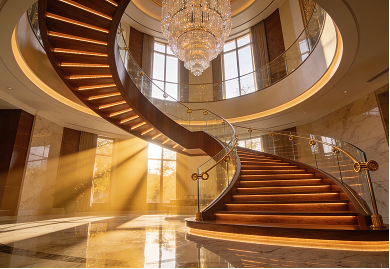
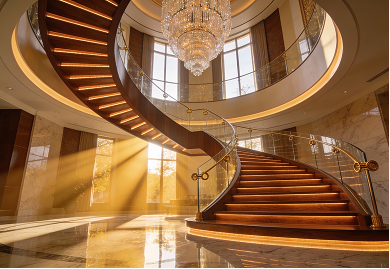
Wood Curved Stairs | Custom by DBM Factory
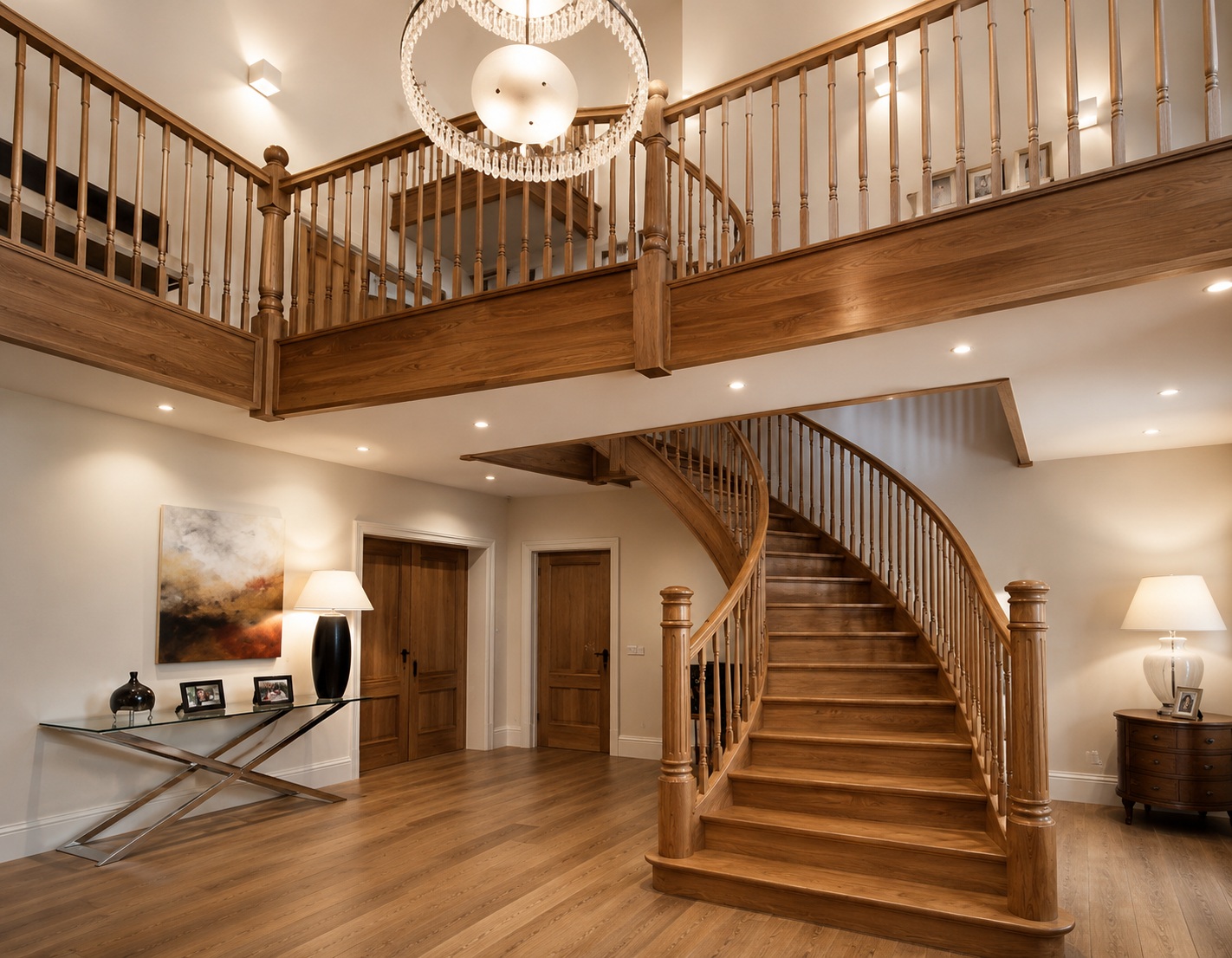


Wood Curved Stairs
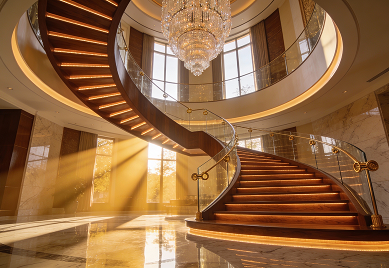
Wood curved stairs bring craft to the arc. Solid timber treads, grain matched across the sweep, a hand-rail you want to run your hand along. The warm centerpiece of a home that values the made.
We build to your drawing in the wood you choose. Share a sketch, plan, or design reference, and we work out the curve, the treads, and the finish together.
Choose Your Tread Wood and the Pairing
Oak Treads — The Family Wood
The everyday request for residential curved stairs. Solid oak fan-shaped to the arc, finished in a stain to match the floor or chosen as a deliberate contrast.
Walnut Treads — The Quiet Statement
Deep brown with the figured grain that reads from across the room. Often chosen when the curved stair is the front-of-house signature piece.
Stringer Pairing — Wood-Clad or Steel
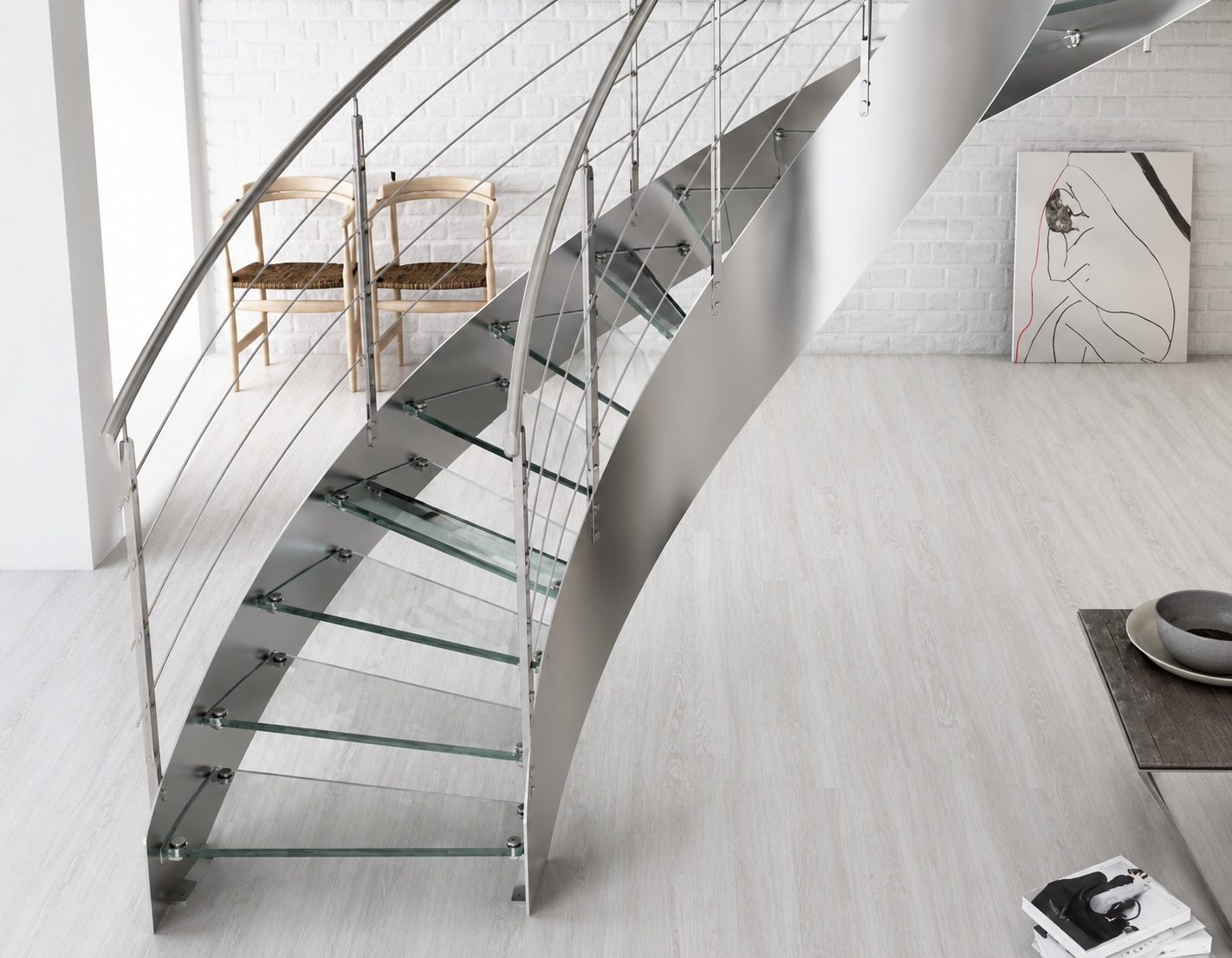
Closed stringer wrapped in matching wood for the traditional residential look. Slim steel mono-stringer under the treads when the brief leans transitional or modern.
Banister & Railing — Carved or Slim
Carved hardwood banister and turned balusters for the heritage look. Slim wood handrail over wrought iron or glass infill when the home wants warmth at the tread but a quieter side rail.
Where It Fits — Four Common Project Types
Villa & Country Home Foyers
A wood curved staircase as the front-of-house gesture. The classic sweep from foyer to landing, treads warm underfoot, banister sized for everyday family use.
Heritage & Traditional New Home Build
Drawn in from the architect's plans for a home that values the made-by-hand feel. Carved banister and turned balusters carry the heritage detail.
Boutique Hotel & Restaurant Owners
Small hotels and restaurants where the entry stair is part of the brand. The wood arc gives the room a quality the photo brief asks for, every day of the year.
Penthouse & Premium-Unit Owner Property
Duplex penthouses and premium top-floor apartments where the owner wants a wood-treaded residential stair rather than a building-standard one.
From Sketch to Site — Three Stages
Share a sketch, photo, or design reference. We turn it into a working drawing covering the radius, the tread fan, the wood selection, the banister detail, and the floor-tie connection.
Every curved staircase is fully assembled and photographed in our Guangdong workshop before being taken apart for shipping. Treads are grain-matched across the arc and labeled in order.
Wooden crates built for ocean freight, packed in the order your installer will assemble. Treads ship climate-protected. Shipped to 60+ countries — the USA, Australia, the EU, and across Asia.
After delivery, your contractor or installer handles fitting. We provide an assembly guide and a step-by-step video. Where local installation is available in your region, we can help you find a vetted installer.
Wood Curved Stairs
When Solid Timber Meets a Curve — the Grain and the Moisture Decide It.
A wood curve is the warmest staircase a home can hold, and the most particular to build properly. Timber is a natural material that breathes with the air, so a solid-wood arc demands more care than a metal configuration. So the brief here is rarely about the shape alone. It concerns how the wood is matched across the curve and how it settles into your interior climate.
Owners reach us when they want the made-by-hand quality of real timber underfoot. A solid oak or walnut arc carries a warmth that no coated surface quite matches. The complication is that wood moves a little with the seasons, especially when it travels from one climate to another. The real brief is a timber curve that reads as one continuous sweep and stays sound once it reaches its destination.
Why the Grain and the Moisture Shape the Build.
The appearance of a wood curve depends on how the grain runs across the arc. Each tread is fan-shaped, narrow at the inside and wider at the outside, so the grain has to flow from one tread to the next to read as a single sweep. We grain-match the boards along the curve, rather than cutting them at random, so the eye follows one continuous line up the entire flight.
The behaviour of the wood matters as much as the appearance. Solid timber expands and contracts a little as the humidity rises and falls, and that movement is gentle but genuine. We allow for that expansion in the joinery, so the treads and the banister hold together as the wood settles. The species itself plays a part here, since a stable hardwood like oak moves less than a softer timber.
The journey is the consideration owners rarely think about. A staircase built in our workshop humidity has to live in your interior air, which may be drier or damper by some margin. We bring the timber to a measured moisture content before we build, so it starts close to its final condition. That single step does the most to keep a travelled wood curve quiet and steady.
How the Timber Curve Changes With Wood, Home, and Climate.
A Stable Hardwood vs a Softer Timber.
The species sets both the appearance and the movement. A dense hardwood such as oak or walnut holds its dimension well and takes a fine edge on the curve, which suits a staircase that has to last for decades. A softer or more open-grained timber reads warmer and lighter, yet it moves a little more with the surrounding humidity. We match the wood to the look you want and the climate the curve will occupy.
A Dry Climate vs a Humid One.
The home climate sets the moisture target before we build. A dry, heated interior pulls timber toward a lower moisture content, so we condition the wood to suit that environment. A humid coastal or tropical home sits at the other extreme, and the timber is prepared for that level instead. The configuration of the curve stays identical, while the wood is brought to the moisture its destination expects.
A Bare Timber Look vs a Mixed Pairing.
Not every wood curve is timber all the way through. A full-timber staircase pairs solid treads with a carved banister and turned balusters for the traditional heritage reading. A mixed pairing keeps the warm wood tread but sets it against a slim steel stringer or a glass infill, which lightens the entire arc. We draw either configuration to the room, so the timber leads exactly as far as the design intends.
What Coordination Looks Like for a Timber Curve.
Drawing-First Coordination begins with the floor opening, the rise, and the home climate the timber will face. We settle the species, the grain layout, and the moisture target before anyone cuts wood, because timber choices cannot be undone after the boards are shaped. The working drawing records the configuration and the tread fan together.
Trial Assembly Before Packing then stands the whole curve upright on our Guangdong workshop floor. We grain-match every tread across the arc, fit the banister, and photograph the result. Then we take the staircase down and label each piece, so the build in your home becomes an ordered assembly that keeps the grain in sequence.
Export-Ready Crating protects the finished timber for the long ocean leg, where humidity shifts along the way. We wrap the boards against knocks and damp, and seat the heaviest pieces low. The crate lands ready to open, sort, and assemble straight against the drawing.
What to Send Us About Your Home.
A sketch or photo of the entry gives us a strong start. Add the floor-to-floor height, which is the climb from the lower floor up to the landing surface. Then tell us the wood you have in mind, whether oak, walnut, or another timber you favour.
One more note helps us prepare the timber. Tell us the climate of your home, from a dry heated interior to a humid coastal one, and whether you want full timber or a mixed pairing. From there we turn your notes into a working drawing and a stair ready to ship.
After delivery, fitting is on your side. On site, your contractor or installer handled fitting directly from our drawings, with our assembly guide and step-by-step video to follow — or use your own local installer where needed.
Chat on WhatsApp →Compare the Modern Curved Staircase → · see the Luxury Modern Curved Staircase → · browse the full Curved Staircase range → · or explore all our staircases →