




Loft Spiral Staircase | Custom by DBM Factory


Loft Spiral Staircase
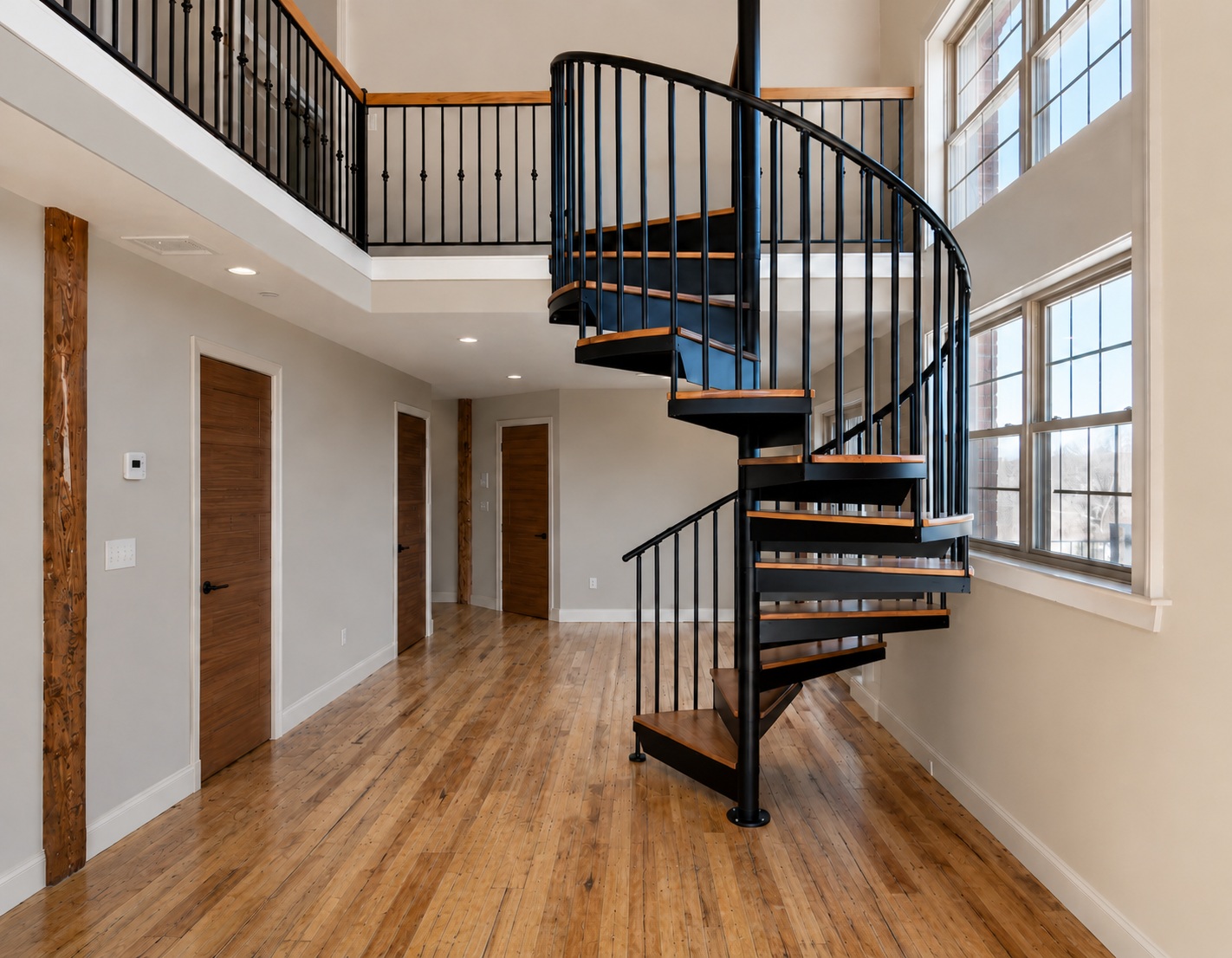
A loft spiral staircase replaces the ladder. The dedicated answer when there's one level to climb, the opening is small, and a straight run won't fit. The mezzanine becomes proper floor area instead of a storage shelf reached by a ladder.
We design and build each mezzanine spiral around your opening and floor-to-floor height. Share a sketch, a photo of the opening, or your architect's plans. We turn it into a working drawing and a stair ready to ship.
Sized for the Opening, Finished for the Room
Tread Material — Hardwood / Steel / Composite
Solid hardwood for residential lofts — warm underfoot, quiet on the climb. Steel plate or open bar tread where the loft is part of a converted workshop and the metal language already runs through the building.
Stringer — Slim Centre Post
A slim centre post is the typical loft-spiral configuration — the smallest possible footprint inside the room, with the helix wrapped tightly around it.
Railing — Picket / Cable / Slim Bar
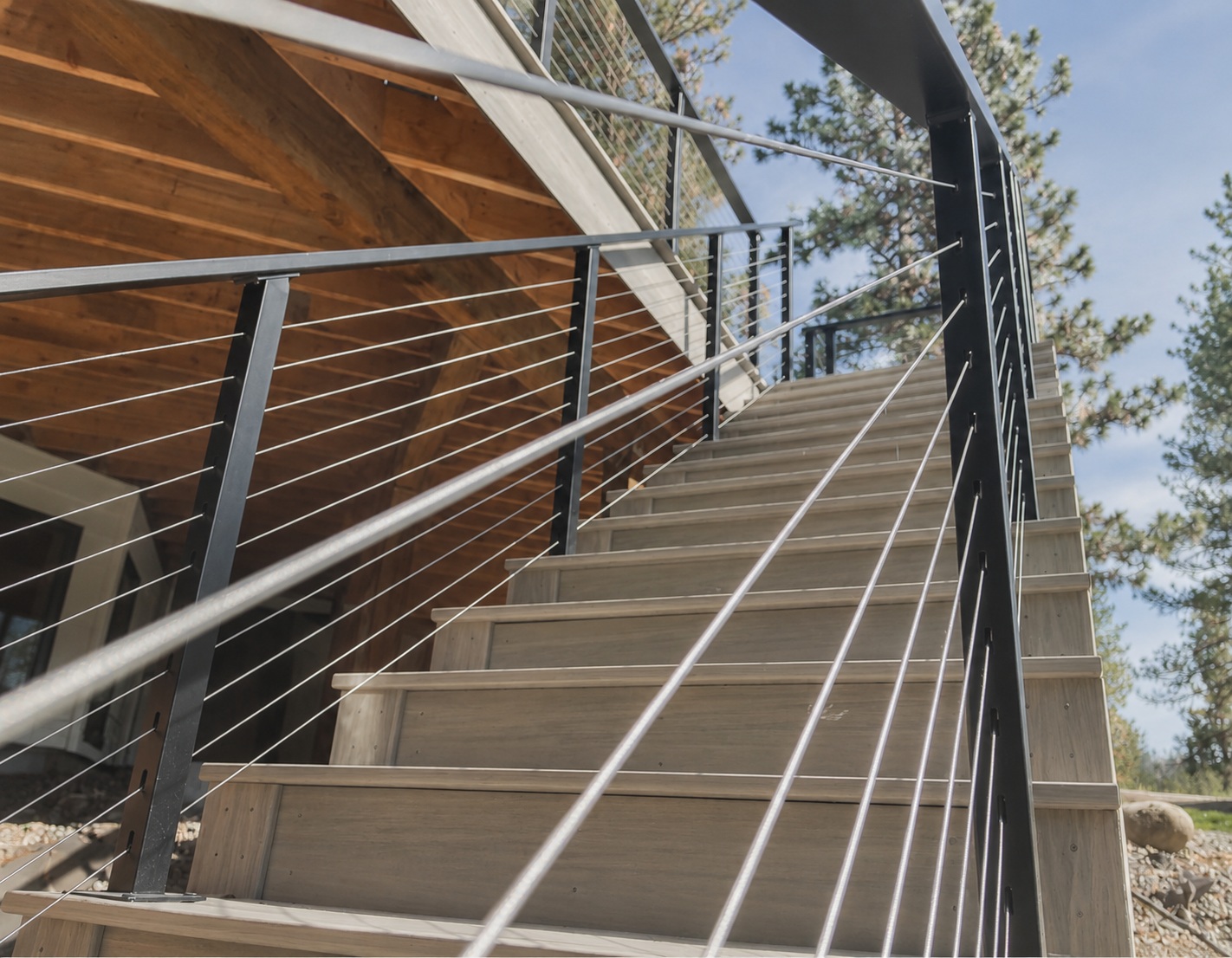
Slim vertical pickets keep the spiral feeling light in a tight ceiling. Cable infill where the loft is open-plan and the sightlines need to stay clean.
Finish Options — Powder-Coat / Stainless
Matte powder-coat for studios and converted lofts. Brushed stainless for designed residential mezzanines where the spiral reads as part of the room's palette.
Where It Fits — Four Common Project Types
Loft Conversion
Warehouse and shop conversions where a sleeping mezzanine sits above the main living level. A loft spiral staircase replaces the ladder that was there before, turning the upper deck into proper habitable area.
Open-Plan New Home with Mezzanine
New builds where the design includes an open mezzanine over the living room — a study, a reading nook, a guest area. The mezzanine spiral stair becomes part of the open architecture rather than a separate room.
Studio Apartment Upper Deck
Compact studio apartments and small flats with a sleeping platform overhead. The spiral keeps the floor area on the main level usable while still giving the upper deck a real stair.
Owner-Side Mezzanine Office & Studio
When the owner's workshop, art studio, or home office sits on a mezzanine above the main floor. A loft access spiral gives the upper level a permanent stair instead of a temporary ladder.
From Sketch to Site — Three Stages
Share a sketch, a photo of the opening, or your architect's plans — that's enough to start. We turn it into a working drawing covering the diameter, the floor-to-floor height, tread layout, railing, and the connections at top and bottom landing.
We dry-assemble and photograph every spiral in our Guangdong workshop. Our team checks the mezzanine landing connection, applies the finish, and reviews the helix end-to-end before breaking it down for shipping.
We build wooden crates for ocean freight and pack them in the order your installer will assemble. We ship to 60+ countries — including the USA, Australia, the EU, and across Asia.
After delivery, your contractor or installer handles fitting. We provide an assembly guide and a step-by-step video. Where local installation is available in your region, we can help you find a vetted installer.
Loft Spiral Staircase
From Ladder to a Real Stair — Fitting a Spiral Through a Tight Mezzanine Opening.
A mezzanine reached by a ladder is rarely the mezzanine the owner wanted. The level above works for storage, yet the ladder keeps it from becoming a real room. A loft spiral changes that, because it folds a full climb into a small round opening where a straight flight would never fit.
Owners usually reach us once the upper deck has earned a proper purpose, such as a study, a guest bed, or a quiet office. The catch is always the opening overhead. It sits small, often framed tight by joists, and a long straight run would need a hole far bigger than the floor can spare. So the brief is precise. They want a safe daily stair that climbs through the tight opening already there.
Why a Spiral Fits Where a Straight Run Cannot.
The opening is the whole problem, and the spiral is the plain answer to it. A straight flight needs a long slot cut through the floor above, which a mezzanine usually cannot give up. A spiral instead climbs within a small circle, so the hole stays modest and the upper floor keeps most of its area.
That round footprint is what lets the upper level stay useful. The treads wind around one slim post, so the stair takes a tight circle of floor rather than a long diagonal channel. The mezzanine then reads as a real room reached by a real stair, not a platform served by a ladder.
The trade-offs stay honest, as ever. A spiral allows a single person to climb at a time, and bulky furniture still travels more easily up a straight flight or through a separate access hatch. Where the opening stays small and the climb covers a single level, though, the loft spiral remains a common and sensible configuration.
How the Mezzanine Spiral Changes With the Opening.
The Opening Itself Comes First.
Sometimes the owner can widen the hole between the joists, which frees a slightly larger, gentler circle. More often the surrounding structure fixes the opening, so we calculate the spiral diameter against the hole that already exists. On the drawing we hold a clearance margin between the diameter and the opening, so the handrail and the outer tread edge are drawn to clear the surrounding floor edge throughout the ascent. We draw the configuration to the opening you genuinely have, never to a generic catalogue dimension.
Headroom at the Top Comes Next.
A mezzanine ceiling or a structural beam can sit low over the landing, exactly where someone steps off the stair. We set the exit point and the final tread on the working drawing to work around that obstruction, so the climb is drawn to finish upright instead of forcing an awkward duck. We resolve this geometry on paper, well before we cut any steel.
How Often It Sees Use Comes Last.
A sleeping loft used at night asks for a different comfort than an office climbed all day. Where the traffic runs heavy, we ease the pitch and widen the tread within the opening, so the daily climb stays sure underfoot. The same tight hole can carry a gentle stair or a brisk one, depending on how the room above lives.
What Coordination Looks Like for a Mezzanine Spiral.
Drawing-First Coordination begins at the opening and the floor-to-floor height. We confirm the hole, the headroom above, and the exact climb before we cut any metal, because a mezzanine opening leaves no room for a guess. The top of the spiral fixes to the floor edge with a steel landing bracket, which we detail to the joist direction in the same drawing. The working drawing resolves the tight fit on paper first.
Trial Assembly Before Packing then stands the whole spiral upright on our Guangdong workshop floor. We check the top landing connection, apply the finish, and review the helix turn by turn. Then we take it down and label each part, so the build under your low ceiling becomes an ordered bolt-together job.
Export-Ready Crating packs the parts in the order your installer will raise them through the opening. We seat the heaviest pieces low and protect the finish for the long ocean leg. The crate arrives ready to lift, sort, and assemble straight against the drawing.
What to Send Us About Your Opening.
A photo of the opening from below tells us a great deal on its own. Add the floor-to-floor height, which is the climb from the lower floor up to the mezzanine deck. Then give us the rough size of the hole overhead, measured between the framing on each side.
One more note helps us finish the picture. Tell us about any low beam or sloped ceiling near the top of the climb, and how the upper level will be used. From there we turn your notes into a working drawing and a stair ready to ship.
After delivery, fitting is on your side. On site, your contractor or installer handled fitting directly from our drawings, with our assembly guide and step-by-step video to follow — or use your own local installer where needed.
Chat on WhatsApp →Compare the Exterior Spiral Staircase → · see the Metal Spiral Staircase → · browse the full Spiral Staircase range → · or explore all our staircases →