

Aluminum Casement Window | Custom by DBM Factory


Aluminum Casement Window
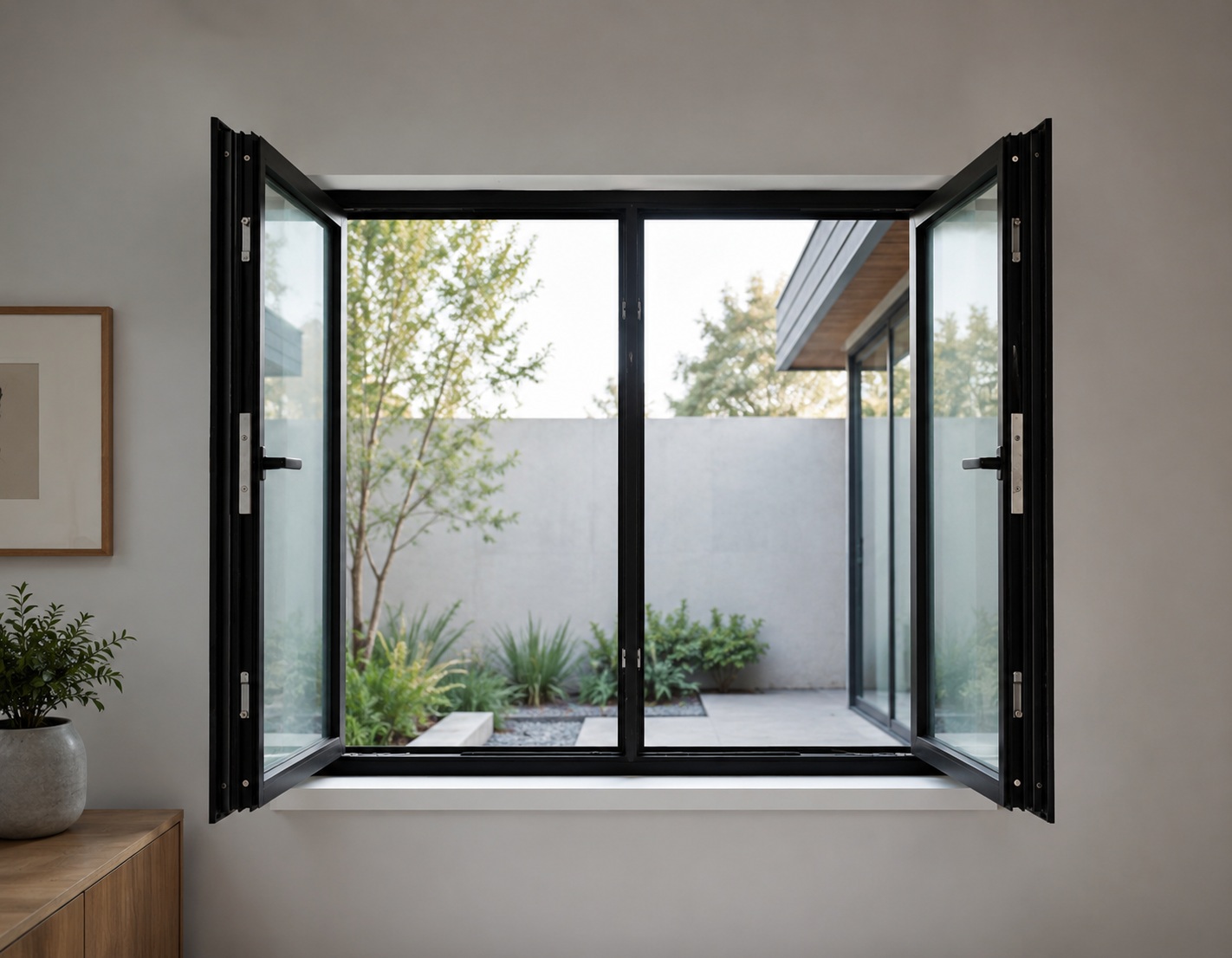
A casement window swings outward on side hinges — the simplest way to open the whole sash to the view and the breeze. Slim aluminum frames keep the glass dominant; from the room, the window reads as a clean rectangle of light, not a stack of operating parts.
We design and produce each casement window around your project. Share the elevation, a floor plan, or a designer reference. We turn it into a working drawing and build the window ready for shipment.
Spec the Window to the Elevation
Frame Finish — Powder-Coat / Anodized
Anthracite, matt black, bronze, off-white, or anodized silver. We quote custom colors to match the existing window suite on request. Marine-grade powder-coat suits elevations that face salt air.
Glass — Double IGU / Low-E
Double-glazed insulating units with low-emissivity coating are the everyday spec. Tinted, laminated, or low-iron glass available where view, sun-control, or look need the finer choice.
Hinge Style — Standard / Wide-Open
Standard side hinges for living-room and bedroom windows. We fit wide-open friction hinges where the elevation calls for full opening. Your architect or designer confirms the choice on the drawing.
Hardware — Handle / Multi-Point Lock
Single handle with multi-point locking is the typical residential package. Hardware finish matched to the frame — matt black, brushed nickel, brass — so the window reads as one designed piece.
Where It Fits — Four Common Project Types
Villa
Living-room, study, and bedroom elevations where the owner wants the view and the breeze with the cleanest possible frame. Anthracite or bronze powder-coat is a common villa direction.
New Home Build
We draw the window into the elevation from the start so the head and sill align with the floor structure and the cladding course. Casements pair well with fixed glass to make wider window walls without sacrificing operating sashes.
Heritage Residence
Period homes where the owner wants the original look but with modern thermal performance. Casements with traditional muntin bars and warm off-white frames sit naturally on heritage elevations.
Vacation Residence
Holiday home where the windows stay shut up during the off-season and open wide when the family arrives. A robust handle, multi-point locking, and a marine-grade finish suit the long-spell-shut pattern.
From Sketch to Site — Three Stages
Share an elevation, a window schedule, or a designer reference — that’s enough to start. We turn it into a working drawing for the casement window. It covers sash sizes, hinge positions, and the structural opening your contractor will need to frame.
We assemble, glaze, and photograph every window unit in our Guangdong workshop before we prepare it for shipping. Each frame ships with its matched sashes, hardware, and seals. On-site installation typically runs set-and-fix, not site-cutting.
Wooden crates built for ocean freight, packed in the order your installer will set the windows. Shipped to 60+ countries — including the USA, Australia, the EU, and across Asia.
After delivery, your contractor or installer handles fitting. We provide an installation guide and a step-by-step video. Where local installation is available in your region, we can help you find a vetted installer.
Aluminum Casement Window
When a Living Room Needs Real Airflow and a Clean Rectangle of View.
A side-hinged window earns its place when a room needs the full sash open to the breeze. The whole pane swings outward, so the opening catches and steers passing air far better than a small vent. With the sash shut, the view sits in one clean rectangle of glass.
Owners usually reach us with two wishes that pull together here. They want a window that opens wide for air on a warm evening, and they want the slimmest frame the wall will allow. So the brief blends comfort and a clean sightline. The opening should move plenty of air, and from the sofa it should read as light, not as joinery.
Why a Side-Hinged Sash Wins for Airflow and Sightline.
The side-hinged design suits this brief for one plain reason: the sash opens fully, not part-way. A hinge swings the whole pane clear of the opening, so the airflow is close to the full gap. The outward swing also lets the open sash scoop a breeze passing across the wall and steer it into the room.
The trade-offs are worth naming early in the talk. An outward sash needs clear space outside the wall, so it suits a wall without a path or obstruction in front. Wind on an exposed face pushes on the open sash, which makes the friction-stay choice matter on higher floors. We weigh those points against the room before the design is settled.
So the right answer turns on how the room breathes and what it overlooks. Where strong, simple airflow and a clean sightline are the goal, a casement typically earns its place against the alternatives. Where the opening sits over a walkway or faces constant weather, an awning or an inward-opening sash may suit the room better, and we discuss the options openly.
How the Casement Flexes Across Rooms and Elevations.
A Single Sash vs a Casement-and-Fixed Wall.
The window layout shapes how much glass the room gains. A single opening sash answers a modest bedroom or study, opening fully for air when needed. Pairing one or two casements alongside large fixed panes builds a wider window wall, keeping the opening sash where the airflow helps and the still glass where the view leads. We compose the sashes and fixed panes to the wall you have.
A Standard Hinge vs a Wide-Open Hinge.
The hinge choice tunes the balance between airflow and easy cleaning. A standard side hinge handles everyday living-room and bedroom use cleanly. A wide-open friction hinge swings the sash further from the frame, which both lifts the breeze and lets a hand reach the outer face from inside. We fit the hinge style the wall and the routine call for.
A Sheltered Garden vs an Exposed Upper Floor.
The surrounding setting decides the hardware and the finish. On a sheltered ground-floor garden room, a standard powder-coat frame and an ordinary stay carry the sash comfortably. On an exposed upper floor, a robust friction stay and a marine-grade coating hold their condition against wind and salt. The outward-opening sash stays the same, while the stay and the finish shift to match the exposure.
What Coordination Looks Like for a Casement Run.
Drawing-First Coordination starts with the elevation and the structural openings within it. We pin down each sash size, the hinge position, and the clear swing outside the wall before anyone cuts metal. A window schedule rarely repeats one size exactly, so the working drawing resolves every opening and saves a scramble on site.
Trial Assembly Before Packing then builds and glazes each window unit on our Guangdong workshop floor. We hang the sash, swing it through a full cycle, and photograph the result before we prepare it for transport. Each frame ships with its matched sash, hardware, and seals labelled together, so the build on your wall becomes a measured set-and-fix job rather than a site puzzle.
Export-Ready Crating packs the windows in the order your installer will set them along the elevation. We protect the glazed faces and the coated frames against knocks and salt spray for the long ocean leg. The crate lands ready to open by opening, with the units cushioned and the heavier frames seated low for a safe lift.
What to Send Us About Your Elevation.
A rough elevation sketch or a window schedule gives us plenty to begin with. Add the rough opening sizes and the head and sill heights, plus a note on which sashes need to open and which can stay fixed. Then tell us what sits outside each window, since that governs the swing.
One more line of detail helps us understand your particular rooms. Tell us which floors face the weather, and how much ventilation each space really needs. From there we turn your notes into a working drawing and a casement run ready to ship.
After delivery, fitting is on your side. On site, your contractor or installer handled fitting directly from our drawings, with our assembly guide and step-by-step video to follow — or use your own local installer where needed.
Chat on WhatsApp →Compare the Aluminum Awning Window → · see the Aluminum Tilt-Turn Window → · browse the full Aluminum Window & Door range → · or compare Wooden Doors →