

Panel Door | Custom by DBM Factory


Panel Door
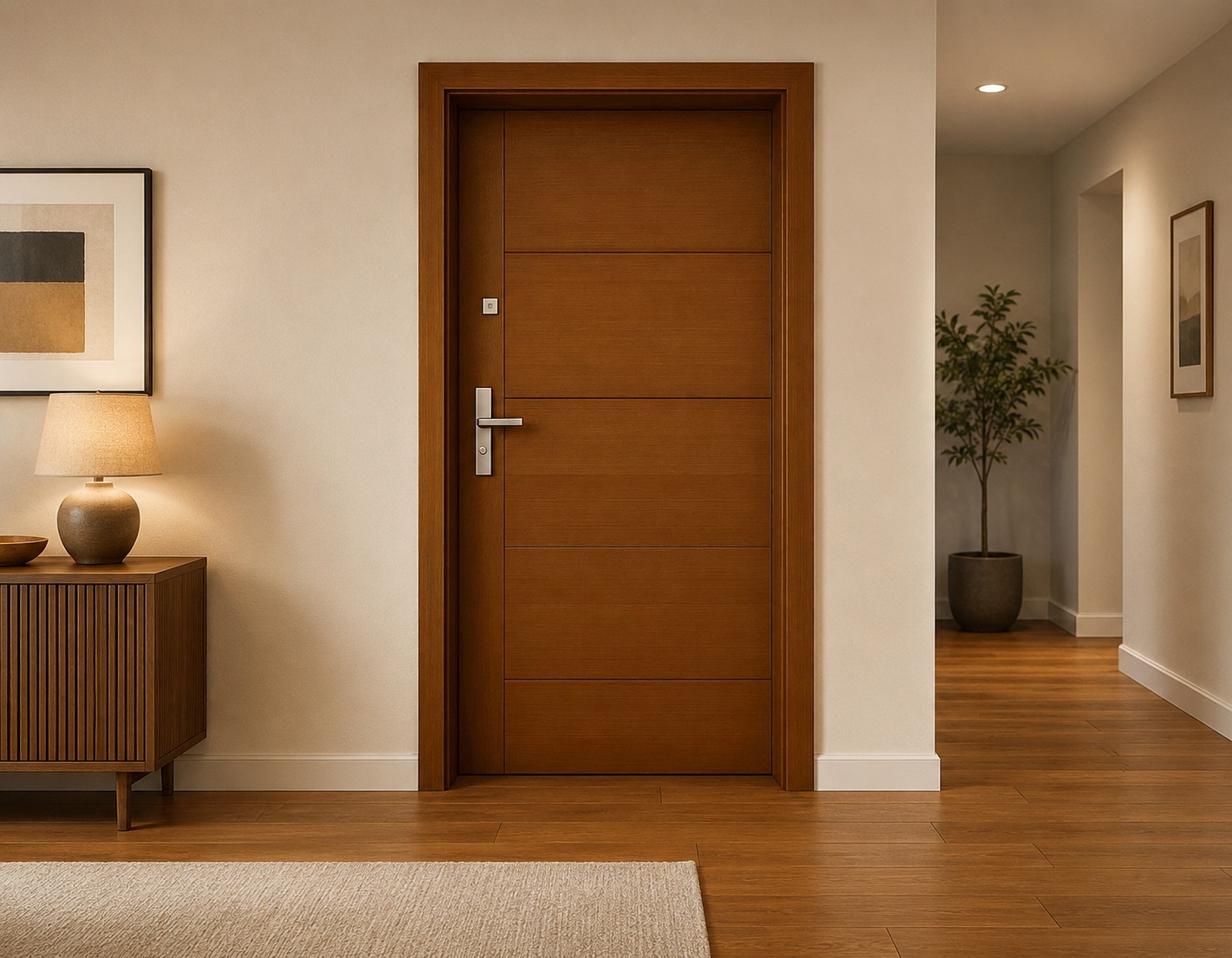
A panel door is the classic interior door layout — stiles and rails framing a set of recessed panels. Panels are raised in traditional work, or flat in transitional and modern work. The proportion of the panels, the shadow line at the rails, and the species of the wood set the read. One panel door reads traditional; another reads clean and contemporary.
We design and produce each panel door around your floor plan — species, panel count, profile, and hardware drawn together across the schedule. Share a sketch or door schedule; we turn it into a working drawing and build the doors ready for shipment.
Build the Panel Door to the Room
Wood Species — Oak / Maple / Poplar
Oak when the door is meant to read stained, maple where the panels will be painted clean, poplar as a stable paint-grade workhorse. Species chosen by finish intent.
Panel Count — 2 / 3 / 5 / 6
2-panel for a clean modern read, 3-panel and 5-panel for traditional schedules, 6-panel for the most classic Federal or Colonial millwork. Layout drawn to door height.
Finish — Raised / Flat / Shaker
Raised panels with a profiled edge for traditional schedules, flat shaker panels for transitional and modern interiors. Painted or stained — finished in-house and matched across the door schedule.
Hardware — Lever / Knob
Lever sets for accessible-friendly schedules, traditional knobs for heritage work. Finishes coordinated across the door schedule — oil-rubbed bronze, brushed nickel, unlacquered brass.
Where It Fits — Four Common Project Types
Traditional New Home
5-panel or 6-panel raised-panel doors in maple or poplar, painted to match the trim package. The traditional pick where the door schedule is meant to read as classic millwork throughout the home.
Villa
A whole-house schedule of stain-grade oak panel doors, layout coordinated room by room. The villa interior reads as one piece when species, stain, and panel layout match across every leaf.
Heritage Residence
Period-correct panel layouts and profile details, drawn to match the existing millwork in older homes. Often paired with unlacquered brass hardware that ages into the patina of the trim.
Family Home
A practical whole-house schedule — shaker flat-panel in painted maple or stained oak, lever hardware for everyday use. The classic family-home door layout, scaled to the rooms.
From Sketch to Site — Three Stages
Share a sketch, a door schedule, or a reference photo — that's enough to start. We turn it into a working drawing for the whole set, covering species, panel count, profile, finish color, and hardware schedule across every door.
Each door is hung in its frame, fitted with hardware, and photographed in our Guangdong workshop before being packed for shipping. We label every door to its room on the schedule so on-site fitting follows the same order as your plan.
Wooden crates built for ocean freight, packed with doors, frames, and hardware grouped by room so your installer works the schedule in order. Shipped to 60+ countries — including the USA, Australia, the EU, and across Asia.
After delivery, your contractor or installer handles fitting. We provide an assembly guide and a step-by-step video. Where local installation is available in your region, we can help you find a vetted installer.
Panel Door
Matching the Period Already There — Proportions and Mouldings Drawn to Existing Trim.
An older home already speaks a clear language in its joinery, and a new door has to join in. The panel layout, the moulding shape, and the rail widths all carry the period the house was built in. So the brief is rarely a blank page; it is a match to the trim already on the wall.
Owners usually reach us with a doorway in an old interior, or a row of openings in a heritage job. Maybe one original leaf survives as a guide, or the trim around the frame sets the look. So the task is reading what is there, then drawing a new door that looks like it always belonged.
Why Proportion Matters More Than the Wood.
A period door reads right or wrong on its shape long before anyone notices the timber. The panel count, the stile and rail widths, and the moulding shadow place a door in its era. So the matching work begins with measuring those parts, not with choosing a species or a finish.
A reference is therefore worth far more than a catalogue picture at this stage. A photo of a surviving original, or a measured detail of the trim, lets us copy the lines exactly. We draw the new leaf to those measurements, so the panel layout echoes the period rather than guessing at it.
The finish then follows the shape, instead of leading it. An old interior often takes a painted leaf with crisp moulding shadows, while a stained leaf suits a timber-rich room. We settle the profile first, then the species and the finish, so the new door sits comfortably beside the original joinery.
How the Match Changes With What Survives.
One Original Survives vs None.
When one original leaf survives, it becomes the template the whole order copies. We measure its panel layout, its moulding shape, and its rail widths, then build to match. When nothing survives, we work from the trim around the frame and the period instead, so the new door still reads right for the house.
Replacing One Door vs a Whole Schedule.
A single new door has to disappear among existing leaves that the household sees daily. We match the shape and the finish closely, so the new leaf blends rather than standing out. A whole-house renovation instead repeats one agreed profile across every opening, so the interior reads even throughout.
An Out-of-Square Old Opening.
Old openings rarely stay perfectly square after decades of settlement and seasonal movement. A door cut to a clean rectangle can leave an uneven gap against a leaning frame. We note the opening as measured, so your installer has the allowance to trim the leaf to the actual frame on site.
What Coordination Looks Like for a Period Match.
Drawing-First Coordination begins with your reference photos and the measured details around the opening. We turn the panel layout and the moulding shape into a working drawing before anyone cuts timber. The drawing fixes the species, the finish, and the layout, and you review and approve it before we start.
Trial Assembly Before Packing then hangs each door in its frame on our Guangdong workshop floor. We check the gap reveal, fit the hardware, and photograph the leaf so you confirm the proportion against your reference. We label each door to its room as it comes apart, so the set installs in the same order as your plan.
Export-Ready Crating packs the doors, frames, and hardware grouped by room for the long ocean leg ahead. We guard the finished faces against knocks and seat the heavy leaves low in the crate. The shipment lands sorted room by room, ready to work through one opening at a time.
What to Send Us About Your Interior.
A photo of a surviving original, or of the trim around the opening, gives us the strongest start. Add the opening width and height, and a close measurement of the panel and moulding if you can reach one. Then tell us whether you are replacing one door or matching a whole schedule.
One more note helps us read the period correctly. Tell us roughly when the house was built, and whether the doors on that floor are painted or stained today. From there we turn your references into a working drawing and a period-matched door ready to ship.
After delivery, fitting is on your side. On site, your contractor or installer handled fitting directly from our drawings, with our assembly guide and step-by-step video to follow — or use your own local installer where needed.
Chat on WhatsApp →Compare the Solid Wood Interior Door → · see the Solid Wood Exterior Door → · browse the full Wooden Door range → · or explore the Window & Door collection →