

Wrought Iron Deck Railing | Custom by DBM Factory


Wrought Iron Deck Railing
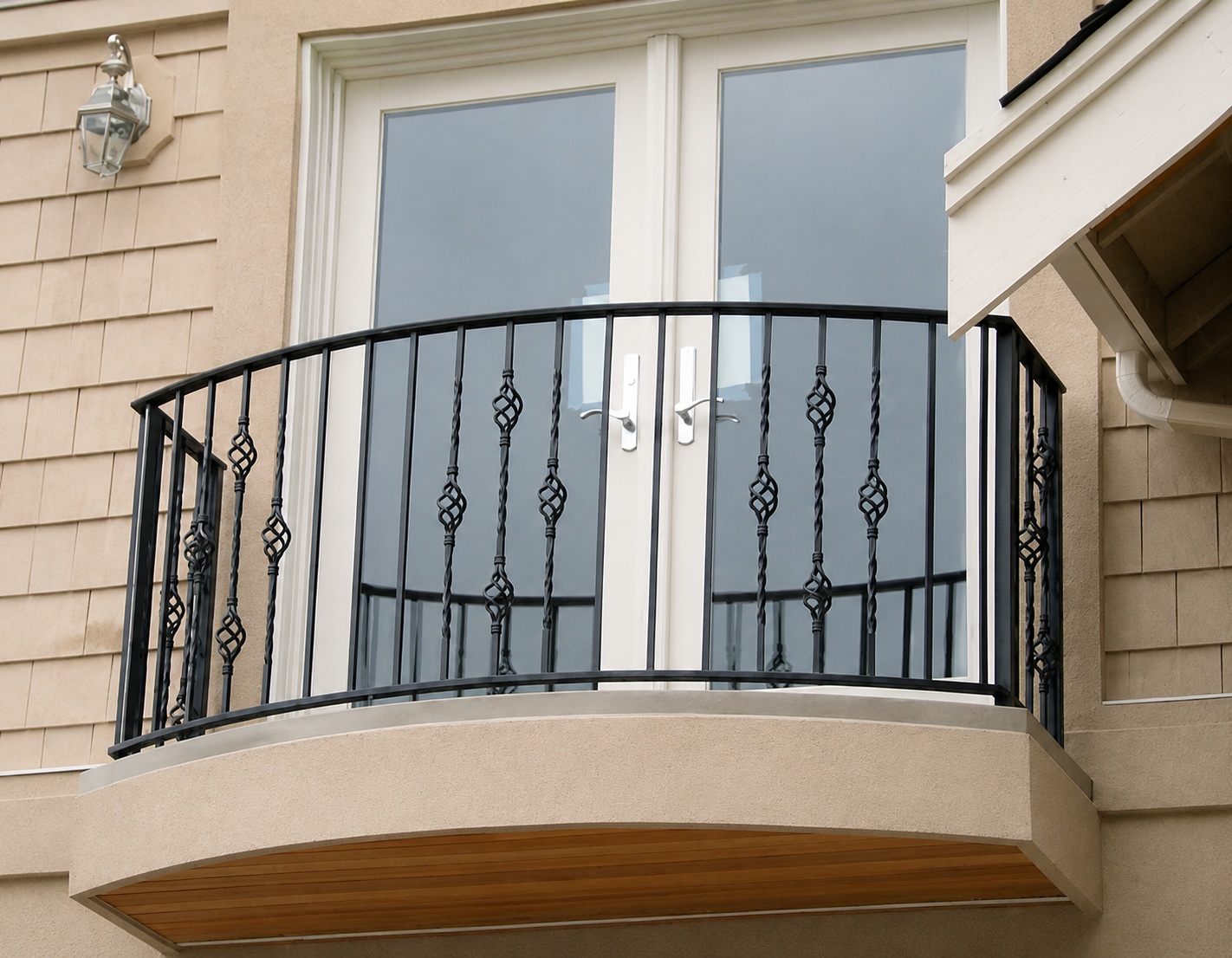
A wrought iron deck railing carries forged detail at deck height. The pickets read against the deck boards, the cap rail draws a clean line at hand height, the corners turn cleanly. It is the railing for a deck that wants to feel rooted — less catalogue rail, more part of the house.
DBM designs and produces each iron deck railing run around your project. Share a sketch, a photo of the deck, or a CAD plan. We turn it into a working drawing, then build the panels, posts, and cap rail ready for shipment.
Choose the Right Iron Deck Build for Your Site
Powder-Coat Finish — Matte Black / Bronze
Matte black reads clean against stained timber decking. Antique bronze answers warmer composite boards and brick patio. Custom RAL color where the deck palette is set.
Galvanized Base — Outdoor Service
Hot-dip galvanized steel under the powder coat for outdoor weather. The everyday choice on a deck that sees real rain, snow, and seasonal use.
Forged Pattern — Plain / Scroll / Mixed
Plain pickets across the run for the calm deck reading. Scroll work at corners and stair landings where the railing turns. Mixed patterns drawn to a specific brief where the deck is a feature space.
Picket Spacing — Drawn to Run
Picket spacing typically meets common residential guard rules where the deck serves a home. We draw the layout to your deck dimensions so the spacing reads even across straight runs and corners.
Where Iron Deck Railing Fits — Four Common Project Types
Heritage Villa Deck
A rear deck off a heritage villa, a stone-paved terrace edge, a side garden deck. Scroll pickets in matte black answer the brick and stone facade and tie the deck back to the main house.
Traditional New Home Build
A new build with a substantial deck that wants to read more crafted than catalogue. Plain pickets and a flat cap rail are the workhorse pairing. Drawn in from the architect’s deck plan so post layout aligns with the deck framing.
Cottage Residence
A country cottage with a wraparound deck, a weekend home with a small upper deck off the main bedroom. Quiet picket pattern in matte black keeps the cottage character without dressing the deck up.
Lakeside Residence
A lakeside home with a long deck running along the water side. The galvanized base under the powder coat is the common pick where humidity and seasonal weather are part of the brief. The dark iron reads against water and timber decking.
From Sketch to Site — Three Stages
Share a deck sketch, a CAD plan, or a photo of the run — that’s enough to start. We turn it into a working drawing covering picket pattern, post placement, cap-rail profile, and how the run meets stairs and corners.
Panels, posts, and cap rail are trial-fit and photographed in our Guangdong workshop before crating. Each part comes labeled and finish-protected, so on-site work is typically bolt-up and touch-up — not field-welding.
Wooden crates built for ocean freight, packed in the order your installer will assemble. Shipped to 60+ countries — including the USA, Australia, the EU, and across Asia.
After delivery, your contractor or installer handles fitting. We provide an assembly guide and a step-by-step video. Where local installation is available in your region, we can help you find a vetted installer.
Wrought Iron Deck Railing
When the New Deck Has to Match the Iron Already on the House.
A new rear deck joins a home that already wears forged iron elsewhere. The front porch, the entry steps, or the garden gate set a pattern years ago, and the deck rail needs to belong to that same family. This is not a deck designed on its own. It is a new run answering iron the house already has.
Owners reach us once the deck is framed and the railing has to be chosen. A different pattern at the back would read as a separate project bolted onto the house, which the owner is trying to avoid. So the brief is a deck run drawn to echo the existing iron, so the property reads as one consistent whole.
Why Matching Across the Property Earns Its Place.
A property reads as a whole when its details repeat. Where the porch and the gate already carry a forged pattern, a deck rail in the same language ties the front and the back together. The eye then accepts the deck as original architecture, not a later addition. A mismatched rail breaks that thread, and the deck always looks separate.
The match does not have to be identical to work, and that is the useful part. We can echo the picket profile, the scroll detail, or the finish from the existing iron without copying every element, so the deck rail still suits its own setting. The shared character carries the continuity, even where the deck run is plainer than a feature porch.
Echoing the existing iron is the typical choice where the house already has a strong forged identity. Where the deck is the only iron on the property, it sets its own pattern with a free hand. We settle which case applies from your photos of the existing runs, before the drawing begins.
How We Carry the Existing Character Onto the Deck.
The Existing Pattern Comes First.
A few photos of the porch or gate iron show us the character to carry across. We read the picket profile, the scroll detail, and the spacing, then bring those into the deck drawing. The deck run does not have to repeat the feature exactly; it carries enough of the pattern that the two read as relatives across the property.
The Finish Match Comes Next.
The existing iron carries a particular colour and a particular age. We set the deck rail finish to sit with it, whether that means a matching black or a warmer bronze close to the weathered original. The deck then looks like part of the same forged scheme, rather than a fresh black run against an aged one.
The Deck Conditions Come Last.
The deck has its own requirements that the front of the house never had. It runs longer, it turns more corners, and it usually meets a flight of steps to the garden. We draw the matched pattern to suit those runs and that exposure, with a galvanized base beneath the powder coat where weather is part of the specification.
What Coordination Looks Like for a Matched Deck Run.
Drawing-First Coordination begins with your deck plan and your photos of the existing iron. We confirm the pattern to carry across, the deck dimensions, and the corners before any iron is cut. The working drawing brings the existing character onto the deck run, so the new railing reads as part of the home rather than a separate piece.
Trial Assembly Before Packing then stands the deck run upright on our Guangdong workshop floor. We fit the panels and the posts, apply the matched finish, and review the pattern against the reference photos of your existing iron. Then we take the run apart, label each panel to its position, and protect the finish for transport.
Export-Ready Crating packs the deck run in the order your installer will raise it. We group the panels by their position on the deck, and seat the heavy posts low in the crate. The shipment arrives sorted, so the deck builds run by run against the drawing.
What to Send Us About the Match.
A few clear photos of the existing iron tell us the character to carry. Shoot the porch, the gate, or the entry rail straight on, so we can read the pattern and the finish. Then send a plan of the new deck, marking the length of each run, the corners, and any steps to the garden.
One more note helps us finish the picture. Tell us how aged the existing finish looks, and how close the deck sits to the coast. From there we turn your photos and plan into a working drawing and a matched deck run ready to ship.
After delivery, fitting is on your side. On site, your contractor or installer handled fitting directly from our drawings, with our assembly guide and step-by-step video to follow — or use your own local installer where needed.
Chat on WhatsApp →Compare the Wrought Iron Stair Railing → · see the Outdoor Wrought Iron Railing → · browse the full Wrought Iron Railing range → · or explore all our railings →