

Wine Bar Cabinet | Custom by DBM Factory
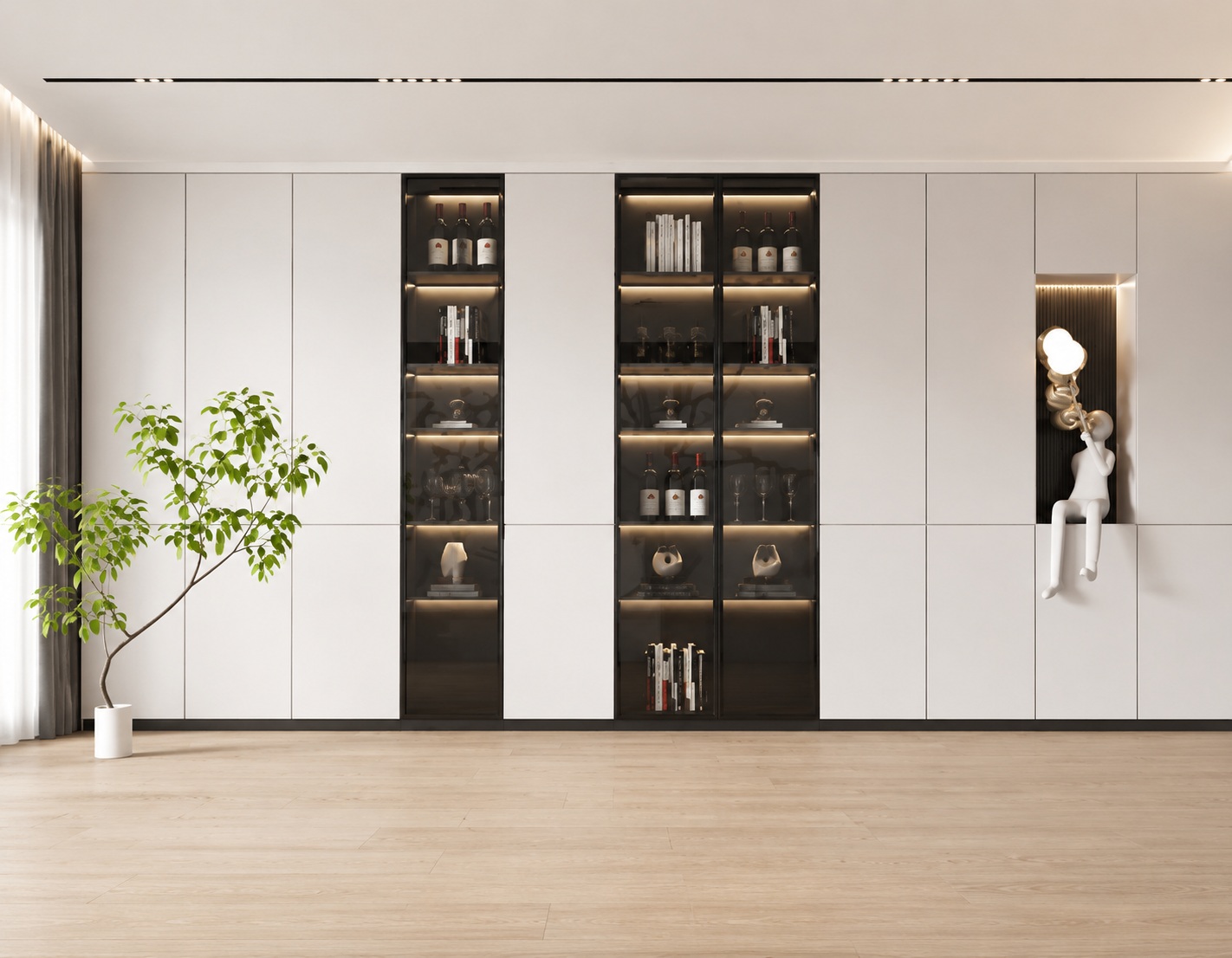


Wine Bar Cabinet
A wine bar cabinet brings the collection out where it belongs. Bottle storage holds at the right angle. A tasting surface stays ready for the next opening. Stem glasses hang within reach. This is the cabinet for the owner who entertains around wine rather than cocktails: villa wine rooms, heritage new-home dining wings, boutique residences, vacation cellars.
We design and produce each wine bar cabinet around your project. Share a sketch, a room photo, or a design reference. We turn it into a working drawing, fabricate the cabinet to the species and storage layout you choose, and prepare everything for shipment.
Choose the Right Build for Your Collection
Wood Species — Warmth at the Cabinet
Walnut, white oak, or cherry are the species owners pick for wine cabinets. Solid stock at the face frames, with veneered panels where the cabinet runs long, so the grain matches across the panel.
Bottle Storage Cells — Single or Magnum
Standard cells for 750 ml, mixed with magnum cells, or built around the owner's collection mix. We size the cells so bottles sit at the correct angle to keep the cork stable.
Cooler Cutout — Per Owner's Unit
Cutout sized for the wine cooler the owner has chosen — built-in undercounter or column-style. The working drawing locks ventilation gaps so the unit breathes correctly inside the cabinet.
Glass Rack & Tasting Surface — Stem Glassware
Stem-glass rack above the tasting counter, set at a height that suits the owner’s glass collection. The counter itself runs in stone or hardwood — surface choice set with the room palette.
Where It Fits — Four Common Project Types
Villa Wine Room
A dedicated wine room off the main living or dining space, often paired with a cooler column or a small tasting table. Walnut or oak in a deeper stain reads warm under the lower lighting that wine rooms tend to use.
Heritage New Home
New homes built in traditional or heritage character where the dining wing carries joinery rather than open shelving. The wine cabinet matches the species and finish of the rest of the dining-room millwork.
Boutique Residence
Smaller high-end residences where space is at a premium and the wine cabinet doubles as the entertaining surface. We size the cells around the owner’s collection rather than a fixed template.
Vacation Cellar
Second-home cellars where the owner stocks for visiting weeks. The cabinet sits at the entry to the cellar or in the adjoining lounge — bottle storage at the wall, tasting surface at the room.
From Sketch to Site — Three Stages
Share a sketch, room photo, or design reference — that’s enough to start. We turn it into a working drawing for the cabinet. The drawing covers species, finish, bottle-cell layout, cooler cutout, and the glass-rack details your installer will need.
We assemble the carcass, doors, shelving, bottle cells, glass rack, and hardware in full. The team photographs the unit in our Guangdong workshop before taking it apart for shipping. Each component ships labeled, so on-site assembly stays straightforward — typically bolt-together, not site-fabricated.
Wooden crates built for ocean freight, lined to protect finished surfaces, packed in the order your installer will assemble. Shipped to 60+ countries — including the USA, Australia, the EU, and across Asia.
After delivery, your contractor or installer handles fitting. We provide an assembly guide and a step-by-step video. Where local installation is available in your region, we can help you find a vetted installer.
Wine Bar Cabinet
A Wine Wall for the Living Room — Display and Storage on One Face.
Plenty of wine lives in a box in a cupboard, out of sight and out of mind. Many owners want the opposite. They want the collection on the wall of the room where they actually relax, near the dining table, where a guest can read the labels over dinner. The bottles become part of the interior rather than a chore in the garage.
Owners usually approach us about a wall that already exists in a finished residence. The dining room is complete, the joinery is installed, and a bare stretch of wall awaits the wine. So the brief carries two purposes at once. The wall has to present the bottles like a display, and still hold a genuine working quantity behind the arrangement.
Display or Capacity — the Choice That Shapes the Wall.
In a room the household actually uses, the wine wall is pulled two ways at once. Pure display turns each bottle face-out under light, which looks superb but holds too few for a real collection. Pure storage packs the bottles tight on their sides, which suits a cellar yet reads as a wall of cork ends in a dining room. So the living-room wall cannot sit at either extreme; it has to earn its place as furniture and still hold a working quantity.
So the common answer combines the two on one face. A display band runs at eye level, where a few labels face the interior and catch the light. Denser storage occupies the cells above and below, where the working bottles await their turn. The wall then resembles a showcase and operates like a store.
The trade-offs stay honest, as ever. A taller wall holds more but requires a step for the upper rows, and a glass door guards against dust at the cost of a little reach. A tasting counter is a lovely addition, yet it exchanges a stretch of storage for the surface. We discuss all of this thoroughly before a single cell is drawn.
How the Wall Fits a Room You Already Live In.
Matching the Joinery Already There.
A wine wall in a finished room cannot ignore the cabinetry beside it. The dining sideboard, the door frames, and the skirting all carry a colour and a grain the eye already recognises. We match the species and the stain to that existing run as closely as a new commission allows, so the wine wall reads as part of the interior rather than an element introduced later.
Working Around a Fixed Alcove.
Many living rooms offer a recess, a chimney breast, or a clearance between two walls where the wine belongs. That opening is fixed, so we proportion the wall to the alcove rather than asking the architecture to change. The cells occupy the width that exists, and the frame meets the surrounding wall cleanly. We draw the unit to the opening you have, not to a catalogue dimension.
Room for the Owner's Cooler.
Some owners pair the display with a cooling appliance they have already chosen. We build the bay around that unit and leave the ventilation clearance it needs to breathe inside the wall. The cabinet then accommodates the owner's own cooler without a struggle, and the display sits comfortably above or beside it.
What Coordination Looks Like for a Living-Room Wine Wall.
Drawing-First Coordination starts with the wall as it stands today. We confirm the opening, the skirting line, and the colour of the joinery already in the interior before we cut anything. The display band, the storage cells, and any cooler bay all get drawn to scale in the same pass. The working drawing settles the appearance on paper first.
Trial Assembly Before Packing then stands the whole wall upright on our Guangdong workshop floor. We load the cells, fit the display lighting, and compare the finish against the sample for the interior. Then we disassemble the wall and label each component for transport. The assembly in your home becomes an ordered bolt-together operation rather than guesswork.
Export-Ready Crating packs the components in the sequence your installer will raise them. We cushion the cells and the display lighting and protect the finished faces for the long ocean leg. The crate arrives ready to open, sort, and assemble straight against the drawing.
What to Send Us About Your Wall.
A photo of the wall and the joinery beside it tells us a great deal. Add the width and height of the area you want the wine to occupy, bounded by any alcove or recess. Then tell us the rough bottle quantity you would like to keep at hand.
One more line establishes the balance of the wall. Tell us whether you lean toward display or storage, and whether a cooler or a tasting shelf belongs in the arrangement. From there we develop your notes into a working drawing and a wall ready to ship.
After delivery, fitting is on your side. On site, your contractor or installer handled fitting directly from our drawings, with our assembly guide and step-by-step video to follow — or use your own local installer where needed.
Chat on WhatsApp →Compare the Home Wet Bar Cabinet → · see the Coastal Bar Cabinet → · or browse the full Bar Cabinet range → and all our cabinetry →