

Aluminum Louvered Pergola | Custom by DBM Factory


Aluminum Louvered Pergola
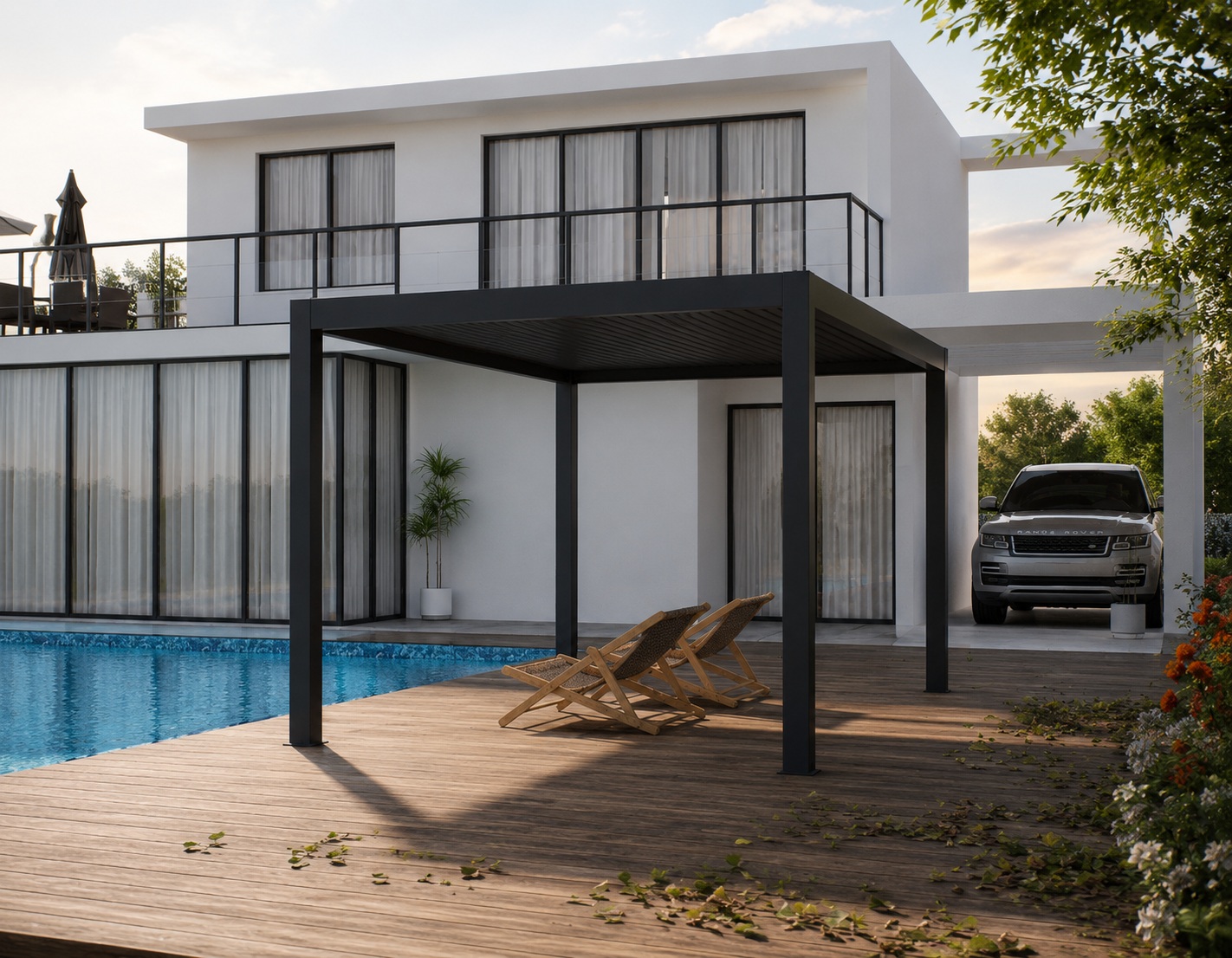
A louvered aluminum pergola turns an outdoor area into a room you can shape across the day. Open the louvers in the morning to let the sun in. Angle them at midday to throw soft shade across the lounge. Close them when the rain comes. The aluminum frame keeps the look clean and the upkeep light — a quiet match for villa pool patios, coastal residences, and modern new-home backyards.
We design and produce each louvered pergola around your project. Share a sketch, a site photo, or a design reference. We turn it into a working drawing, fabricate the frame and louvers, and prepare everything for shipment.
Choose the Right Build for Your Setting
Louver Angle Control — Hand or Motor
Manual hand-crank for cottages and smaller patios. Motorized rotation where the owner wants a switch beside the door or a remote on the table. Both share the same blade profile.
Frame Finish — Powder-Coat Palette
Matte black is the common villa pick. Bronze warms a stone or timber palette. White lifts the look on a coastal residence. Custom RAL on request when the architect has set the exterior colors.
Span Options — Per Drawing
Single bay over a dining setting, or several bays chained over a pool deck. Final span and post layout are set on the working drawing so it sits cleanly against the architecture.
Drainage — In-Frame Gutters
When the louvers close, water runs into channels built into the beams and down through the posts — out of sight from the patio. Local wind loading is referenced to AS 1170.1 on the drawing where the project sits in Australia.
Where It Fits — Four Common Project Types
Villa Pool Patio
The pergola sits over the lounge end of the pool deck. Louvers stay open while the family swims, close when the heat peaks at midday. Matte bronze frame is a common pick where the villa palette leans warm.
Coastal Residence
Aluminum handles the salt-air exposure that timber pergolas struggle with on seaside lots. White or light-bronze finishes match the elevation typical of coastal architecture.
Modern New-Home Backyard
Drawn into the architect's plan as a defined outdoor room off the great-room sliders. Clean lines and a matte black finish keep the pergola visually quiet, so it reads as part of the building rather than an add-on.
Boutique Vacation Property
Owner-operated short-stay homes where the outdoor area is part of the guest experience. The adjustable louvers handle changing weather across the booking week without anyone needing to roll an awning in and out.
From Sketch to Site — Three Stages
Share a sketch, site photo, or design reference — that’s enough to start. We turn it into a working drawing for the pergola. The drawing covers bay layout, louver direction, post positions, and the connection details your installer will need.
Frame, louvers, drive mechanism, and drainage channels are fully assembled and photographed in our Guangdong workshop before being taken apart for shipping. Each component comes labeled, so on-site assembly is straightforward — typically bolt-together, not field-welding.
Wooden crates built for ocean freight, packed in the order your installer will assemble. Shipped to 60+ countries — including the USA, Australia, the EU, and across Asia.
After delivery, your contractor or installer handles fitting. We provide an assembly guide and a step-by-step video. Where local installation is available in your region, we can help you find a vetted installer.
Aluminum Louvered Pergola
Over the Pool Deck — Shade That Follows the Sun Across the Afternoon.
A pool deck is the hardest part of any garden to shade properly. The sun travels continuously through the afternoon, and a fixed roof either obscures the view or abandons the loungers to glare by four o'clock. The owner wants direct sunlight on the water at midday, then comfortable shade by the time the guests arrive.
Owners usually approach us once the swimming pool itself is finished and the surrounding deck still bakes in the open. A solid canopy would darken the entire area and trap the accumulated heat below it. So the brief is rarely about a roof at all. It concerns adjustable daylight the owner can increase or reduce as the afternoon progresses.
Why Tilting Blades Beat a Fixed Roof Here.
The pool is the whole reason, and the moving roof is the practical answer to it. A fixed slat roof projects identical shade all day, so the deck sits dark at noon and bright at dusk. A bank of tilting blades instead lets the owner open the roof toward the sun, then close it again as the heat peaks. The same structure delivers full sunlight and deep shade from a single frame.
That control is exactly what suits a swimming pool. Open blades release warm sunlight onto the water for a midday swim. A small adjustment to the angle lifts the glare off the loungers without darkening the surrounding deck. By late afternoon the owner closes the roof and the seating area cools, while the pool stays bright a step away.
The trade-offs remain honest, as ever. A moving roof carries blades, a drive mechanism, and bearings that a plain canopy does not, so the structure costs more than a simple fabric shade sail. Where the deck occupies the open sun and earns daily use, though, the adjustable configuration typically justifies its keep against a fixed cover.
How the Pool Deck Shapes the Build.
Which Way the Blades Run.
Blade direction follows the path of the sun, not the shape of the deck. We position the louvre run across the arc the sun travels, so a small adjustment tracks it from late morning to dusk. The orientation is fixed on the working drawing against the deck's aspect, so the shade covers the loungers when the heat is strongest, never the empty paving behind them.
Where the Water Goes.
A pool deck is a wet area, and a closed roof has to clear its own rainwater cleanly. When the blades shut, the runoff drains into the perimeter beam and down through a hollow post, away from the paving where people walk barefoot. We detail that drainage path on the drawing, so the discharge point sits clear of the deck rather than collecting at a post base.
Open Water or Salt Air.
Chlorine and salt both work aggressively on metal near a swimming pool. The aluminium frame carries a powder-coat finish that maintains its colour against that exposure, and the blade bearings are dimensioned to keep pivoting smoothly for years in the damp surrounding air. A coastal pool, exposed to sea spray, demands the same protection across every fixing. We match the specification to the environment the structure will occupy.
What Coordination Looks Like for a Poolside Structure.
Drawing-First Coordination starts with the deck and the sun. We establish the post positions, the blade direction, and the clearance to the pool edge before anyone cuts metal. A pool surround rarely sits perfectly level, so the working drawing resolves the post heights and the drainage gradient early, and prevents a scramble on site later.
Trial Assembly Before Packing then stands the complete frame upright on our Guangdong workshop floor. We fit the blade array, operate it through its full tilt, and confirm the louvres open and close without a snag. Then we take the structure back down and label each component, so the build on your deck becomes an ordered bolt-together operation, not field welding beside the water.
Export-Ready Crating packs the parts in the order your installer will raise them on site. We seat the heaviest beams low and wrap the blades against knocks for the long ocean leg ahead. The crate lands ready to open and sort, with the finish protected against the salt of the voyage.
What to Send Us About Your Deck.
A rough sketch or a quick phone photo of the pool and its surround gives us plenty to begin with. Mark which way the deck faces, so we can read where the sun sits through the afternoon. Then note the area you want covered, and the height you have to the underside of the frame.
One more line of detail helps us read the air around your site. Tell us how close you sit to the coast, and your nearest large town so we can check the local wind zone. From there we turn your notes into a working drawing and a structure ready to ship.
After delivery, fitting is on your side. On site, your contractor or installer handled fitting directly from our drawings, with our assembly guide and step-by-step video to follow — or use your own local installer where needed.
Chat on WhatsApp →Compare the Aluminum Freestanding Pergola → · see the Motorized Pergola → · or browse the full Pergola range →