




Deck Curved Stairs | Custom by DBM Factory


Deck Curved Stairs
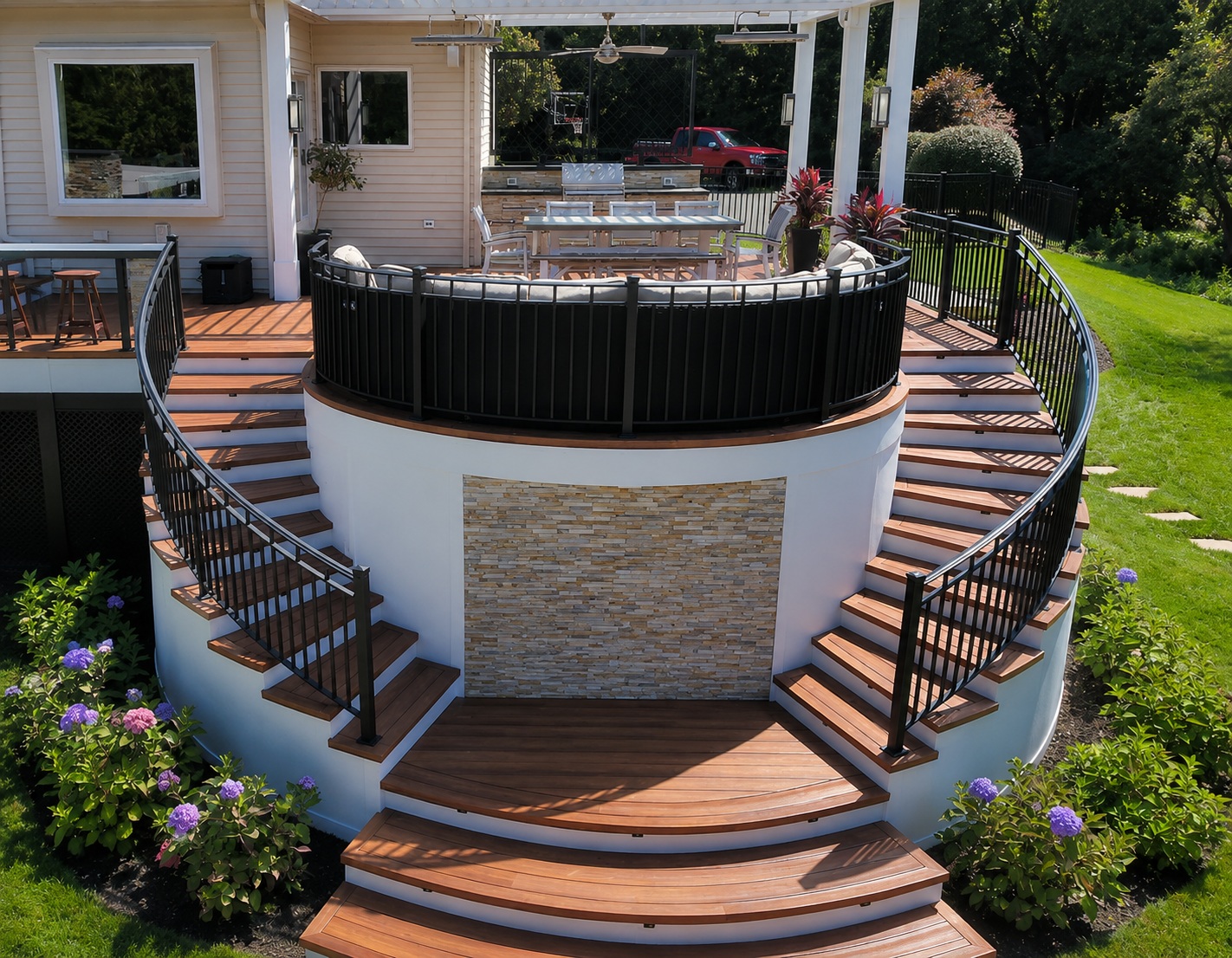
Deck curved stairs turn a flat-edge level change into a moment in the garden. The arc softens the drop, opens the sightline, and invites you onto the next deck or down to the lawn.
We build to your drawing and the conditions of the site. Share a photo, sketch, or landscape plan, and we work out the radius, the tread, and the finish.
Pick the Material That Suits the Site
Galvanized Steel — Garden & Inland Decks
Custom-rolled stringer with zinc coating. The everyday durable choice for back-garden decks and inland-property level changes.
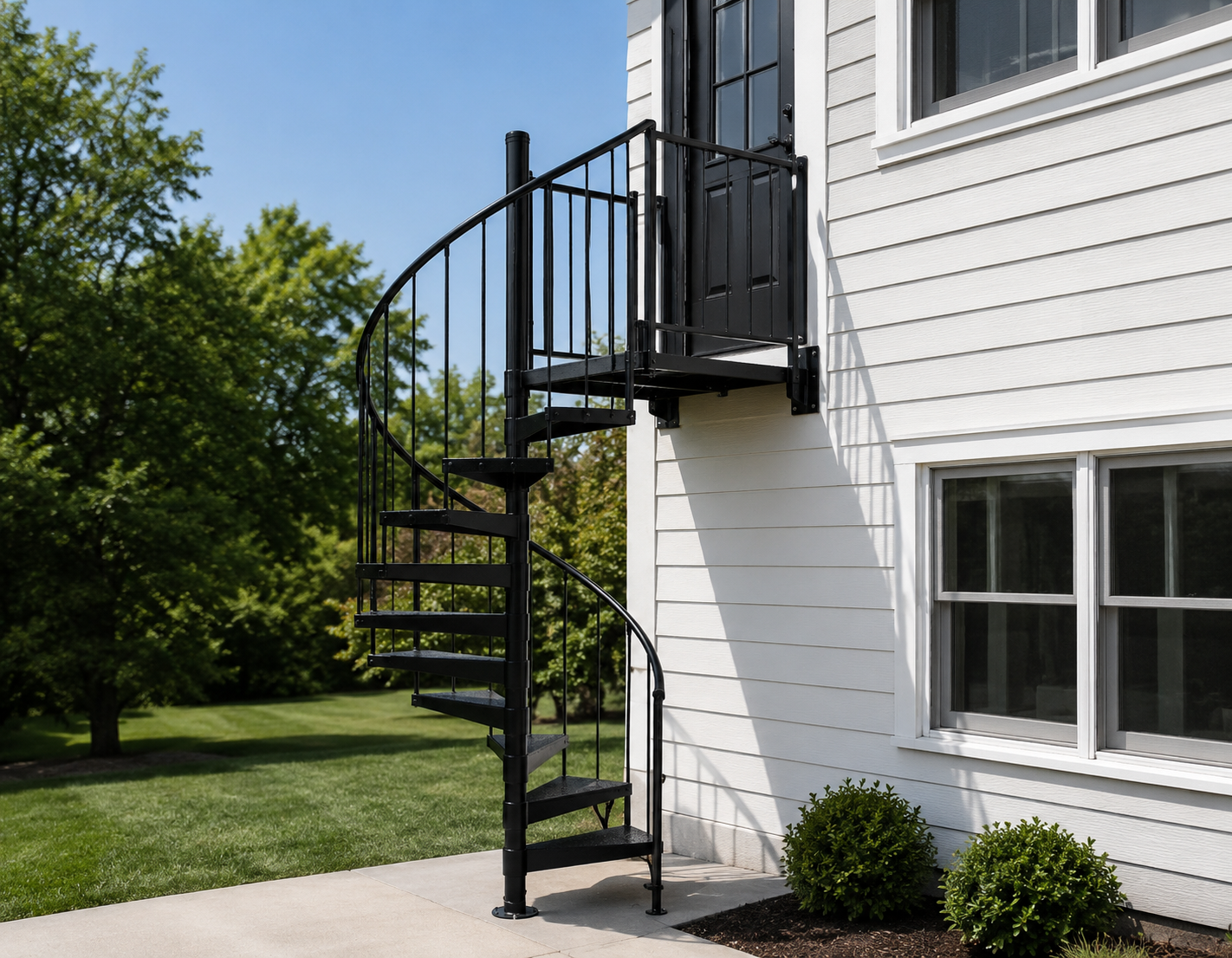
Aluminum — Lighter Decks & Rooftops
Rolled aluminum stringer where weight matters — rooftop terraces, balcony-level decks, soft-soil garden sites. Anodized or powder-coat finish.
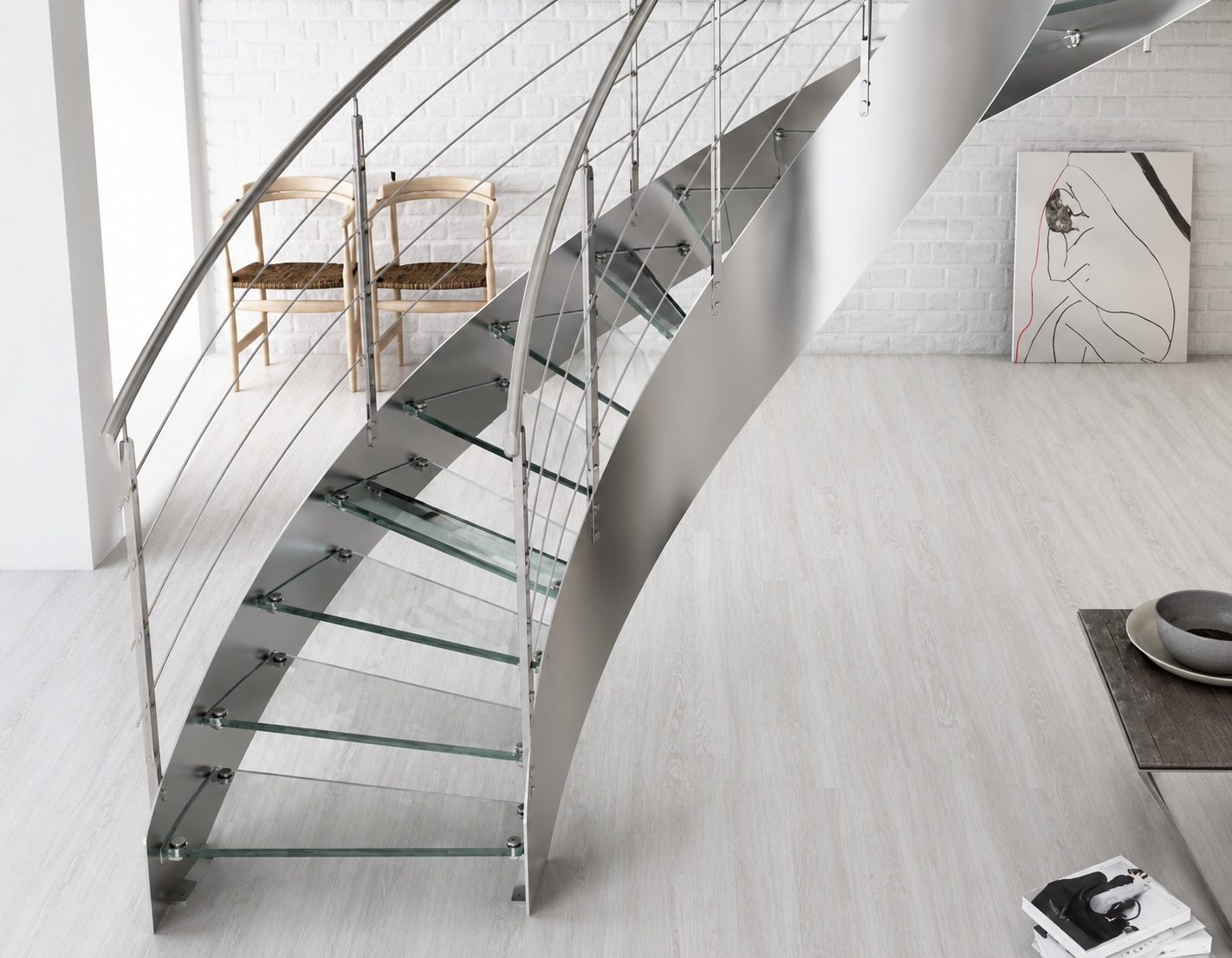
Stainless Steel — Pool Edge & Coast
For pool-deck transitions and coastal homes where salt or chlorine would shorten the life of plain galvanized. The choice when the curve needs to last.
Tread Choice — Wood / Composite
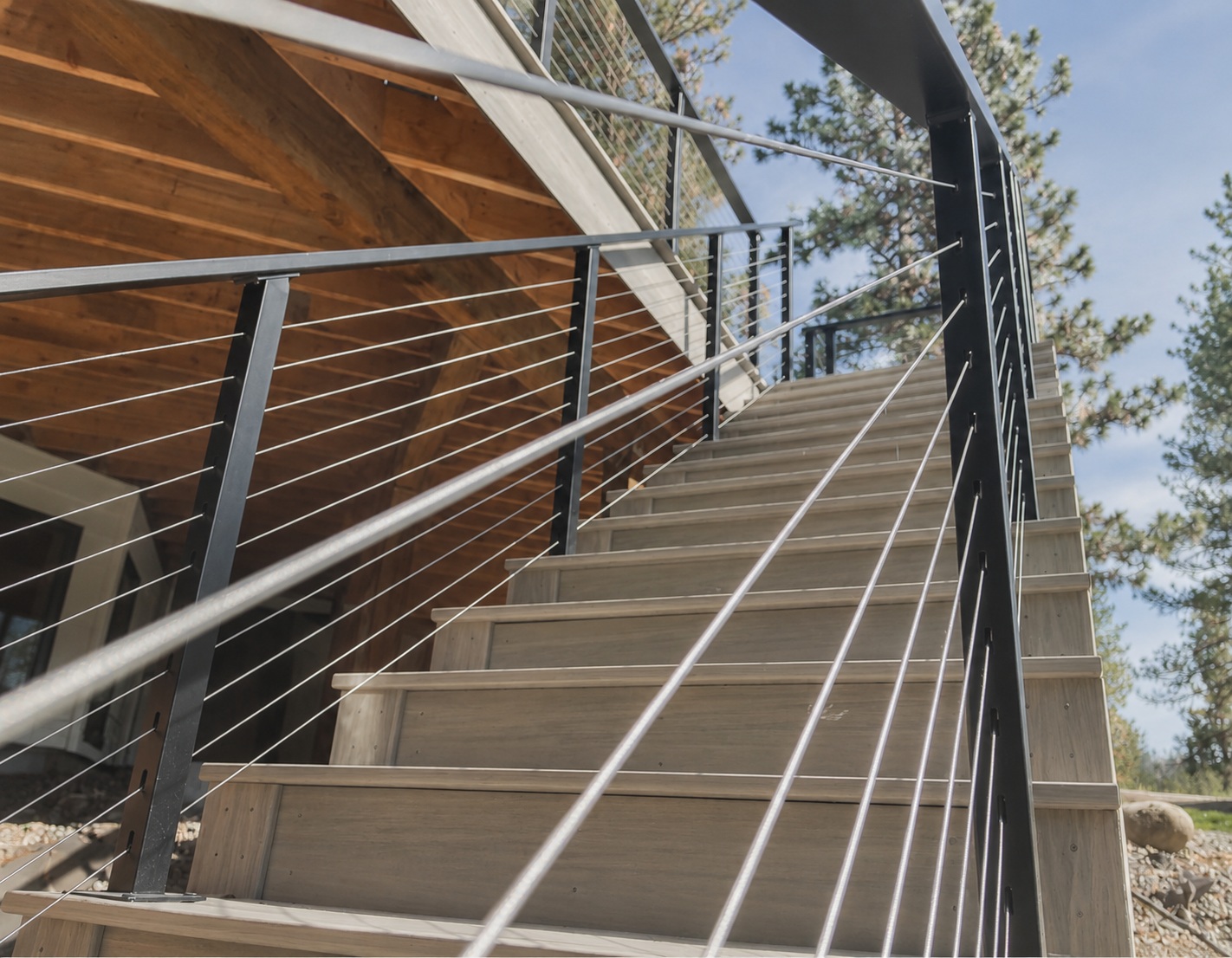
Solid ipe or teak for villa gardens. Wood-plastic composite board where you want low maintenance. Steel pan if the deck calls for a more industrial finish.
Where It Fits — Four Common Project Types
Villa Gardens & Terrace Drops
Stone-edged garden levels, formal lawn drops, raised terraces. The deck curved stair carries the level change without breaking the sweep of the planting.
New Home Outdoor Living
Drawn in from the landscape plan. The curve becomes the route from the back-door deck out to the lawn or down to the firepit garden level.
Apartment Balcony & Rooftop Deck
Premium-unit terraces with split levels, rooftop deck transitions, double-balcony arrangements. Aluminum keeps the weight down on slabs.
Pool House & Pool-Edge Decks
Curved approach from terrace to pool deck. Stainless or marine-grade aluminum holds up to splash and sun where everyday finishes wouldn't last.
From Sketch to Site — Three Stages
Share a sketch, photo, or landscape plan. We draw the radius, tread shape, stringer, and railing. The anchor type follows your deck or slab.
Every curved deck stair is fully assembled and photographed in our Guangdong workshop before being taken apart for shipping. Each fan-shaped tread is fitted to its position and labeled.
Wooden crates built for ocean freight, packed in the order your installer will assemble. The rolled stringer ships protected. Shipped to 60+ countries.
After delivery, your contractor or installer handles fitting. We provide an assembly guide and a step-by-step video. Where local installation is available in your region, we can help you find a vetted installer.
Deck Curved Stairs
When the Curve Links Two Outdoor Levels — the Anchoring Decides the Build.
An outdoor level change is a quieter problem than an indoor one. The curve has to carry people from a raised deck down to a lawn or a lower terrace, and it has to do so on whatever the garden offers at the bottom. So the brief here is rarely about the arc on its own. It is about where the staircase lands and what holds it there.
Owners reach us once the upper deck exists and the route down still feels abrupt. A straight flight would cut hard across the planting, while a gentle curve carries the descent without breaking the sweep of the garden. The catch sits underneath. The top fixes neatly to the deck frame, yet the foot has to meet a surface that is rarely as solid as an indoor floor.
Why the Landing Surface Drives the Whole Detail.
The top connection is the straightforward end of the problem. A curved deck stair fixes to the deck frame or the slab edge with a steel landing bracket, which we detail to the structure already there. That part of the anchoring rarely surprises anyone, because the deck gives a known surface to bolt against.
The foot of the curve is where the engineering decisions actually live. A flight that lands on a concrete patio meets a firm, level surface, so the baseplate connection stays simple. A flight that lands on soft garden soil needs a footing the ground can hold, which is a separate foundation decision the owner generally arranges with a local builder. The same staircase carries either base condition, yet the detail beneath it shifts with the surface.
The drop height ties the two ends together. A shallow descent of a few steps reads as a gentle transition and asks little of the structure. A taller drop across a steeper garden gradient calls for a deeper stringer section and a firmer foundation at the base. We resolve the configuration against the actual difference in elevation, rather than a generic deck-stair dimension.
How the Curve Adapts to What the Garden Offers.
A Solid Slab vs Soft Soil.
The ground at the foot determines the base detail more than anything else. A concrete patio or paved terrace gives a firm bearing surface, so the baseplate sits flat and the connection stays direct. Soft lawn or planted soil needs a prepared footing underneath, which the owner arranges locally to suit the particular ground condition. We draw the baseplate and the fixing pattern, and we clearly identify where the local footing has to take over.
A Rooftop Deck vs a Garden Drop.
Weight starts to matter once the deck sits over a slab or a structure. A rooftop terrace or a balcony-level deck often calls for a lighter rolled aluminium stringer, so the load stays gentle on the surface below. A ground-level garden drop can carry a heavier galvanised section comfortably. The configuration follows the capacity the supporting structure can reasonably accommodate.
A Single Run vs a Split-Level Garden.
Some gardens drop in one move, and some step down in stages. A single curve handles a clean descent from deck to lawn in one continuous sweep. A terraced garden with several levels may want a curve at each drop, sharing one material and one finish across the set. We coordinate the run as a family of staircases, so the separate descents read as one continuous outdoor language.
What Coordination Looks Like for an Outdoor Curve.
Drawing-First Coordination starts with the level difference and both end surfaces. We pin down the deck frame at the top and the landing surface at the foot before anyone cuts metal, because the anchoring detail depends entirely on what sits at each end. The working drawing resolves the baseplate, the fixing pattern, and the stringer section on paper first.
Trial Assembly Before Packing then stands the whole curve upright on our Guangdong workshop floor. We fit every fan-shaped tread to its place on the arc, check the landing bracket, and photograph the result. Then we take the staircase down and label each part, so the build on your deck becomes an ordered bolt-together job rather than guesswork outdoors.
Export-Ready Crating packs the parts in the order your installer will raise them. We protect the outdoor finish against knocks and moisture for the long ocean leg ahead. The crate lands ready to open and stack, with the heaviest pieces seated low for a safe lift.
What to Send Us About Your Deck.
A photo of the deck and the level below gives us plenty to begin with. Add the height of the drop, which is simply the distance from the deck surface down to the lower ground. Then tell us what the foot will land on, whether a paved patio, a concrete slab, or open garden soil.
One more note helps us read the site. Tell us how close you sit to the coast or a pool, and whether the deck rests on the ground or over a structure. From there we turn your notes into a working drawing and a stair ready to ship.
After delivery, fitting is on your side. On site, your contractor or installer handled fitting directly from our drawings, with our assembly guide and step-by-step video to follow — or use your own local installer where needed.
Chat on WhatsApp →Compare the Metal Curved Stairs → · see the Outdoor Curved Staircase → · browse the full Curved Staircase range → · or explore all our staircases →