

Metal Curved Stairs | Custom by DBM Factory


Metal Curved Stairs
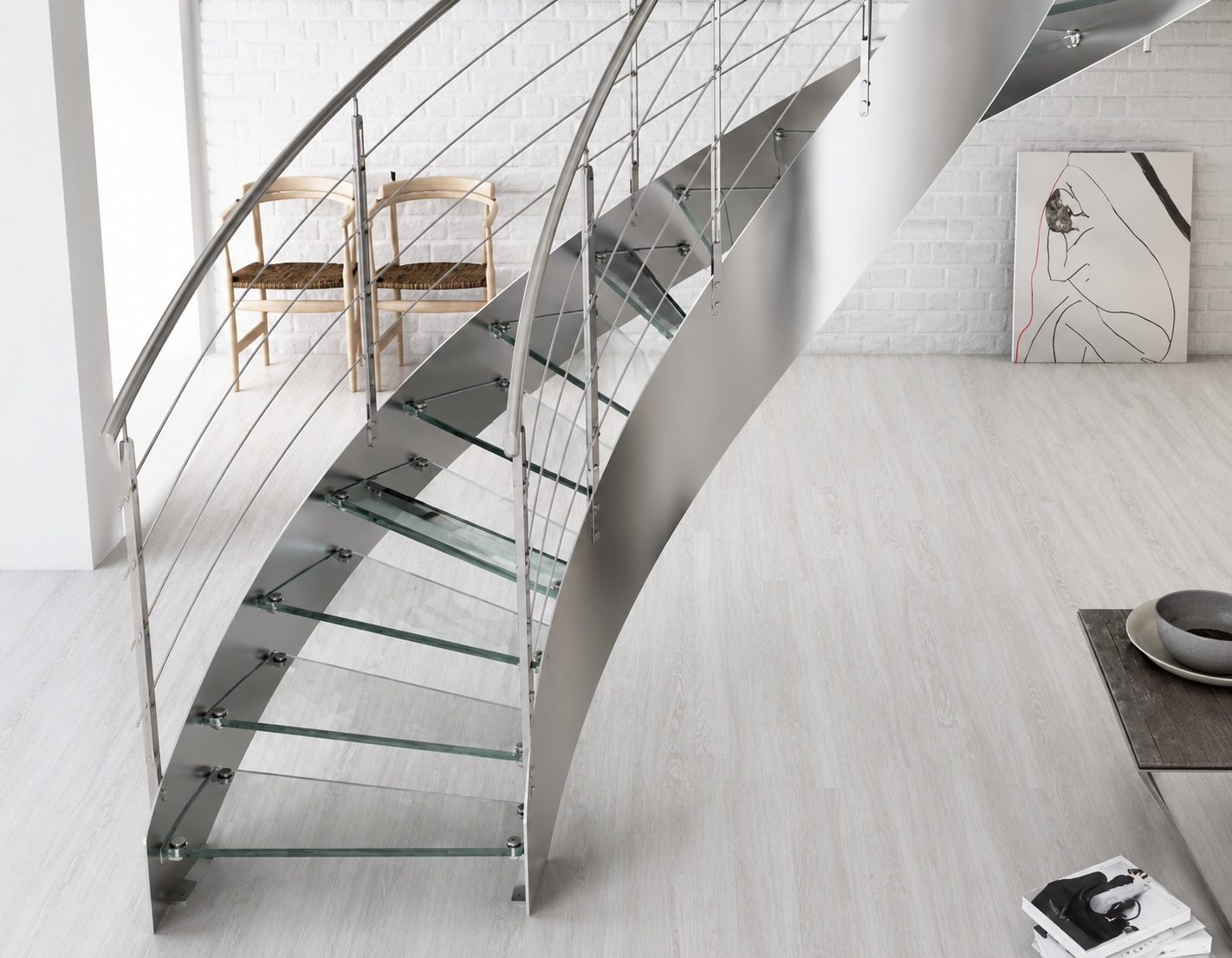
Steel curved stairs handle the spans the soft-material stairs cannot. A wide foyer, a tall lobby, a stair that carries many people every day — the structural steel curve does it without flex or fuss.
We custom-roll each stringer to your drawing and finish it to your palette. Share a sketch or CAD, and we work out the curve, the connections, and the fit.
Decide the Steel, the Finish, and the Tread
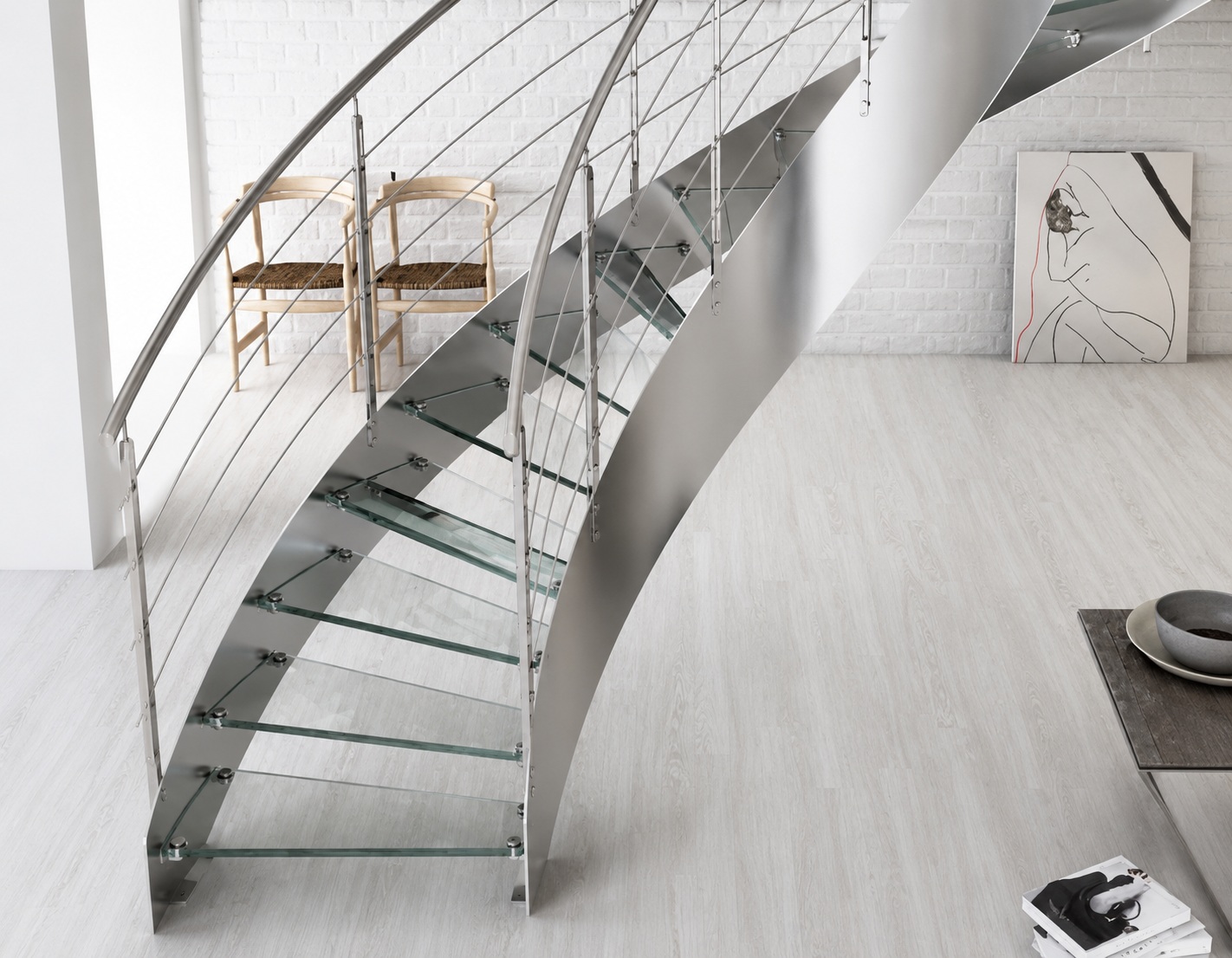
Carbon Steel Stringer — The Common Choice
Rolled to your radius with the section sized for the span and the load. The workhorse choice for wider stairs and busier rooms.
Powder-Coat Finish — Colour to Palette
Custom colour matched to the room. Matte black is the everyday request; soft charcoals and warm whites for lighter interiors.
Tread Choice — Wood, Stone, Pan
Solid timber for the entry-warmth read. Stone or composite for a quieter modern feel. Steel pan with concrete fill where the brief is fully architectural.
Connection Style — Bolted On-Site
Each section ships shop-welded and on-site bolted. No field welding needed in most projects — the connections come labeled and torque-spec'd.
Where It Fits — Four Common Project Types
Villa & Country Home Foyers
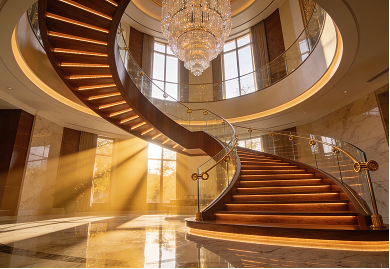
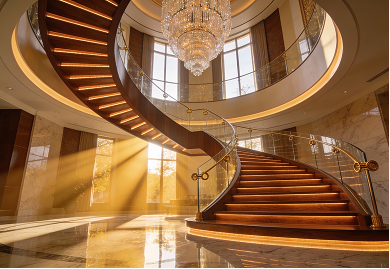
Wide entry halls with a tall ceiling. The steel curve carries a generous span without thick visible structure underneath — the arc reads cleanly across the room.
Multi-Unit Common Areas
Premium lobbies, club levels, top-floor common spaces. A steel curved stair built to take the daily traffic without complaint.
Mixed-Use Lobbies
Office foyers, retail mezzanines, atrium spaces where the stair is part of the design signature and also part of how the room works every day.
Boutique Hospitality Properties
Small hotels, restaurant entries, gallery spaces. A structural steel curved stair that holds up to a busy property without losing its quiet line.
From Sketch to Site — Three Stages
Share a CAD, sketch, or design reference. We turn it into a working drawing covering the radius, the steel section, the tread fan, the connection style, and the finish.
Every curved staircase is fully assembled and photographed in our Guangdong workshop before being taken apart for shipping. Each section is checked at the connection points and labeled.
Wooden crates built for ocean freight, packed in the order your installer will assemble. The rolled stringer ships protected. Shipped to 60+ countries.
After delivery, your contractor or installer handles fitting. We provide an assembly guide and a step-by-step video. Where local installation is available in your region, we can help you find a vetted installer.
Metal Curved Stairs
When the Span Is Wide and the Traffic Is Heavy — the Steel Section Decides It.
A wide curve in a busy room is an engineering question before it is an aesthetic one. The arc still has to look effortless, yet underneath it must carry a generous span and a steady stream of people without any visible flex. So the brief here turns on structure. The owner wants a clean line above and a steel section sized honestly below.
Owners and their architects reach us when the room is generous and the daily traffic is real. A tall lobby, a wide villa foyer, or a boutique hospitality entrance asks more of the structure than a quiet home stair ever does. A soft-material flight would feel undersized in that setting. The real brief is a curve that spans the room cleanly and absorbs the footfall of a full day.
Why the Span and the Traffic Size the Steel.
The structural logic is plain once you separate the two demands. The span determines how far the rolled stringer must reach between its supports, and a wider reach calls for a deeper steel section to stay rigid. The traffic determines the load the treads carry daily, which the section and the connections also have to absorb. We size the stringer against both figures together, rather than the appearance alone.
The single stringer versus twin stringer decision follows from there. One central rolled stringer keeps the underside clean, which suits a moderate span and a refined modern reading. Two stringers framing the treads add stiffness and distribute the load, which a wider or busier configuration generally needs. The visual preference and the structural demand meet somewhere on the drawing, and we resolve the balance there.
The trade-offs stay honest throughout. A deeper section carries more, yet it reads as heavier from below, so the detailing has to stay disciplined. A more slender profile looks lighter, but it suits a gentler span and a calmer room. We talk through the relationship between the appearance and the capacity before fabrication begins, so neither one quietly compromises the other.
How the Steel Curve Adapts to Span, Load, and Freight.
A Moderate Span vs a Wide Reach.
The distance the curve has to cover sets the depth of the section. A moderate span across a domestic foyer holds its line with a relatively slim rolled stringer. A wide reach across a tall lobby needs a deeper, stiffer section to keep the long arc rigid underfoot. We calculate the configuration against the actual span, never a generic stair dimension.
A Quiet Home vs a Busy Property.
The pattern of use shifts the specification underneath the same look. A private residence sees gentle, intermittent traffic, so the structure answers mainly to the span. A boutique hotel or restaurant entrance carries a steady daily stream, which raises the load the treads and connections must absorb. The arc above can stay identical while the steel beneath it grows to match the footfall.
A One-Piece Curve vs a Bolted Sequence.
Size eventually meets the reality of a shipping container. A smaller curve can travel as a single rolled stringer, ready to stand on arrival. A large structural arc exceeds container length, so we engineer the splice connections and ship it as bolted sections instead. Each joint arrives shop-welded, labelled, and torque-specified, so the sequence reassembles cleanly without field welding in most projects.
What Coordination Looks Like for a Structural Curve.
Drawing-First Coordination begins with the span, the rise, and the support points at each end. We resolve the steel section, the connection style, and any splice positions before anyone cuts metal, because a structural arc leaves no margin for a later guess. The working drawing settles the geometry and the load path on paper first.
Trial Assembly Before Packing then stands the whole curve upright on our Guangdong workshop floor. We check every connection point, confirm the section lines up across each splice, and photograph the result. Then we take the staircase down and label each piece, so the build in your room follows an ordered bolted sequence rather than improvisation on site.
Export-Ready Crating packs the sections in the order your installer will raise them. We seat the heaviest pieces low and protect the finish for the long ocean leg ahead. The crate lands ready to open, sort, and bolt straight against the drawing.
What to Send Us About Your Space.
A sketch or CAD plan of the room gives us a strong start. Add the floor-to-floor height, which is the climb from the lower floor up to the upper landing. Then give us the width of the opening and the span the curve has to reach across.
One more note helps us size the structure. Tell us roughly how busy the space will be, from a private home to a commercial entrance, and whether the look leans clean and slender or frankly structural. From there we turn your notes into a working drawing and a stair ready to ship.
After delivery, fitting is on your side. On site, your contractor or installer handled fitting directly from our drawings, with our assembly guide and step-by-step video to follow — or use your own local installer where needed.
Chat on WhatsApp →Compare the Outdoor Curved Staircase → · see the Wood Curved Stairs → · browse the full Curved Staircase range → · or explore all our staircases →