




Residential Spiral Staircase | Custom by DBM Factory


Residential Spiral Staircase
A residential spiral staircase belongs in living spaces. Quieter underfoot, gentler tread proportions, finishes that fit a home rather than a service stair. The same compact footprint as an industrial spiral, but the steps feel different and the materials read warmer.
We design and build each home spiral around your drawing and finish. Share a sketch, a photo, or your architect's plans and we turn it into a working drawing and a stair ready to ship.
Built Around How It Feels Underfoot
Centre Post — Powder-Coat / Stainless / Bronze
Matte powder-coat is the everyday residential choice. Brushed stainless or antique bronze where the spiral becomes a quieter feature in a designed interior.
Tread Material — Solid Timber / Carpet-Friendly Steel
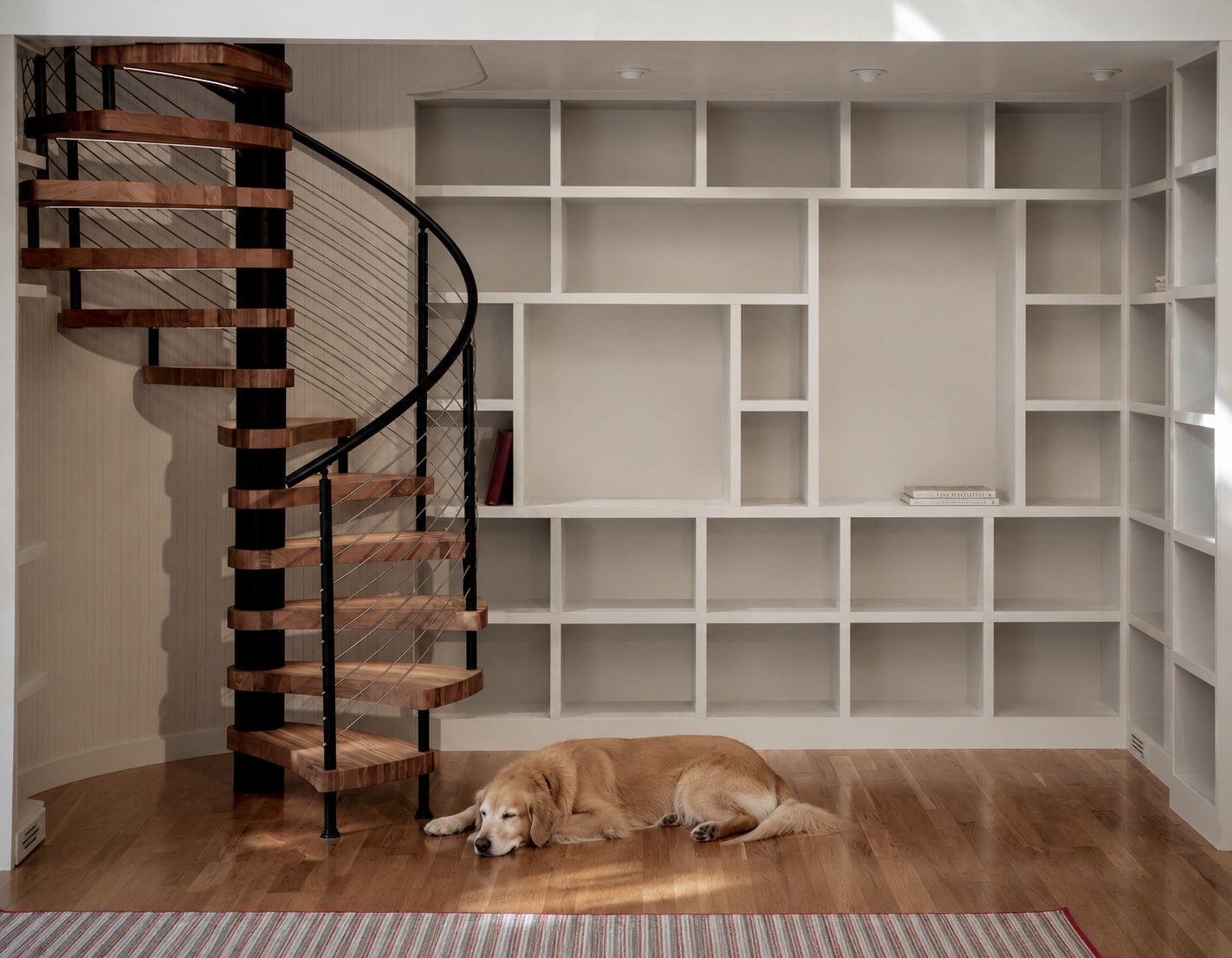
Solid oak or walnut tread is the residential default — warm, quiet, the timber the rest of the floor relates to. Carpet-friendly steel pan is available where the owner wants to drop a stair runner over the tread.
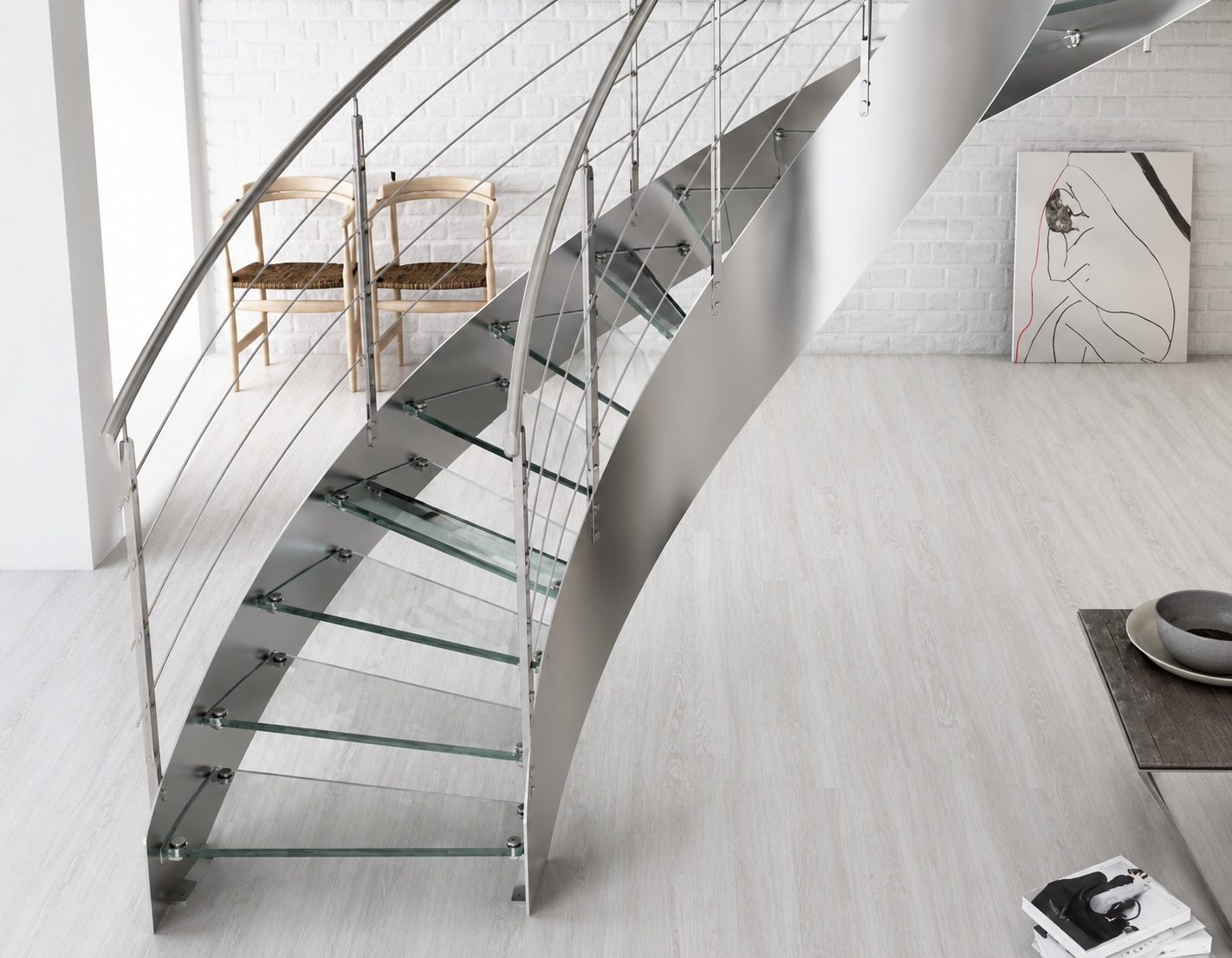
Railing Style — Picket / Wrought / Cable / Glass
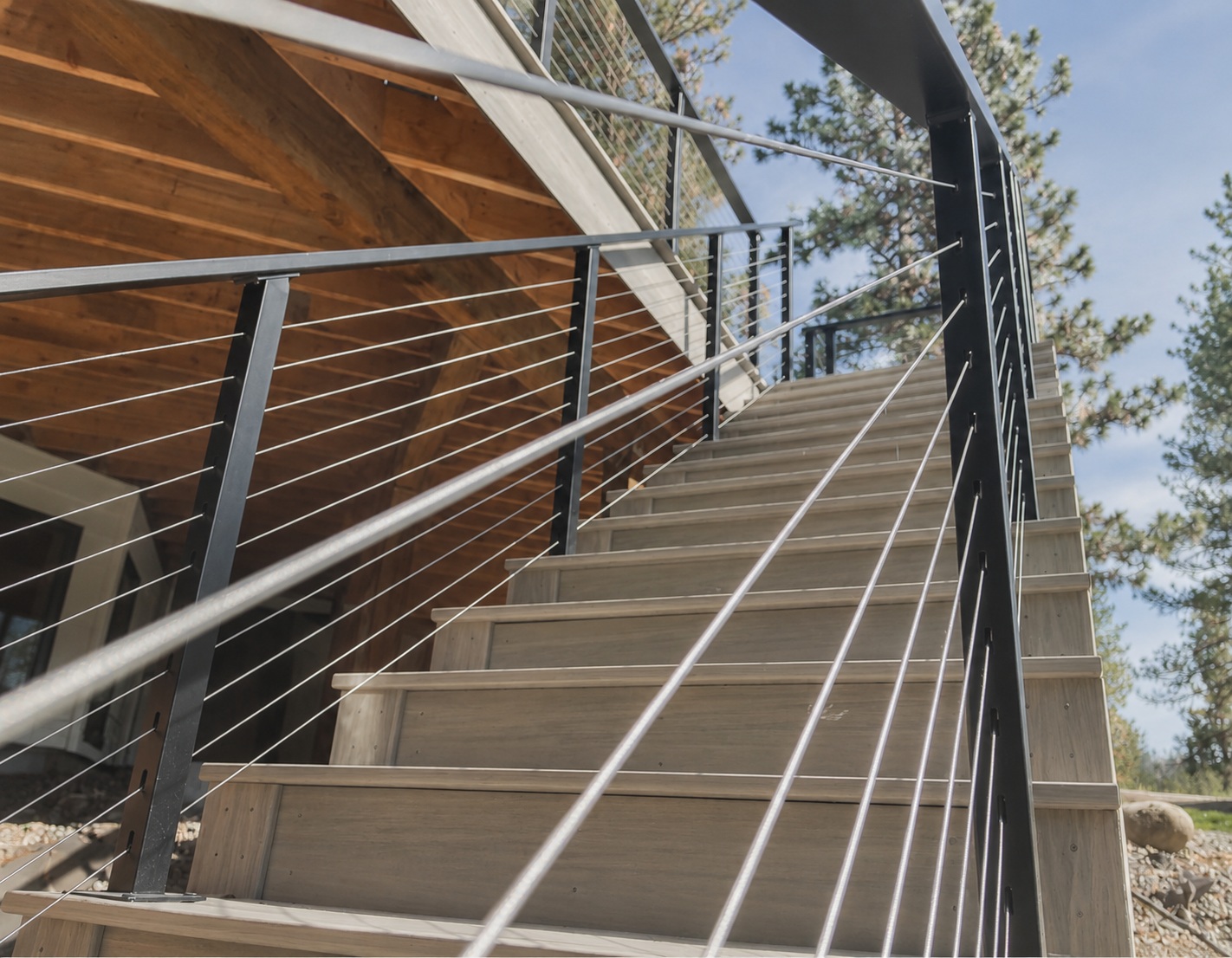
Slim vertical pickets for the classic look. Wrought-style scroll work for traditional villas. Cable infill or curved glass where the home reads modern.
Finish Detail — Handrail / Tread Edge
Continuous timber handrail wraps the helix in a single smooth curve. We round the tread edges for residential touch and finish rather than leave them as a pure metal lip.
Where It Fits — Four Common Project Types
Villa Family Home
Where the home spiral is part of daily family life — bedrooms upstairs, children on the steps every morning. Timber tread, continuous handrail, a finish chosen to age quietly with the house.
New Home Build — Designed Interior
A residential spiral staircase drawn in from the architect's plans, sitting inside a finished interior. We choose the proportions and tread feel for the way the home will be lived in, not for a service stair.
Apartment Owner Residence
For duplex and penthouse owners where the spiral is a daily stair, not a feature shown on a tour. Soft tread, a quiet finish, a handrail the owner reaches for without thinking about it.
Vacation Home & Second Residence
Lake houses, mountain cabins, coastal second homes. A residential spiral fits into the smaller floor plan of a holiday property. The upper level gets the same finish quality as the main floor.
From Sketch to Site — Three Stages
Share a sketch, photo, or your architect's plans — that's enough to start. We turn it into a working drawing covering the diameter, tread profile, handrail, railing style, and the connections at top and bottom landing.
We dry-assemble and photograph every spiral in our Guangdong workshop. Our team checks tread fit and handrail curve one step at a time, then applies the finish. We review the helix end-to-end before breaking it down for shipping.
We build wooden crates for ocean freight and protect the finish and timber treads. We pack components in the order your installer will assemble. We ship to 60+ countries — including the USA, Australia, the EU, and across Asia.
After delivery, your contractor or installer handles fitting. We provide an assembly guide and a step-by-step video. Where local installation is available in your region, we can help you find a vetted installer.
Residential Spiral Staircase
When the Stair Is Climbed Every Day — Designing a Round Stair Around a Household's Routine.
A spiral in a family home is not a showpiece glimpsed on a tour. It is climbed before breakfast, carried down with laundry, and taken in slippers late at night. So the brief becomes quietly practical, governed less by the photograph and far more by the everyday rhythm of the people living around it.
Owners usually reach us once the home is genuinely settled. Children use the steps each morning, guests arrive at weekends, and the household expects to stay for many years. What they are weighing is how a round stair behaves across all of that, comfortably and quietly, long after the novelty has worn off.
Why Daily Comfort Outranks the First Impression.
A round stair that lives in a home succeeds on the feel underfoot rather than the silhouette. A generous tread arc gives each step a reassuring, predictable depth, so the climb stays relaxed even when arms are full. A continuous handrail wrapping the helix lets a hand follow the turn naturally, which matters most on the unlit trip down at night.
The materials then settle into the background of ordinary life. A timber tread stays quieter and warmer than bare metal, a genuine difference for a household crossing it constantly. A rounded tread edge feels kinder to a bare foot, and a considered finish hides the everyday marks a busy family inevitably leaves behind.
So the early conversation explores the routine rather than the render. We discuss who climbs the stair, how often, and at which hours the house grows dark and quiet. Only afterwards does the working drawing tune the proportions toward genuine daily ease.
How the Same Stair Suits Different Households.
A Young Family vs a Settled Couple.
Who lives in the home naturally reshapes the priorities. A household with young children leans toward closer balusters, a softer tread surface, and a handrail height that suits a smaller reach. A settled couple instead values an easy, gentle gradient and a dependable grip, the qualities that keep a stair comfortable across many quiet years.
An Everyday Route vs an Occasional One.
How often the stair is climbed changes how hard it must work. A main route between living floors faces constant traffic, so the tread surface and the handrail both deserve real durability. A stair to a guest room or a study sees gentler, occasional use, which leaves more freedom for a lighter, more decorative treatment.
A Carpeted Step vs a Bare Tread.
The way a household wants the stair to sound also guides the build. A runner softens the footfall and warms the look, so the treads are prepared to hold it neatly. A bare timber tread instead stays clear and sculptural, finished and rounded at the edge for comfortable everyday contact.
What Coordination Looks Like for a Daily Home Stair.
Drawing-First Coordination begins with the routine alongside the measurements. We record who uses the stair and how often, beside the floor levels and the upper opening. The tread feel and the handrail height are settled here, so the climb genuinely suits the household rather than a standard template.
Trial Assembly Before Packing then stands the whole spiral upright across our Guangdong workshop floor. Our team confirms the tread fit and the handrail curve one step at a time, then applies the finish. We review the helix turn by turn, photograph the result, and take it apart with care, labelling every part for a clean rebuild on your side.
Export-Ready Crating afterwards protects the finished treads and handrail against knocks and moisture across the long ocean passage. We seat the heaviest pieces low for a stable lift and pack the parts in the order they reassemble. The crate then arrives ready to open, sort, and stack straight against the working drawing.
What to Send Us About Your Home.
A rough sketch or a quick phone photo of the space gives us a solid starting point. Add the floor-to-floor height, which simply means the climb from the lower finished floor up to the upper one. Then note the clear circle you can give the stair, bounded by the nearest wall or whatever furniture sits closest.
One further note helps us tune the stair to your routine. Tell us who will climb it daily, and whether you picture a bare tread or a soft runner. Mention any reach or grip that matters to the household as well. From there we turn your notes into a working drawing and a stair ready to ship.
After delivery, fitting is on your side — on site, your contractor or installer handled fitting directly from our drawings. Follow our assembly guide and step-by-step video, or use your own local installer where needed.
Chat on WhatsApp →Compare the Loft Spiral Staircase → · see the Exterior Spiral Staircase → · browse the full Spiral Staircase range → · or explore all our staircases →