

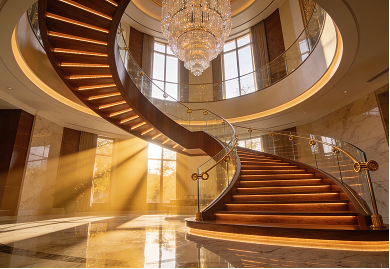
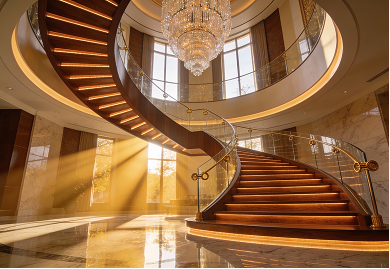
Wooden Spiral Staircase | Custom by DBM Factory
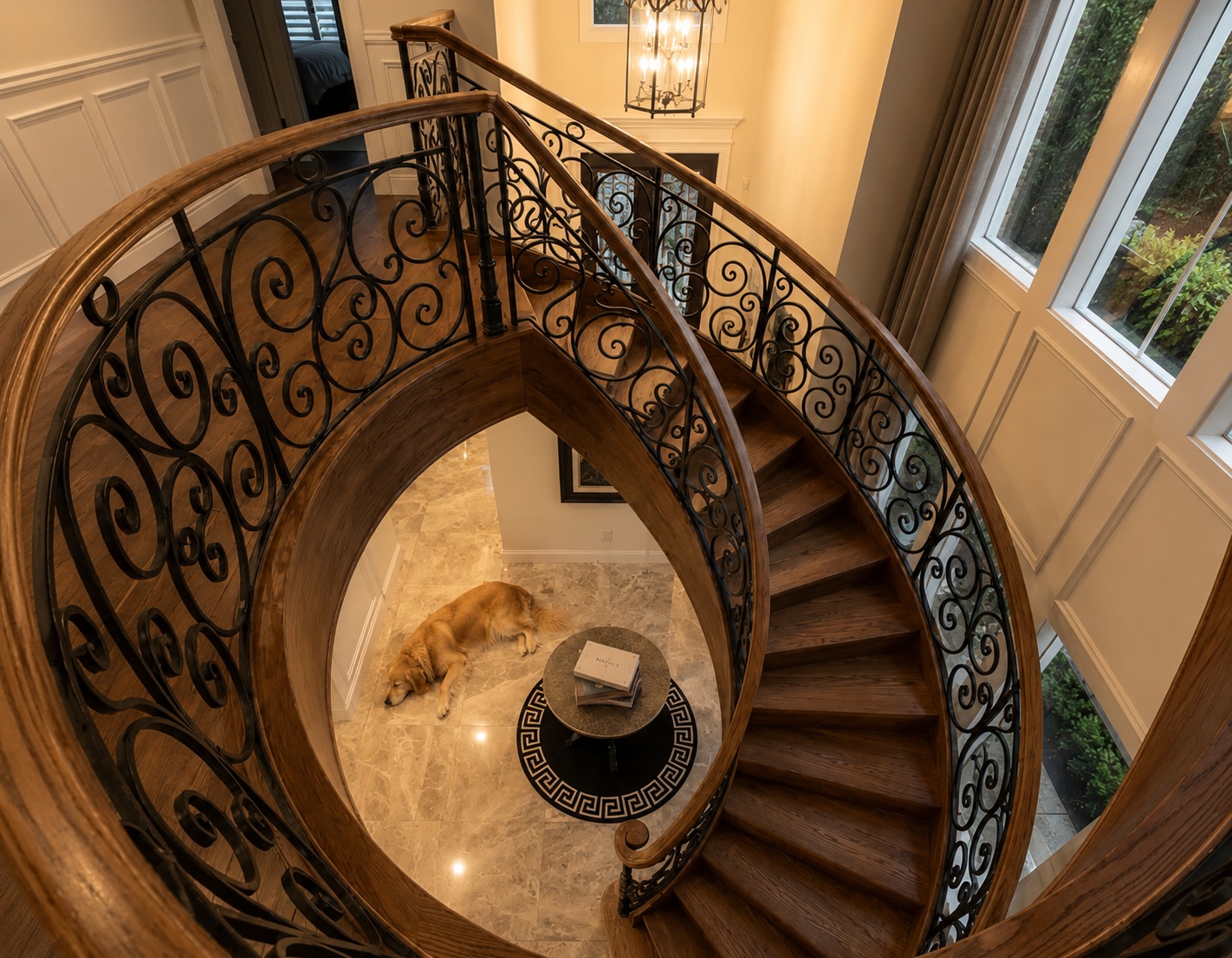


Wooden Spiral Staircase
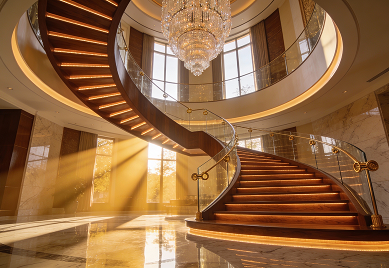
A wooden spiral staircase brings warmth into a tight footprint. Solid timber treads, a stained or oiled finish, grain visible underfoot. The spiral becomes the kind of interior object that belongs in a heritage home, boutique residence, or craft-driven villa.
We build each wood spiral around your drawing and timber choice. Share a sketch, photo, or design reference and we turn it into a working drawing and a stair ready to ship.
Choose the Timber and Its Pairing
Oak Treads — The Heritage Tone
Solid oak in natural, stained, or fumed finish. The everyday timber for a wooden spiral staircase — warm, traditional, and forgiving across most interior palettes.
Walnut Treads — The Dark Modern Read
Solid walnut for a darker, more contemporary spiral. Suits villa foyers and modern interiors where the timber is meant to read as a deliberate design choice.
Ipe or Teak Treads — The Durable Hardwood
Dense tropical hardwoods where the spiral lives in a high-traffic interior or where the owner wants timber that wears slowly across years.
Stringer Pairing — Steel / Stainless / All-Timber
Powder-coat steel centre post is the typical pairing for a wood spiral. Brushed stainless where the foyer reads cleaner. All-timber spiral construction is available on request for the most traditional interiors.
Where It Fits — Four Common Project Types
Villa Interior & Entry Foyer
The wooden spiral staircase as the heirloom moment of the entry hall. Solid oak or walnut on a powder-coat steel post. Warmth at the threshold, a stair that ages with the house rather than dating it.
Heritage New Home Build
New homes drawn in a traditional or classical idiom — cottage country homes, period-style builds, stone facades. A wood spiral pairs with the rest of the timber joinery and reads as part of the architecture, not an add-on.
Boutique Residence & Apartment
Small high-end residences, duplex apartments, designed studios — where the spiral is one of the few sculptural objects in the interior. Walnut on a slender stainless post becomes a quiet focal point.
Mountain Lodge & Country Retreat
For homes where timber is the language of the building — lodges, country retreats, lake-house second levels. An all-timber spiral, or a hardwood-on-steel spiral with an oiled finish, sits naturally in the room.
From Sketch to Site — Three Stages
Share a sketch, photo, or design reference — that's enough to start. We turn it into a working drawing covering the diameter, the timber choice, tread profile, finish, and the connections at top and bottom landing.
We dry-assemble and photograph every spiral in our Guangdong workshop. Our team checks tread fit one step at a time, applies the finish, and reviews the helix end-to-end before breaking it down for shipping.
Wooden crates built for ocean freight, with timber treads protected from moisture and edge damage. Shipped to 60+ countries — including the USA, Australia, the EU, and across Asia.
After delivery, your contractor or installer handles fitting. We provide an assembly guide and a step-by-step video. Where local installation is available in your region, we can help you find a vetted installer.
Wooden Spiral Staircase
When the Timber Becomes the Warmth of the Room — Choosing a Species That Belongs in the Interior.
A timber helix fills a room differently from a metal one. It softens the light, carries a grain you quickly notice, and gives the interior a warmth that steel rarely matches. The climb stops reading as pure structure and starts reading as joinery, closer to the furniture than to the frame.
Owners usually reach us when the room around the stair already leans warm and natural. A panelled library, an oak-floored hallway, a country kitchen with open beams — each hints at a stair built from the same vocabulary. The talk therefore opens not with engineering, but with character and the tone of the wood.
Why the Species Decision Comes Before Anything Else.
With a wood helix, the timber choice quietly sets the whole mood of the result. A pale oak keeps the climb light and traditional, settling neatly into period interiors and warm palettes. A darker walnut instead reads bolder and modern, anchoring a room with a richer, more confident presence.
The finish then refines whatever the species begins. A natural oil keeps the grain open and tactile, letting the timber breathe and age in step with the household. A stained or fumed treatment deepens the tone a great deal, while a lacquer holds a cleaner, more even surface for a formal room.
So the early talk circles the feeling rather than the figures. We discuss the palette around the stair, the joinery already in place, and the light the room takes across the day. Only afterwards does the working drawing turn that character into a buildable staircase.
How the Same Wood Helix Shifts With the Interior Around It.
A Period Interior vs a Modern One.
The architecture around the stair naturally pulls the timber one way or another. Within a traditional home, oak treads above a hardwood-clad post echo the skirtings and panelling already there, so the stair feels original rather than added. Within a modern space, the same helix turns leaner, pairing walnut treads with a slim painted post that lets the timber alone bring the warmth.
A Quiet Tone vs a Statement Grain.
Grain carries its own volume, and some rooms want it whispered while others want it bold. A softly figured oak in a light oil keeps the climb low-key, backing the room without fighting for attention. A boldly figured walnut under a deeper finish instead becomes a true focal point, the sculptural centre the room is arranged around.
An All-Timber Read vs Wood-on-Steel.
The structure underneath also shapes how the timber finally reads. A painted steel post hidden under a timber collar lets the staircase show as nearly all wood, the warmest and most traditional look. An exposed metal post instead brings a deliberate contrast, so the warm treads stand against a cooler structural line.
What Coordination Looks Like for a Timber Helix.
Drawing-First Coordination begins by capturing the character alongside the measurements. We record the chosen species, the finish direction, and the surrounding palette beside the floor levels and the upper opening. The timber tone is settled here, so the grain genuinely belongs to the room rather than arriving as a surprise.
Trial Assembly Before Packing then stands the whole spiral upright across our Guangdong workshop floor. Our team checks the tread fit one step at a time, applies the chosen finish, and reviews the grain flowing around the helix. We photograph the result and take it apart with care, labelling every part for a clean rebuild on your side.
Export-Ready Crating afterwards protects the finished timber against moisture and edge damage across the long ocean passage. We wrap the treads one by one and seat the heaviest pieces low for a stable lift. The crate then arrives ready to open, sort, and stack straight against the working drawing.
What to Send Us About the Room.
A rough sketch or a quick phone photo of the space gives us a solid starting point. Add the floor-to-floor height, which simply means the climb from the lower finished floor up to the upper one. Then note the clear circle you can give the stair, bounded by the nearest wall or whatever furniture sits closest.
One further note helps us match the timber to the interior. Share a photo of the existing floor, the joinery, or any wood already in the room. Tell us the tone you are drawn toward as well. From there we turn your notes into a working drawing and a stair ready to ship.
After delivery, fitting is on your side — on site, your contractor or installer handled fitting directly from our drawings. Follow our assembly guide and step-by-step video, or use your own local installer where needed.
Chat on WhatsApp →Compare the Indoor Spiral Staircase → · see the Residential Spiral Staircase → · browse the full Spiral Staircase range → · or explore all our staircases →