

Shaker Bathroom Vanity | Custom by DBM Factory
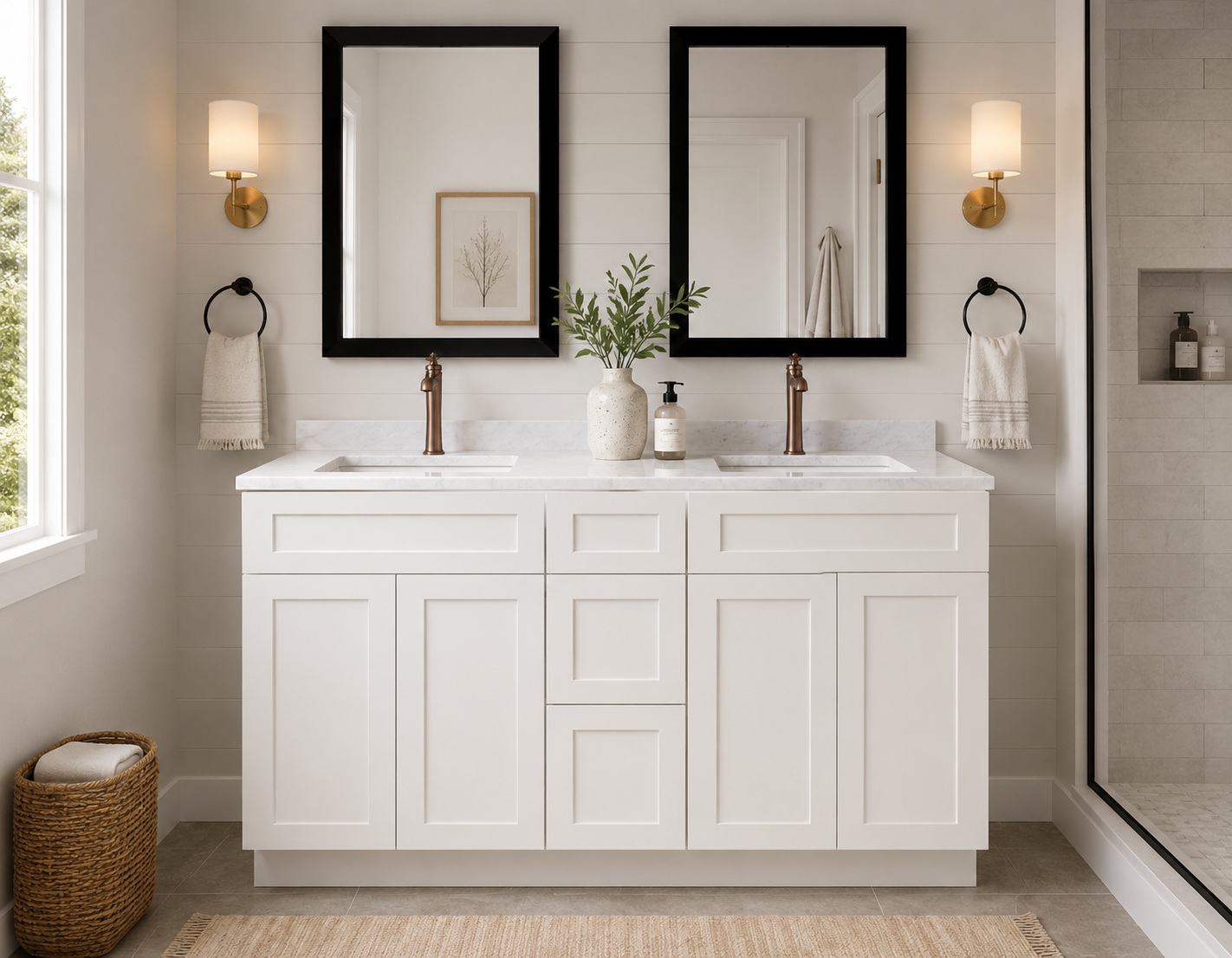


Shaker Bathroom Vanity
A shaker vanity uses the classic five-piece door — a flat centre panel framed by four rails. The detail is quiet, never loud. It suits traditional bathrooms, transitional palettes, and contemporary rooms that want a softer edge than slab-front cabinetry. It dates slowly, which is why so many architects keep returning to it.
We design and produce each shaker vanity around your project. Share the bathroom dimensions, plumbing rough-in positions, and a designer reference. We turn it into a working drawing and build the cabinet ready for shipment.
Get the Shaker Detail Right
Wood Species — Oak / Maple / Poplar
White oak holds the shaker line well under stain. Maple is the common pick for painted finishes — tight grain, even surface. Poplar where the door faces will be painted and the cost matters more than visible grain.
Paint vs Stain — Centre-Panel Choice
Painted — soft white, sage, navy, charcoal — tends to suit traditional and coastal bathrooms. Stain on oak or maple lets the grain read through and works in transitional palettes. Sheen typically matt to satin.
Hardware — Knobs or Cup Pulls
Round knobs are the most period-correct shaker hardware. Brass or polished nickel cup pulls suit a more dressed-up look. Matt black knobs where the bathroom hardware is already black — taps, shower frame, towel rail.
Door Insert — Flat Panel / Beadboard
Flat centre panel is the standard shaker reading. Beadboard inserts add a coastal or cottage cue where the bathroom calls for it. Door-frame width set on the working drawing so the proportion stays right at the room scale.
Where It Fits — Four Common Project Types
Traditional New Home
Drawn into the architect’s plan for a period-style or transitional bathroom. Painted shaker doors in soft white or sage with brass cup pulls suit the room without overplaying the historical reference.
Villa Secondary Bath
Often the guest or family bath rather than the primary. Shaker styling reads as considered without going as bold as the master — stained oak or painted charcoal both tend to land well here.
Family Residence
A bathroom shared between several rooms in a family home. The shaker door is quiet enough to live with day after day. It is robust enough to handle the wear, and easy to repaint when the time comes.
Renovation Refresh
The old laminate vanity replaced with a shaker piece. The new door style updates the bathroom without forcing a full re-tile — the room reads refreshed because the focal point has shifted.
From Sketch to Site — Three Stages
Share the bathroom dimensions, plumbing rough-in positions, and a designer reference — that’s enough to start. We turn it into a working drawing for the shaker vanity. It covers the door rail widths, sink cutout, faucet drilling, and drawer layout your plumber will need.
Every vanity is fully assembled and photographed in our Guangdong workshop before being taken apart for shipping. Each cabinet, door, drawer, and hardware kit comes labeled, so on-site assembly is straightforward — typically bolt-and-cam, not site-cutting.
Wooden crates built for ocean freight, packed in the order your installer will assemble. Shipped to 60+ countries — including the USA, Australia, the EU, and across Asia.
After delivery, your contractor or installer handles fitting. We provide an assembly guide and a step-by-step video. Where local installation is available in your region, we can help you find a vetted installer.
Shaker Bathroom Vanity
Matching a New Cabinet Into a Period Home That Already Has a Look.
A classic five-piece door works in an older home, because the house already speaks that language elsewhere. The challenge is not the new cabinet on its own. It is making it agree with the panelling, the trim, and the joinery that arrived decades earlier.
Owners reach us at a familiar moment, when one tired bathroom sits inside an otherwise considered home. They want the new piece to look built-in, not bolted on. So the brief is rarely about the door style alone. It is about matching the scale and detail of woodwork the household already lives with.
Why Scale Decides Whether It Looks Built-In.
The frame width around the centre panel is what the eye actually reads. A period home usually carries generous, confident woodwork, so a thin modern rail looks wrong against it at once. We widen the stile and rail dimensions to echo the existing architrave, and the cabinet settles into the room.
Paint colour and sheen carry the second half of the match. Older rooms rarely use a stark, cold white, so a warmer tone reads more at home against aged trim. We confirm the colour against a sample of your existing woodwork, because a guess on tone breaks the whole effect.
Hardware finishes the period cue or quietly breaks it. Round knobs and cup pulls in aged brass suit a classic room far better than sleek bar handles. We set the pull style and placement on the working drawing, so the small details align with the woodwork rather than fighting it.
How the Match Changes With the Existing Interior.
A Heritage Interior vs a Transitional One.
The age of the surrounding detail sets how close the match should be. A true heritage home asks for a faithful frame width and a period-correct colour, so the vanity reads as part of the original build. A transitional room allows a cleaner look, where the Shaker line softens rather than copies the old woodwork. We confirm which way the house wants to go before drawing the door.
A Painted Match vs a Stained Match.
The existing finish in the home decides paint or stain. Where the woodwork is painted, we match the cabinet colour and sheen to that nearby tone for a seamless look. Where the trim shows bare timber, a stain that echoes the grain and depth integrates more honestly. We map the existing finish on the working drawing before locking the door faces.
One Bathroom vs the Whole Floor.
A single refit tunes the vanity to one room and one sightline. A wider renovation across several bathrooms flips that logic, because a matched look now matters more than any one room. We hold the same frame proportion and colour specification across each vanity, so the floor reads as one consistent scheme. We settle the detail once and carry it cleanly through the set.
What Coordination Looks Like for a Period Match.
Drawing-First Coordination starts with the detail you already have at home. We work from photos of your existing trim, the basin centre, and the plumbing rough-in before anyone cuts a panel. The working drawing then locks the frame proportion, the colour reference, and the hardware, so the match is resolved on paper rather than improvised on site.
Trial Assembly Before Packing then builds the whole vanity upright on our Guangdong workshop floor. We check the door reveal, the panel alignment, and the colour against your sample, then photograph the result. We label each part as it comes off, so the build in your bathroom stays a clean bolt-together job.
Export-Ready Crating packs the parts in the order your installer will set them. We protect the painted faces against knocks and scuffs for the long ocean leg ahead. The crate lands ready to open, with the heavy carcass seated low for a safe, steady lift.
What to Send Us About Your Home.
A few photos of your existing woodwork give us the strongest start. Capture the architrave, the skirting, and any panelling near the bathroom so we can read the proportions. Add the plumbing rough-in position, which is simply where the waste and water enter behind the cabinet.
One more line helps us hold the colour true across the match. Tell us the paint tone on your existing trim, or send a sample for us to reference. From there we turn your notes into a working drawing and a vanity that belongs in the room.
After delivery, fitting is on your side. On site, your contractor or installer handled fitting directly from our drawings, with our assembly guide and step-by-step video to follow — or use your own local installer where needed.
Chat on WhatsApp →Compare the Wood Bathroom Vanity → · see the White Bathroom Vanity → · browse the full Vanity Cabinet range → · or explore all our cabinetry →