

Aluminum Bifold Door | Custom by DBM Factory


Aluminum Bifold Door
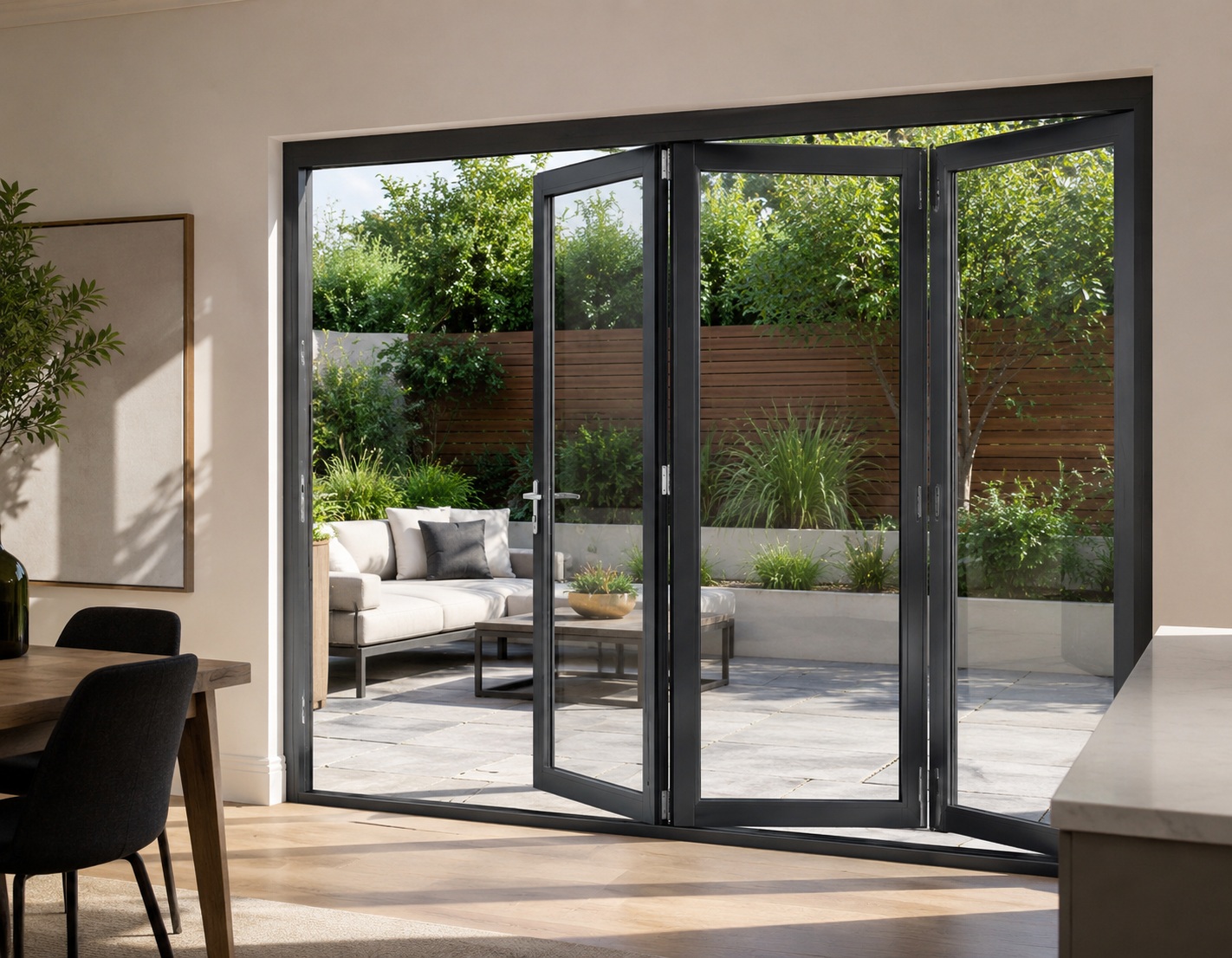
A bifold door folds its panels aside in a stack against one wall. A living room opens onto the terrace; a kitchen opens onto the courtyard. The line between inside and outside almost disappears. The slim aluminum frames keep the glass dominant; the view, rather than the joinery, becomes the moment.
We design and produce each bifold door around your project. Share the opening dimensions, a floor plan, or a designer reference. We turn it into a working drawing and build the door system ready for shipment.
Spec the Door to the Opening
Panel Count — Three to Seven
Three panels open a single living-room bay. Five and seven panels stack to open a wider wall. This kind of run turns a kitchen-dining room into one continuous space with the garden.
Track & Rollers — Top-Hung or Bottom-Rolling
Top-hung carries the weight from above for a clean threshold and a light pull. Bottom-rolling sits the load on a sill track and is the simpler retrofit when the head structure is fixed.
Threshold — Flush or Weather-Sill
Flush thresholds let the floor read continuously from inside out — the look most owners ask for. Weather-sill thresholds raise a small upstand for exposed terraces where wind-driven rain is a concern.
Frame Finish — Anodized / Powder-Coated
Anthracite, matt black, bronze, or off-white powder-coat. Anodized silver where a quieter, more architectural read suits the home. Custom colors to match the window suite are quoted on request.
Where It Fits — Four Common Project Types
Villa Indoor-Outdoor Living
The main living wall opens onto a terrace or pool deck. A long bifold run — often five or seven panels — turns the entertaining floor into one continuous space when the family is at home.
Modern New Home Build
Drawn into the architect’s plan from the start, so the bifold opening lines up with the ceiling beam and the floor finish. Matt black or anthracite frames are a frequent choice on contemporary builds.
Coastal Residence
Sea-facing living rooms where the priority is the view and the breeze. Marine-grade powder-coat and stainless-steel hardware are the usual specification on exposed coastal sites.
Boutique Vacation Residence
Holiday home where the living room opens to the garden or pool during the season and shuts up cleanly when the family is away. Bronze or off-white frames sit well against a relaxed holiday-house palette.
From Sketch to Site — Three Stages
Share an opening dimension, a floor plan, or a designer reference — that’s enough to start. We turn it into a working drawing for the bifold system. It covers panel count, hardware positions, and the structural opening your contractor will need to frame.
Every door system is fully assembled and photographed in our Guangdong workshop before being taken apart for shipping. Each panel, track, and hardware kit comes labeled, so on-site assembly is straightforward — typically bolt-and-set, not site-cutting.
Wooden crates built for ocean freight, packed in the order your installer will assemble. Shipped to 60+ countries — including the USA, Australia, the EU, and across Asia.
After delivery, your contractor or installer handles fitting. We provide an assembly guide and a step-by-step video. Where local installation is available in your region, we can help you find a vetted installer.
Aluminum Bifold Door
When a Whole Wall Folds Open to the Deck — The Entertaining Threshold.
A folding wall earns its place when the living room and the deck need to read as one room for a party. The panels stack to one side, the floor runs straight out to the patio, and guests move freely between the two. The opening itself becomes the event.
Owners usually reach us with a clear picture in mind. They host on the deck through the warm months, and they want the back wall gone when the doors are open, yet snug and weather-tight when the doors are shut. So the brief is rarely a single door. It is a wide threshold that has to vanish on cue.
Why a Folding Wall Wins the Wide Opening.
The folding configuration suits this brief for one plain reason: it clears almost the entire span. The panels concertina into a slim stack, so the daylight opening reaches close to the full structural width. A sliding wall always parks one panel in front of another, which a folding run avoids when an open, uninterrupted threshold is the objective.
The trade-offs are worth naming early in the talk. A folding wall asks for stacking room at one or both jambs, and the panel stack sits in the room or on the deck when open. More panels also mean more vertical frame lines than a single large slider when the wall is closed. We weigh those points against the daily routine before any line is drawn.
So the right answer turns on how the household actually lives. Where the goal is a clear, walk-through threshold for entertaining, a folding wall typically earns its place. Where an uninterrupted view through closed glass matters more, a large slider may suit the property better, and we evaluate both configurations openly before committing the design.
How the Threshold Changes With the Site.
A Flush Sill vs a Weather Sill.
The threshold detail is the first fork in the conversation. A flush sill lets the inside floor and the deck read as one continuous plane, which is the look most owners picture for a seamless party space. A weather sill raises a small upstand that sheds wind-driven rain more firmly, which an exposed deck often needs. The sill is drawn to the shelter the opening actually has, not to a fixed default.
A Sheltered Patio vs an Exposed Coast.
The surrounding environment sets the finish and the hardware specification. On a sheltered courtyard, a standard powder-coat frame and ordinary rollers carry the run comfortably. On a sea-facing deck, a marine-grade coating and stainless fittings hold the finish steady against the salt. The folding configuration stays identical, while the metal and the weather seals shift quietly to match the exposure.
A Single Bay vs a Corner That Opens.
The opening shape drives the panel layout. A straight three-panel run folds back a single living-room bay onto a modest patio. A long five or seven-panel run clears a wide entertaining wall in one sweep. A corner set folds two walls away from a shared post, so two sides of a room open onto a wrap-around deck at once. We size the run and the stack to the geometry you have.
What Coordination Looks Like for a Folding Wall.
Drawing-First Coordination starts with the genuinely demanding part of a wide opening. We pin down the structural width, the head height, and the floor levels inside and out before anyone cuts metal. A deck rarely sits dead level with the room, so the working drawing resolves the sill detail and the stacking clearance early and saves a scramble on site.
Trial Assembly Before Packing then stands the whole run upright on our Guangdong workshop floor. We hang every panel, fold the set through a full cycle, and photograph the result before we take it back down for transport. We label each panel, hinge, and track section as it comes apart, so the build on your wall becomes a measured bolt-and-set job rather than a site puzzle.
Export-Ready Crating packs the panels in the order your installer will hang them. We protect the glass faces and the coated frames against knocks and salt spray for the long ocean leg. The crate lands ready to open in sequence, with the heaviest panels seated low for a safe lift onto the deck.
What to Send Us About Your Opening.
A rough sketch or a quick phone photo of the back wall gives us plenty to begin with. Add the rough opening width and the head height, plus a note on the floor levels inside and on the deck. Then tell us which jamb can take the panel stack when the wall folds away.
One more line of detail helps us understand your particular site. Tell us how sheltered the deck is, and whether you want a straight run or a corner configuration that opens. From there we turn your notes into a working drawing and a folding wall ready to ship.
After delivery, fitting is on your side. On site, your contractor or installer handled fitting directly from our drawings, with our assembly guide and step-by-step video to follow — or use your own local installer where needed.
Chat on WhatsApp →Compare the Aluminum Sliding Door → · see the Aluminum Casement Window → · browse the full Aluminum Window & Door range → · or compare Wooden Doors →