




Pocket Door | Custom by DBM Factory


Pocket Door
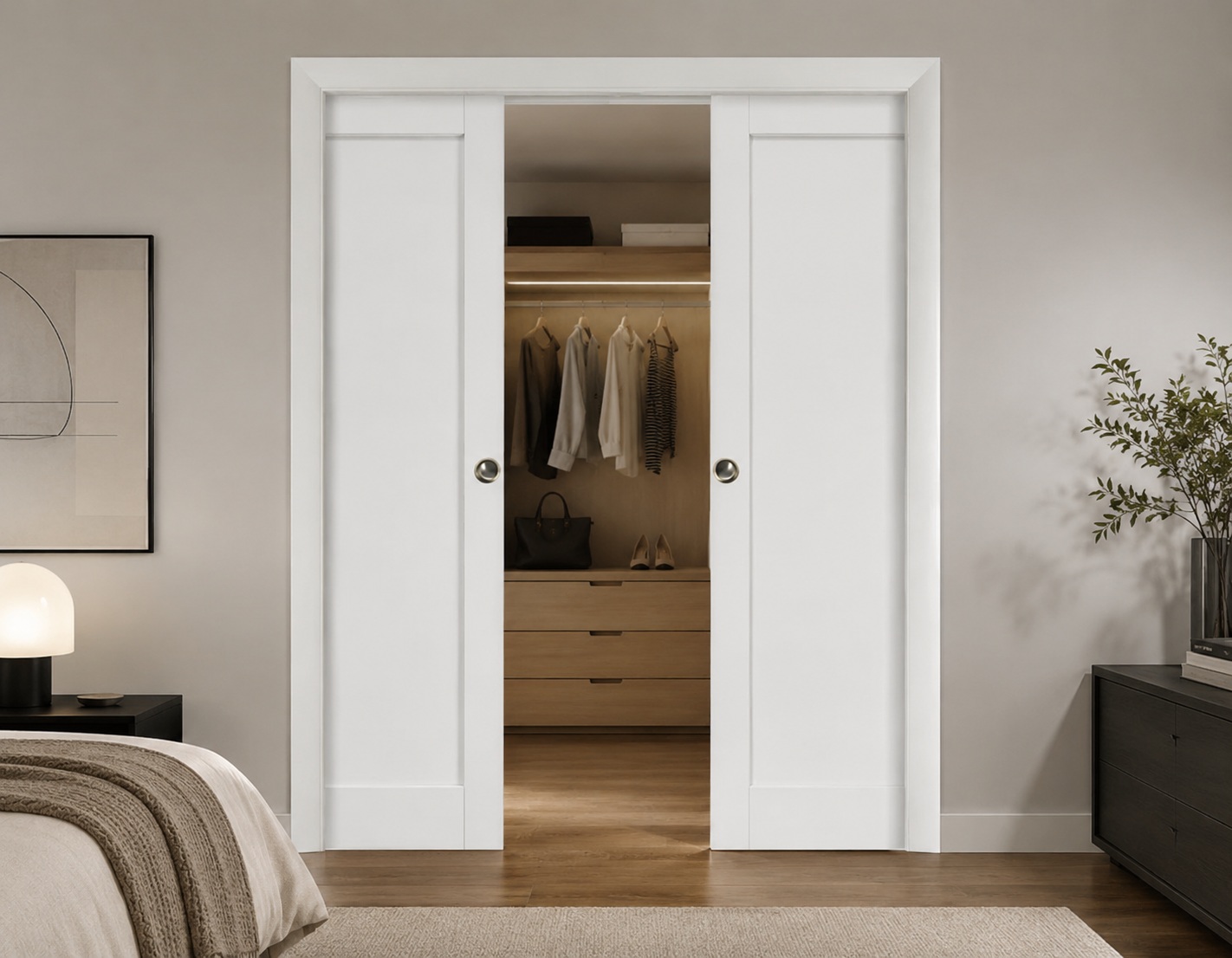
A pocket door slides into a cavity built inside the wall, so the door disappears completely when open. The opening reads as a clean threshold, no swing arc, no panel hanging in view. It is the door choice when the room needs to flow into the next, but you still need privacy on demand.
We design and produce each pocket-door package around your wall — slab, frame kit, track hardware, and edge profile drawn together. Share a sketch or wall section; we turn it into a working drawing and build the package ready for shipment.
The Pocket-Door Package
Slab Door — Solid Wood Panel
Solid oak, walnut, or painted MDF panel sized to your opening. Often flush single-slab for a clean modern read; panel-layout is available for traditional rooms.
Frame Kit — In-Wall Cassette
A steel cassette frame built to the slab dimensions, designed to slot inside the rough wall framing. The cassette is the structural bones of the pocket — the builder frames around it.
Track Hardware — Top-Hung / Soft-Close
Top-hung roller assemblies sized to the slab weight, with soft-close dampers at both ends so the door eases home rather than slamming into the stop.
Edge Profile — Flush Pull / Edge Pull
Flush recessed pull on the face for opening. Edge pull on the leading edge for closing. Both let the door read clean against the wall when the pocket is open.
Where It Fits — Four Common Project Types
Villa
Common between the principal suite and the dressing room. Or between dining and kitchen. These rooms often live open but need to close down on demand. The disappearing door keeps the architecture reading clean.
New Home
Drawn into the framing plans early so the cassette is installed before drywall. A common pick for the powder room off a foyer, or the laundry off the kitchen, where the door is mostly open.
Apartment
In apartments where every square meter counts, the pocket saves the swing arc a hinged door demands. The format often wins back the floor space that a swing door would block at the entry to a small bedroom or bath.
Renovation Refresh
When opening up a closed-plan house, the pocket lets the room read open day-to-day and close down when needed. Drawn to the existing wall depth so the cassette fits inside the renovation framing.
From Sketch to Site — Three Stages
Share a sketch, a wall section, or a reference photo — that's enough to start. We turn it into a working drawing for the pocket-door package. It covers the slab size, cassette depth, track length, and the rough opening your builder needs to frame.
The slab is hung in the cassette in our Guangdong workshop, slide-tested both directions, soft-close adjusted, then photographed before being packed for shipping. Each component comes labeled so on-site fitting follows the same order as the workshop run.
Wooden crates built for ocean freight, packed with the slab, cassette, track, and pull hardware in the order your installer will fit them. Shipped to 60+ countries — including the USA, Australia, the EU, and across Asia.
After delivery, your contractor or installer handles fitting. We provide an assembly guide and a step-by-step video. Where local installation is available in your region, we can help you find a vetted installer.
Pocket Door
The Door That Disappears Into the Wall — Zero Swing Clearance in a Tight Room.
A pocket door slides into a cavity built inside the wall, so the leaf disappears completely when open. The opening then reads as a clean threshold, with no swing arc and no panel hanging in view. So a small room recovers the exact floor a hinged door would have demanded for its swing.
Owners usually approach us when the floor area is genuinely limited, or when two rooms want to connect together. A powder room off a foyer, an ensuite, or a study often has no wall available for a swing. So the brief is really a coordination one, because the pocket frame has to land inside the builder's partition before the lining goes on.
Why the Wall Cavity Decides Everything.
A pocket door is a common choice here for one practical reason: it reclaims the swing entirely. The leaf parks inside the wall instead of arcing into the room, so a tight bathroom or study keeps its usable floor. That single quality is what makes the format suit the smallest rooms in the plan.
The constraint, though, is that the cavity has to exist before the wall is closed. A steel cassette frame holds the slab and the track, and the builder frames the wall around that cassette. So a pocket door is a decision made early, at the framing stage, rather than a fitting added once the rooms are lined.
So the wall section sets the whole package, and we draw the cassette to suit it. The wall has to be deep enough to swallow the slab, and the pocket side stays clear of switches and pipework. We coordinate the cassette depth, the slab size, and the rough opening together, so your builder frames it right the first time.
How the Same Pocket Adapts to the Wall Around It.
A New Build vs an Existing Wall.
A new home lets the cassette drop into the framing before any lining or drywall arrives. A renovation has to open the existing wall first, so the cavity reaches the depth the slab needs. We draw the cassette to the wall depth you actually have, so the builder fits it into either situation.
A Single Pocket vs a Double Pocket.
A standard opening takes one slab sliding into one pocket on a single side. A wide opening can instead take two slabs that separate to opposite pockets and meet in the centre. We size the cassette pair and the meeting detail to the opening dimension, so a generous gap closes cleanly down the middle.
A Plain Slab vs a Privacy Slab.
A pass-through between open rooms often takes a simple slab with an edge pull alone. A bathroom or bedroom needs a privacy latch and a slab heavy enough to deaden sound. We match the slab build and the edge hardware to the room, so a private interior still feels solid behind a sliding leaf.
What Coordination Looks Like for an In-Wall Pocket.
Drawing-First Coordination begins with your wall section and the rough opening within it. We settle the cassette depth, the slab size, and the track length before anyone cuts timber. The working drawing gives your builder the framing dimensions for the pocket, and you review and approve it before we start.
Trial Assembly Before Packing then hangs the slab in its cassette on our Guangdong workshop floor. We slide-test the leaf both directions, adjust the soft-close damper, and photograph the assembly. We label each part as it comes apart, so on-site fitting follows the identical order as the workshop assembly.
Export-Ready Crating packs the slab, cassette, track, and pull in the order your installer will fit them. We guard the finished face against knocks for the long ocean leg ahead, and protect the cassette from bending. The crate therefore lands ready to open, with the heavy slab braced flat and the hardware bagged by step.
What to Send Us About Your Wall.
A wall section or a quick sketch of the opening gives us a strong start. Add the opening width and height, and the wall depth available to swallow the slab. Then tell us whether this is a new build or a renovation, since that decides how the cassette goes in.
One more note helps us match the slab correctly. Tell us the room behind the door, and whether it needs a privacy latch and a heavier leaf. From there we turn your section into a working drawing and a pocket package ready to ship.
After delivery, fitting is on your side. On site, your contractor or installer handled fitting directly from our drawings, with our assembly guide and step-by-step video to follow — or use your own local installer where needed.
Chat on WhatsApp →Compare the Sliding Barn Door → · see the Panel Door → · browse the full Wooden Door range → · or explore the Window & Door collection →