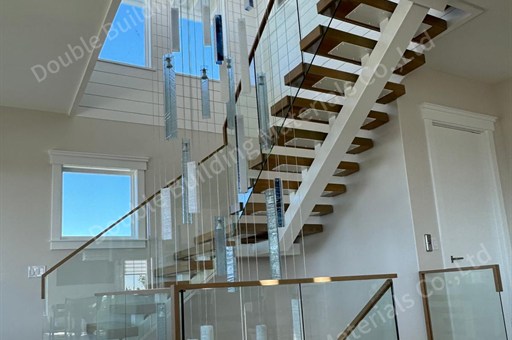





Curved Staircase in Portland, USA | DBM Factory
Project DBM23110802B · Portland, USA · Trial-Assembly Proof
A Curved Stone Staircase for a Portland Home — Stood Up in Our Workshop First
We built this whole curved staircase once in Guangdong and lit the steps to check every line. Then we took it apart and shipped it — so it would look the same in Portland as it did on our floor.
By Double Building Materials — the staircase & railing manufacturer in Guangdong, China that drew, trial-assembled and crated this curved stone staircase and its frameless glass railing. Written from our own shop drawings and workshop records. Published June 2026.
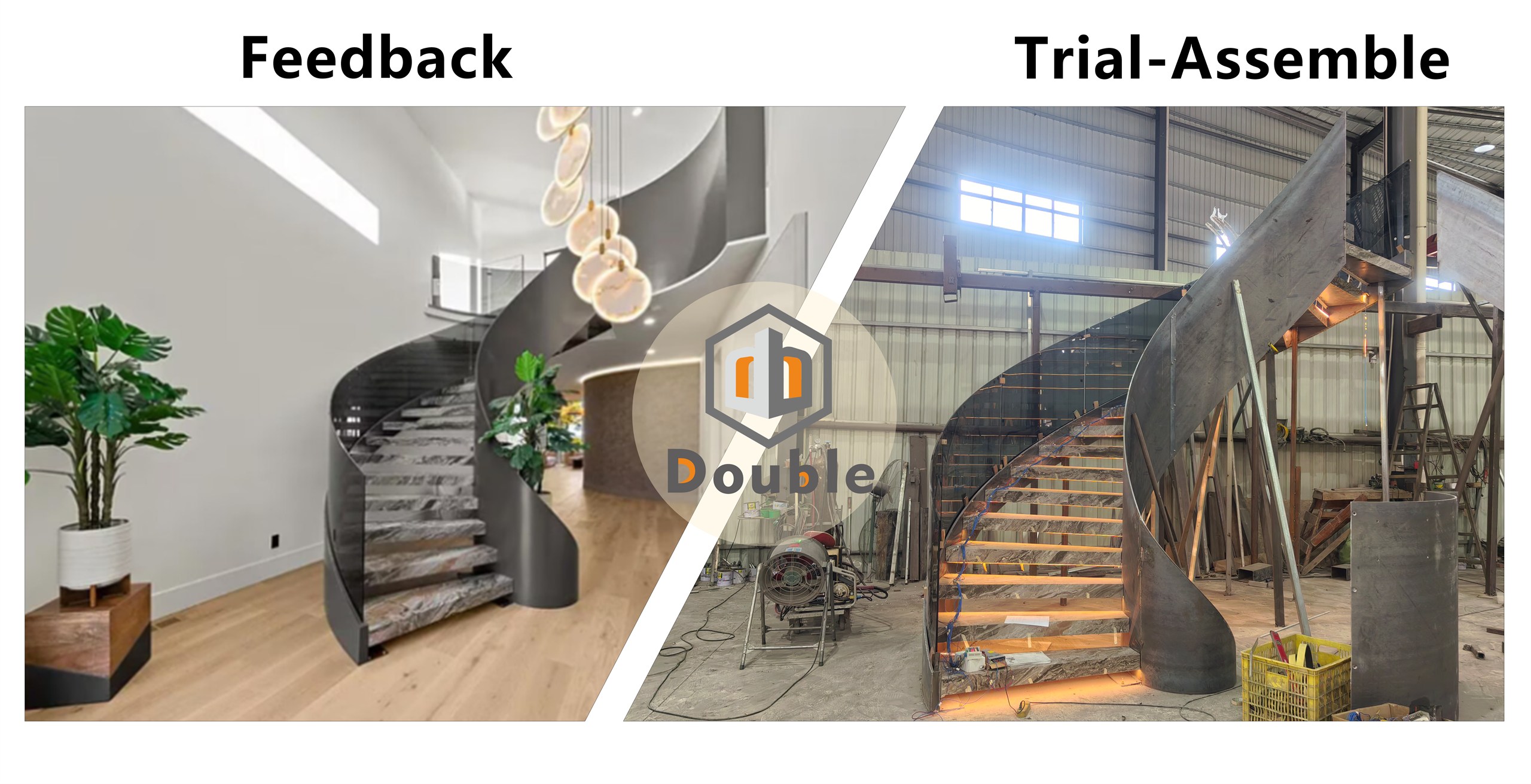
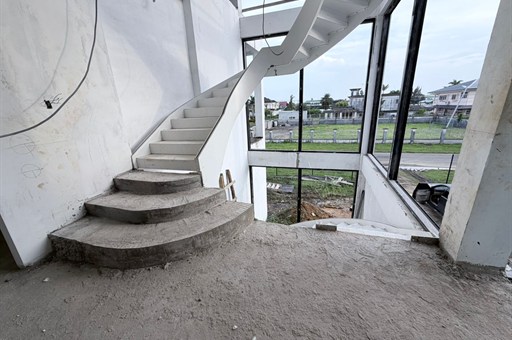
Left: the finished curved staircase in the Portland home. Right: the same staircase stood up and LED-checked on our workshop floor before packing.
The Project at a Glance
For a double-height home in Portland, Double Building Materials made a curved staircase: stone treads on a sculptural dark-steel spine, with a frameless glass railing. We drew it, trial-assembled it and crated it in our Guangdong workshop, then shipped it for the homeowner’s own contractor to fit on site.
The Brief & The Build
The homeowner wanted a curved staircase as the centrepiece of a white, double-height room. The look is a single sweeping move. A dark steel spine wraps the outside of the curve, stone treads step up the inside, and a frameless glass railing keeps the eye on the stone. In an open room like this, the stair reads from the entry, the living area and the floor above, so the curve has to be clean from every angle.
A curved stair is hard because almost nothing is straight. The steel spine bends in two directions at once, each tread sits at its own angle, and solid stone leaves no room to fudge a joint on site. So we cut the steel, welded the spine, set the treads and ran warm LED strips under each step in our own workshop first. That way the hard problems get solved in Guangdong, where we have the tools — not in a Portland living room.
From Drawing to Site
Drawing-First Coordination
Drawing-First Coordination means we draw the whole stair before we cut a single part. We turned the homeowner’s plans into shop drawings for the curved steel spine, the stone setting-out and the glass railing. In the US, these drawings reference IRC and IBC stair and guard rules, so the homeowner’s engineer can review and sign off. Nothing reached the workshop floor until the drawings were approved.
Trial Assembly Before Packing
Trial Assembly Before Packing is the heart of this project. We stood the whole curved staircase up in our workshop, fixed every stone tread, hung the glass and switched on the under-step LEDs — exactly as you see in the photo below. We walked the curve and checked the line of the spine and the rise of each step. Any gap or wobble was fixed in Guangdong, before a single crate was sealed. The finished stair in Portland looks the same as the one we tested, because it is the same stair.
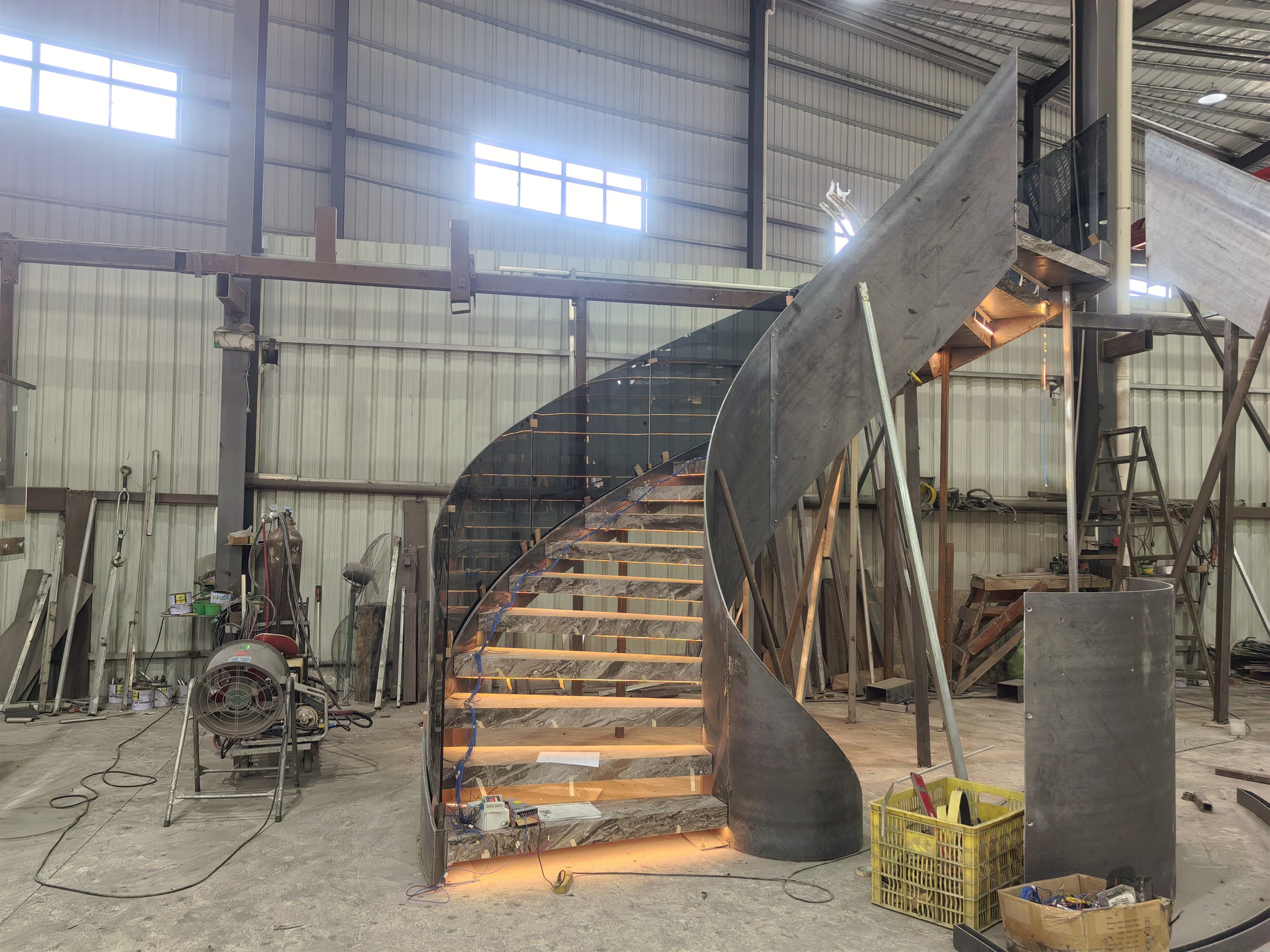
The curved staircase stood up and lit in our Guangdong workshop — tread line, glass and step lighting all checked before packing.
Export-Ready Crating
Export-Ready Crating means we take the tested stair apart and pack each part to survive the sea to the United States. The stone treads travel in braced timber crates with foam edges, and the curved steel and glass ship in their own protected packs. We label every crate to the assembly order, so parts arrive in the sequence the site needs.
Double Building Materials makes, trial-assembles, crates and ships. On this project the homeowner’s own contractor handled fitting on site. We supply assembly drawings and a step-by-step guide, and where local installation is available we can help you find a vetted installer.
The Reveal
Set into the white, double-height room, the staircase delivers the centrepiece the homeowner wanted. The dark steel spine sweeps up in one curve, the stone treads catch the light, and the frameless glass almost disappears. A cluster of pendant lights drops through the open void beside it, so the curve and the lights play off each other from the entry and the living area.
What matters most is what you cannot see: there were no surprises on site. Because the stair had already been built once in our workshop, the contractor was fitting a known, tested piece — not solving a curved-steel puzzle in the living room.
Frequently Asked Questions
What does “trial assembly” actually mean?
We build your full staircase once in our own workshop before it ships. For this Portland curve, that meant standing up the steel spine, fixing every stone tread, hanging the glass and lighting the steps — then checking and fixing anything before packing. The photo above is that trial build.
Will a curved staircase meet US building rules?
We prepare the shop drawings to reference the US stair and guard rules in the IRC and IBC. Your own engineer or building official then reviews and signs off for approval. We make and document the parts; the local sign-off stays with your team.
Who installs it when the crate arrives?
Your own contractor or installer fits it on site, as the Portland homeowner’s did. We send assembly drawings and a step-by-step guide, and where local installers are available we can help you find one.
Planning a curved staircase and want it proven before it ships?
Send Us Your Plans for a Drawing Review →Related Products
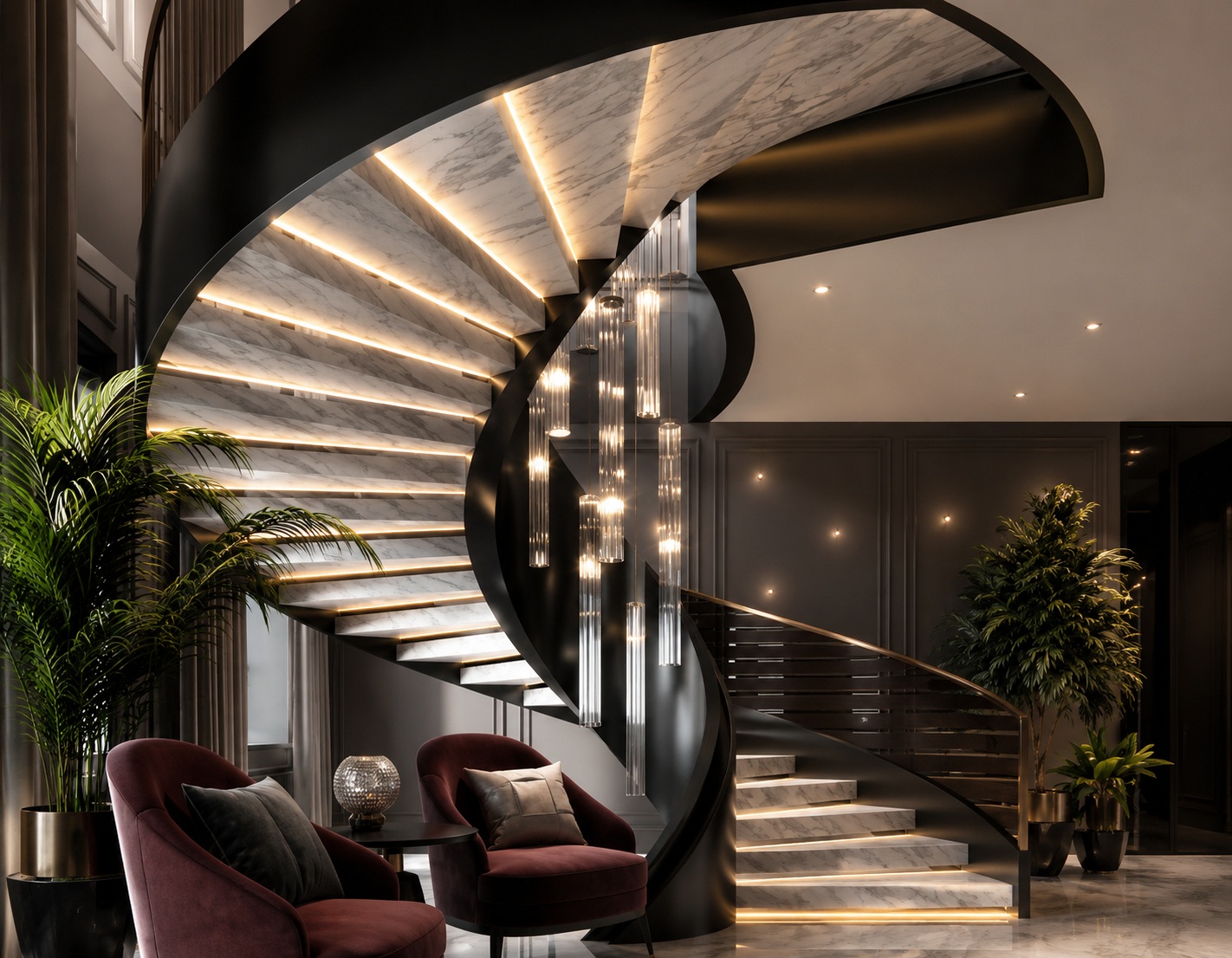
Other Products
More from the same factory — drawn, trial-assembled and export-crated the same way.