

Florida White-Oak Floating Staircase & Glass | DBM
Project DBM20061901G · Florida, United States · New-Build Home
A Florida Ocean-View Home: White-Oak Floating Staircase on Black Steel, with Frameless Glass
For an ocean-view home in Florida, we made a white-oak switchback that floats off a hidden black-steel frame, wrapped in frameless glass.
By Double Building Materials — the staircase & railing manufacturer in Guangdong, China that drew, made and shipped this project’s floating oak staircase, its steel frame and its frameless glass balustrade. Written from our own shop drawings and workshop records. Published June 2026.
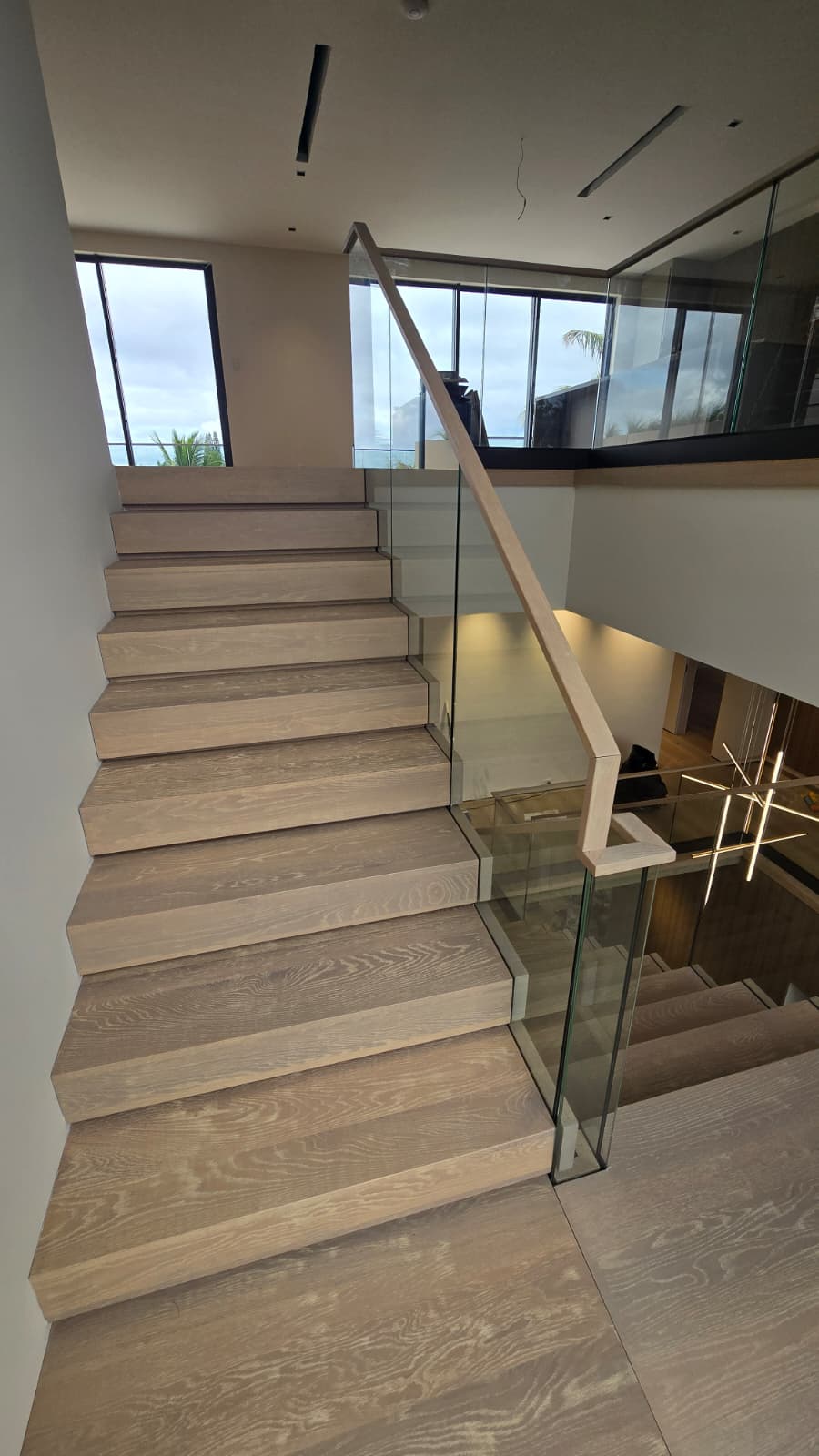
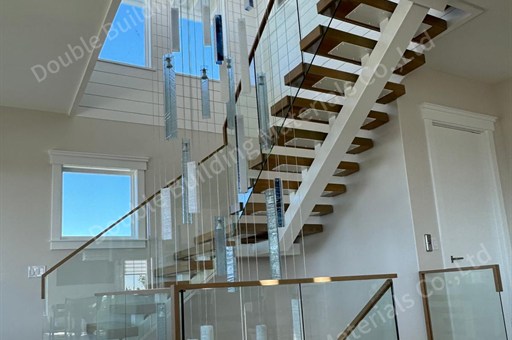
The upper flight catching the sea horizon through the tall windows — Florida, United States.
The Project at a Glance
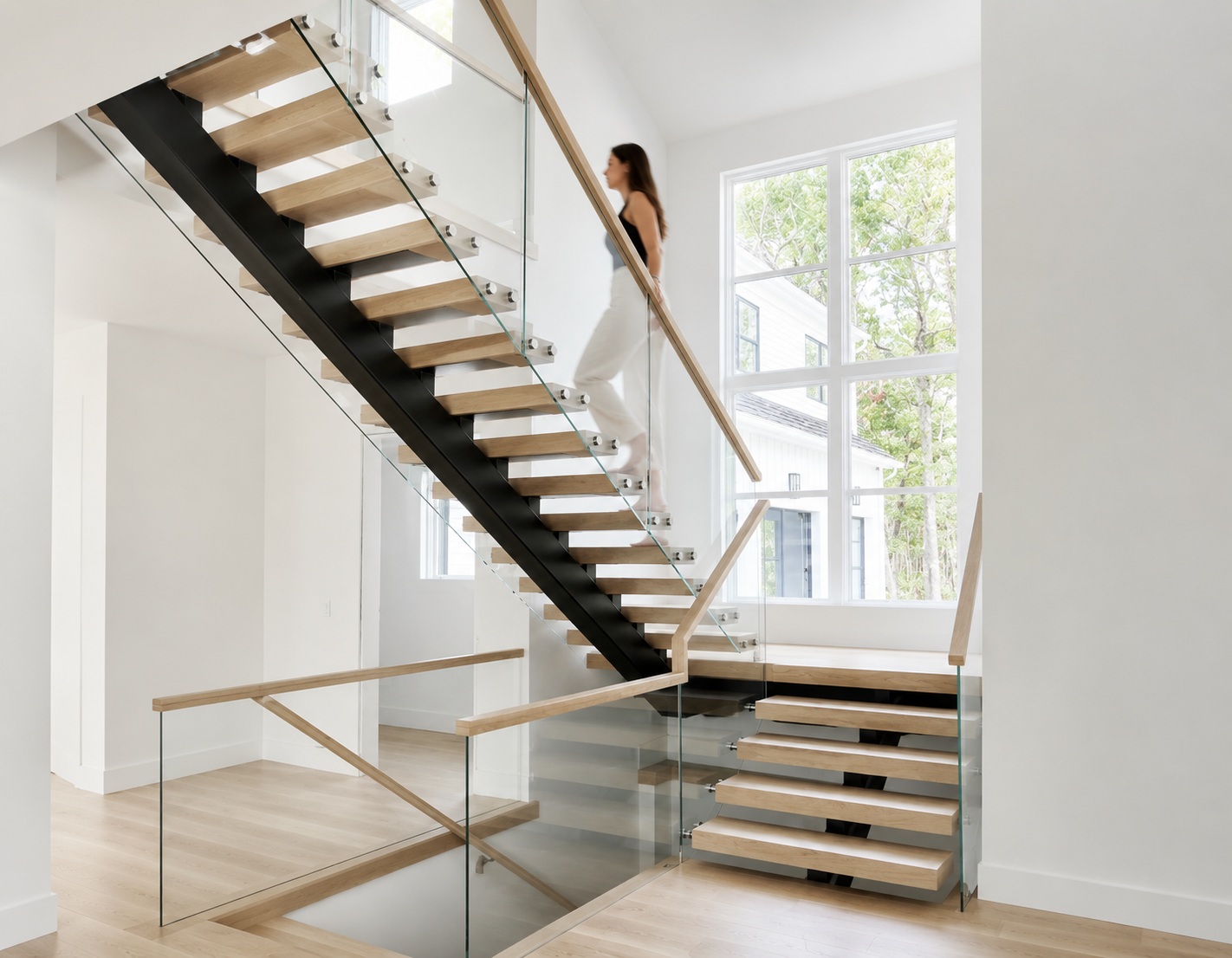
Double Building Materials made a white-oak floating staircase for a new-build, ocean-view home in Florida. The switchback turns at a half-landing on a hidden black-steel frame. A frameless glass balustrade with an oak cap runs the climb. We drew, trial-assembled and crated the work in Guangdong, then shipped it for the owner’s contractor to fit.
The Homeowner
The homeowner was finishing a new build near the Florida coast. Tall windows pull the ocean and the palm line straight into the stair hall. The owner wanted the staircase to be the quiet star of that double-height space — warm wood, clear glass, nothing heavy in the way of the view. The owner worked with us directly, from our workshop in China through to the crate that landed on site.
The Challenge
A floating staircase hides its muscle. Every tread had to reach out with no post under it, so the load travels back into a steel frame buried in the wall and floor. A switchback adds a turn: two flights and a half-landing have to line up over open space. Set the steel out even a little off, and the wood treads above it will not sit level.
White oak raised the stakes again. The treads, the handrail cap and a slat feature wall all read at once in daylight, so the grain and tone had to match across parts made at different times. Wood near big coastal glazing also lives with strong, shifting light.
And the stair sits in the middle of the home. From the entry, the living floor and the level above, there is no angle that hides it. One proud step, or one wavy line in the glass, would give itself away in plain sight.
The Brief
The brief was easy to picture and hard to build. The owner wanted oak steps that looked like they floated, with the steel that holds them kept out of sight. The balustrade had to be frameless glass, so the ocean stayed in view from the stair. An oak cap would run along the top of the glass to tie it to the treads. The look was meant to feel calm and modern — one wood, one tone, carried from the steps to the rail to the slat wall behind.
Why These Materials
White-oak floating treads
A floating staircase hides its support, so each step looks like it grows from the wall. We built each tread as a deep, solid-looking oak box that wraps a steel core. White oak has an open, straight grain that takes a pale, natural finish and keeps it. It is warm underfoot and it ages well. Because the steps are open on the side, the end grain shows — so the boards are picked and matched before any of them is fixed.
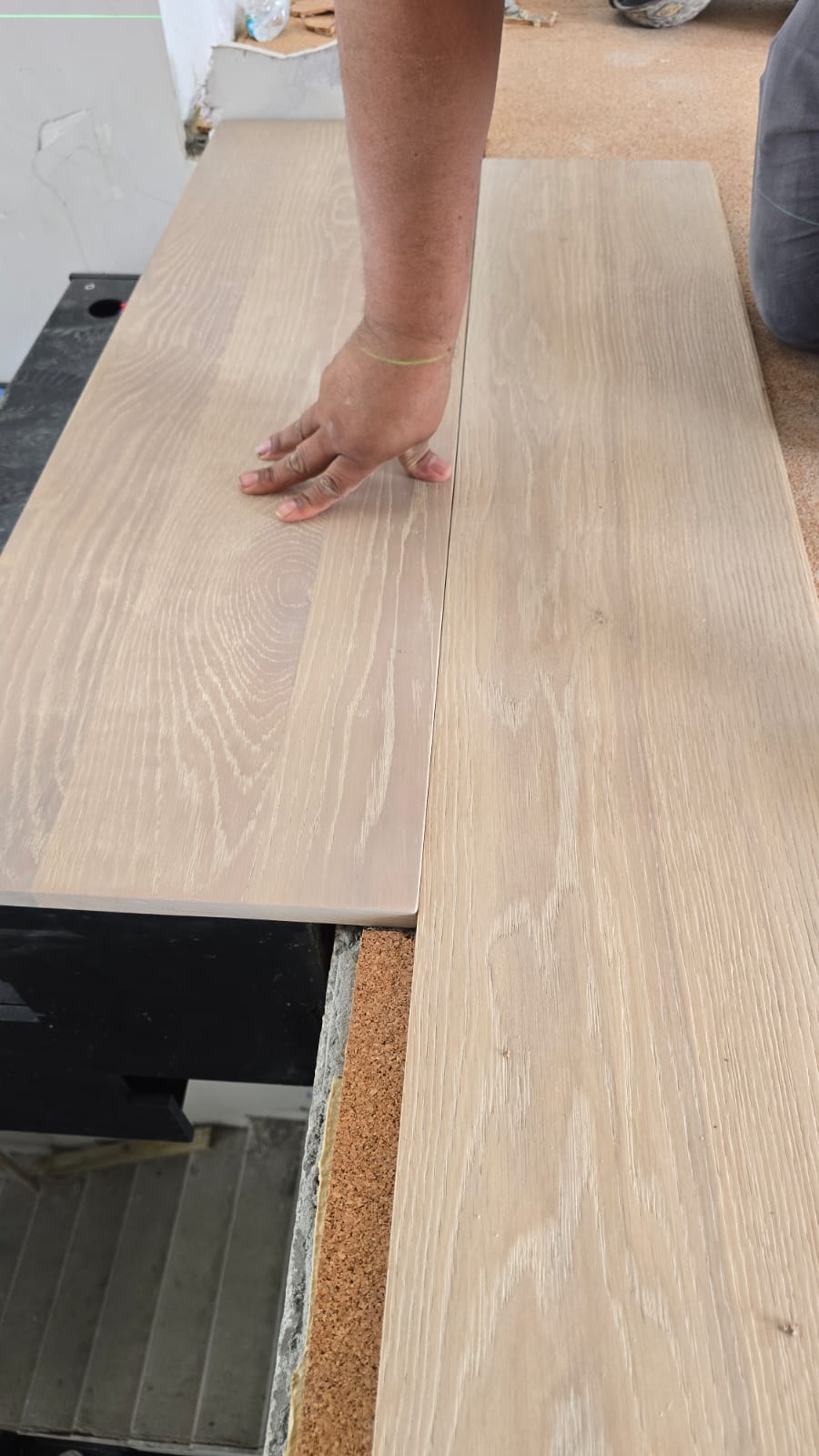
Matching two oak boards for grain and tone before they become treads — the step that keeps the finished flight reading as one piece.
A frameless glass balustrade
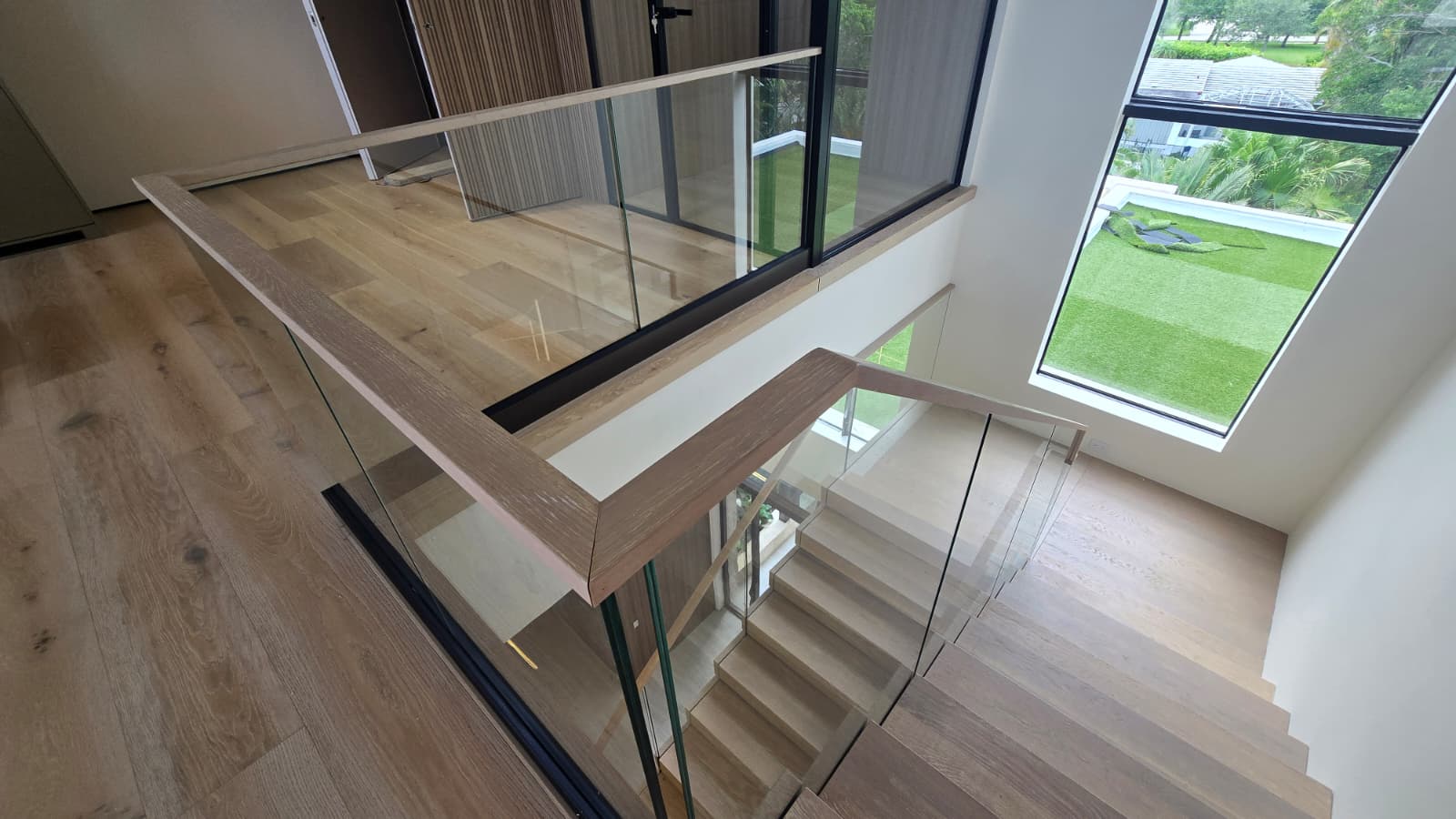
Frameless glass means the panels stand with no posts between them, held in a slim base channel. That keeps the ocean and the room in view from the stair, instead of a row of balusters. We finished the top of the glass with an oak cap, so your hand meets warm wood and the rail matches the treads. A dark base shoe grounds the glass at the floor line.
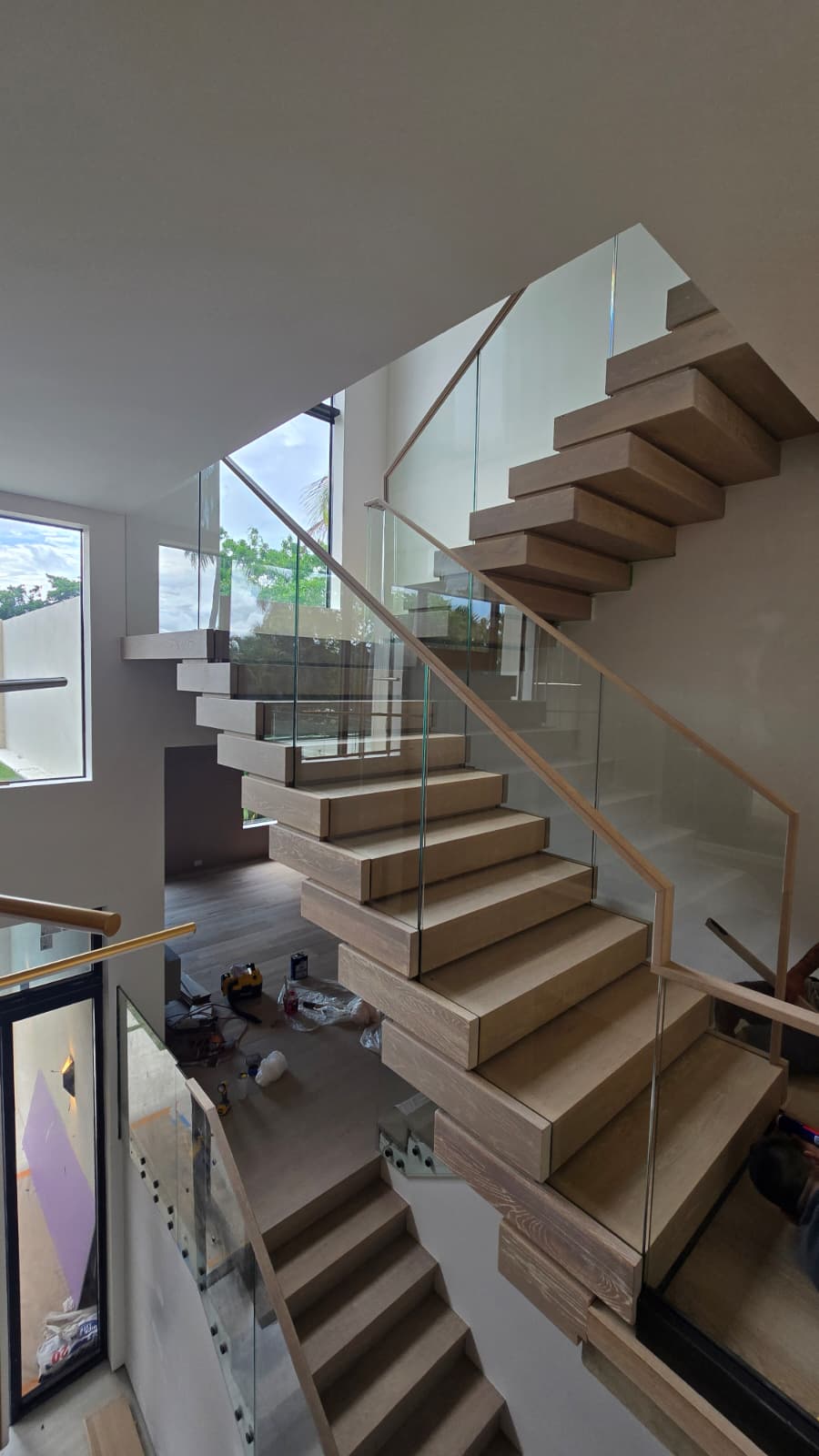
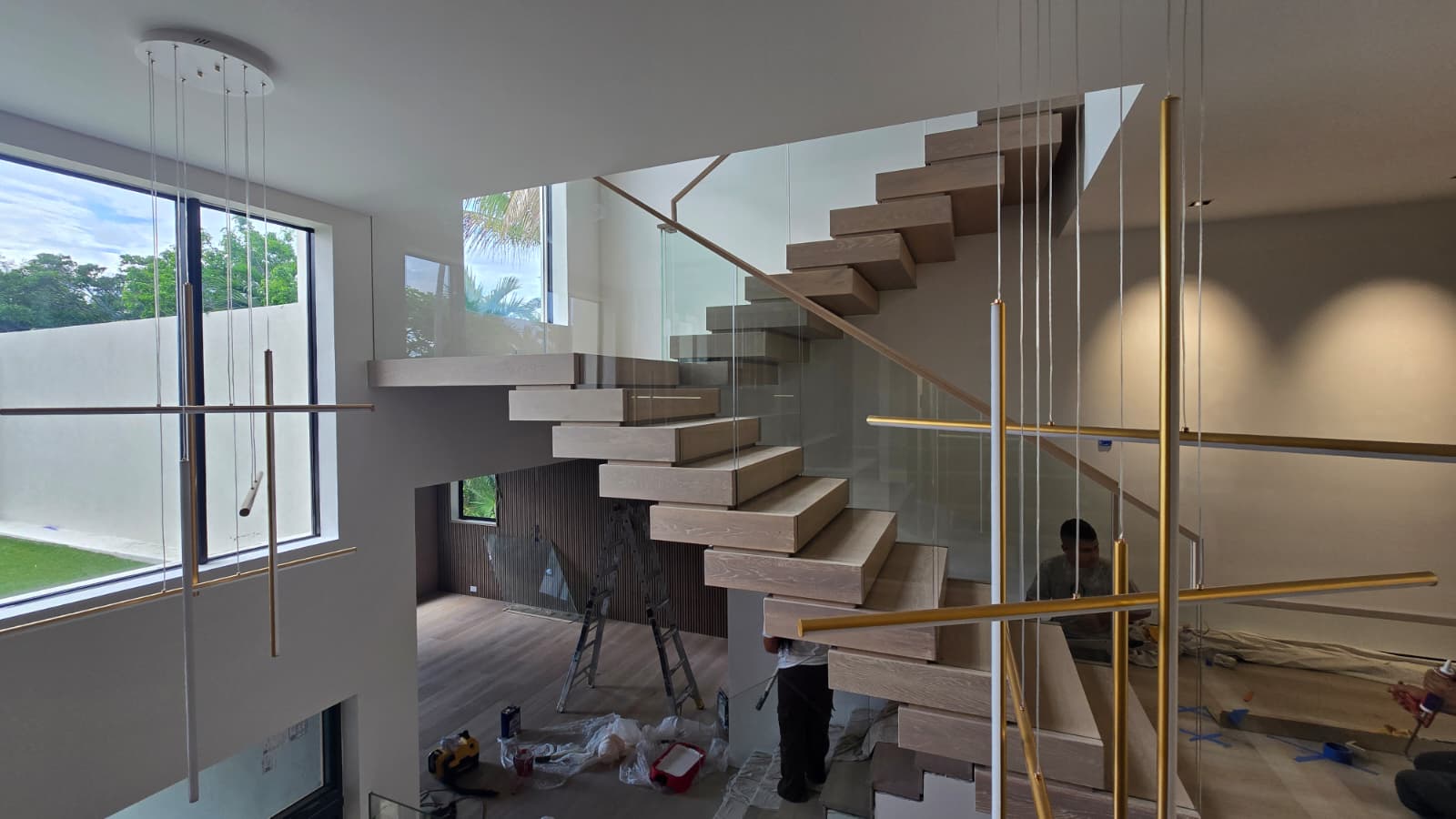
Oak treads reaching past the glass, with the oak cap running the line of the climb — on site during fit-out.
The oak slat feature wall
Behind the lower flight runs a wall of vertical oak slats. We drew it from the same wood set as the stair, so the tone carries from the steps to the wall. The slats add texture and a soft rhythm to the double-height space, and they catch the linear pendant light at night without competing with the stair.
Engineering & Code
The black steel under the wood
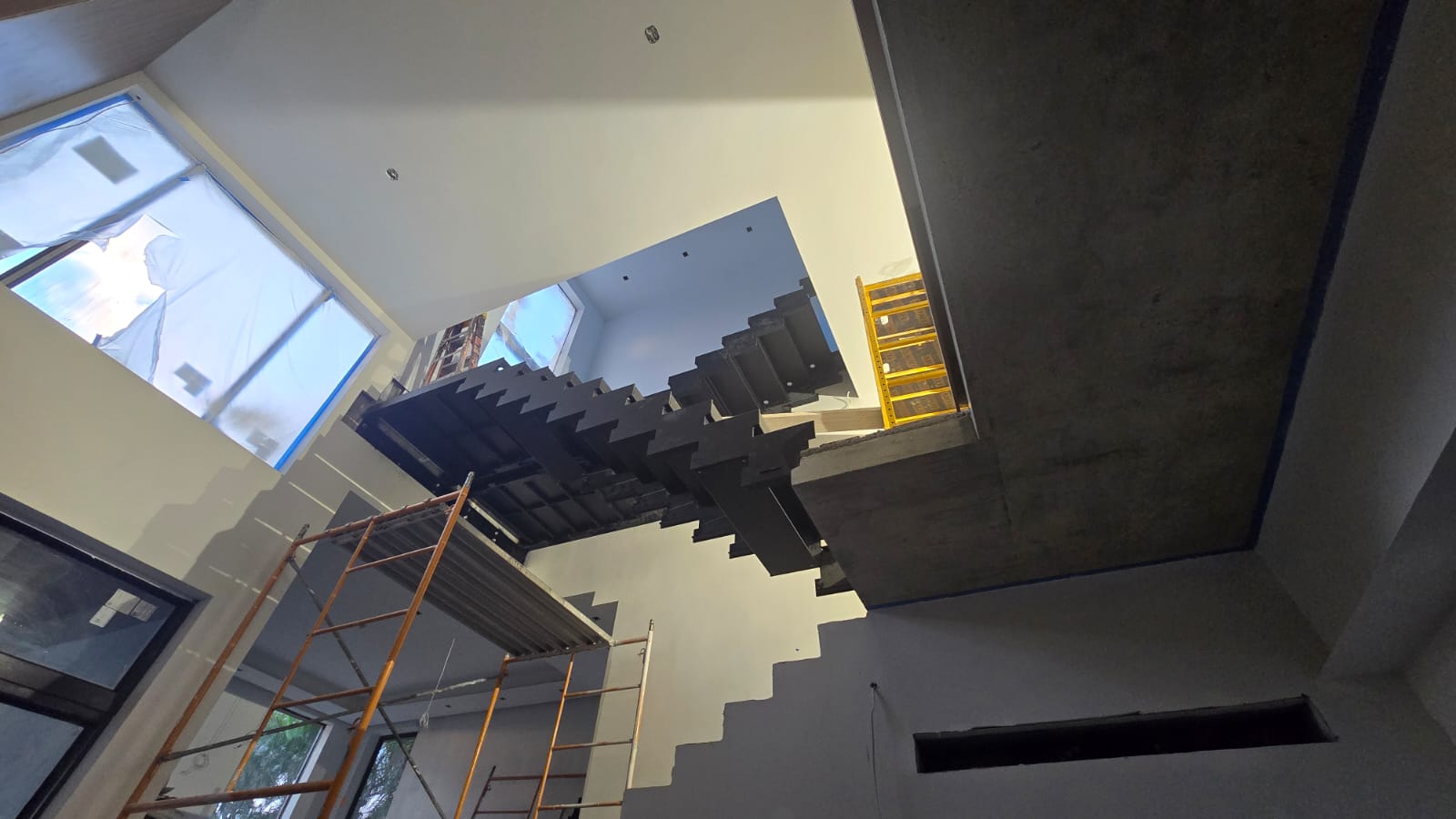
Under the oak is the part that does the work: a black-steel frame, with a tread plate welded out at each step. We size the steel for the weight of the wood plus people on the stairs, and we set out the turn at the half-landing first. The steel is finished in matte black, so the few places it shows read as a clean shadow line under each tread.
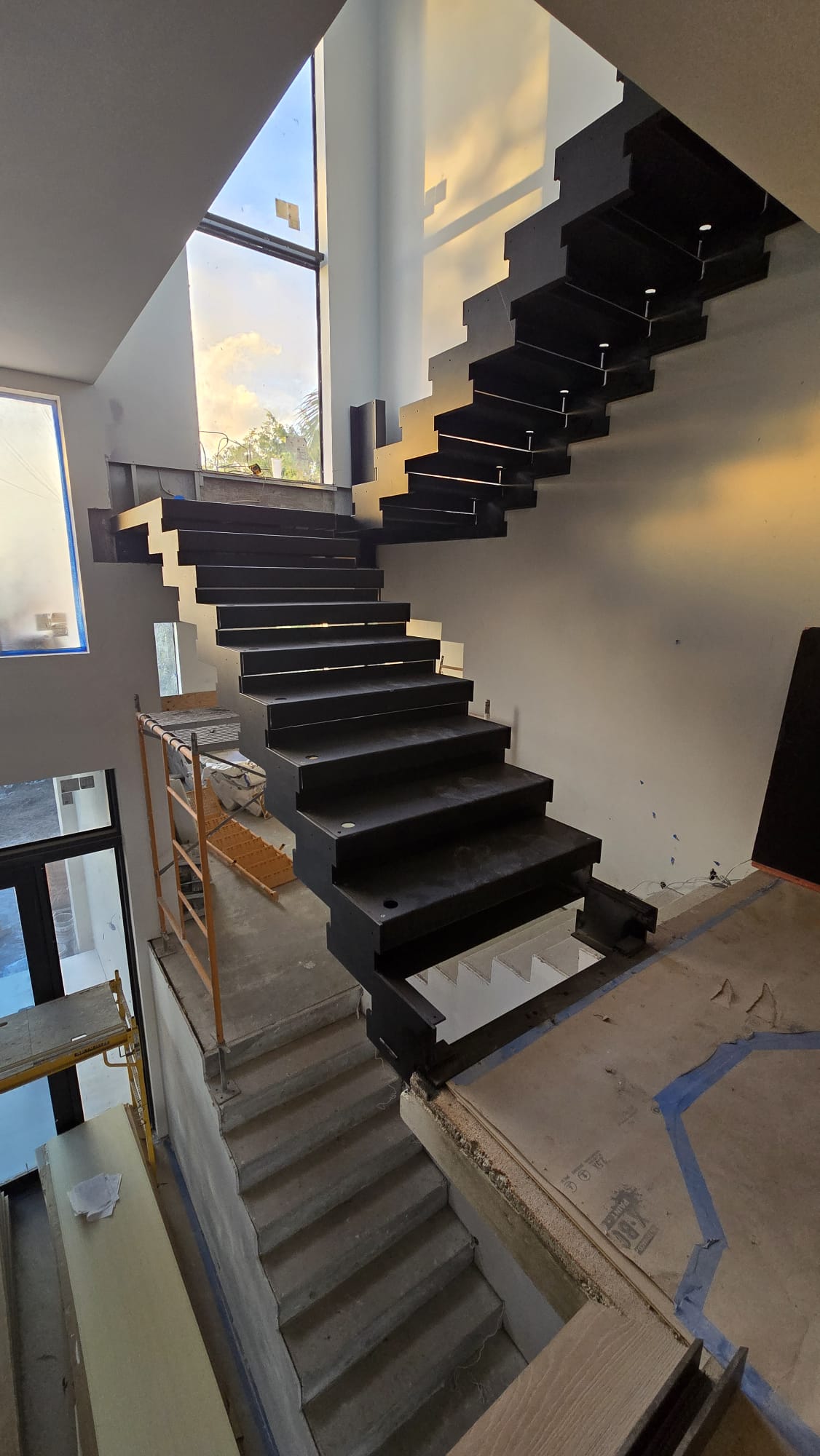
The black-steel frame standing on site — tread plates cantilevered, the turn already set, before any oak is fitted.
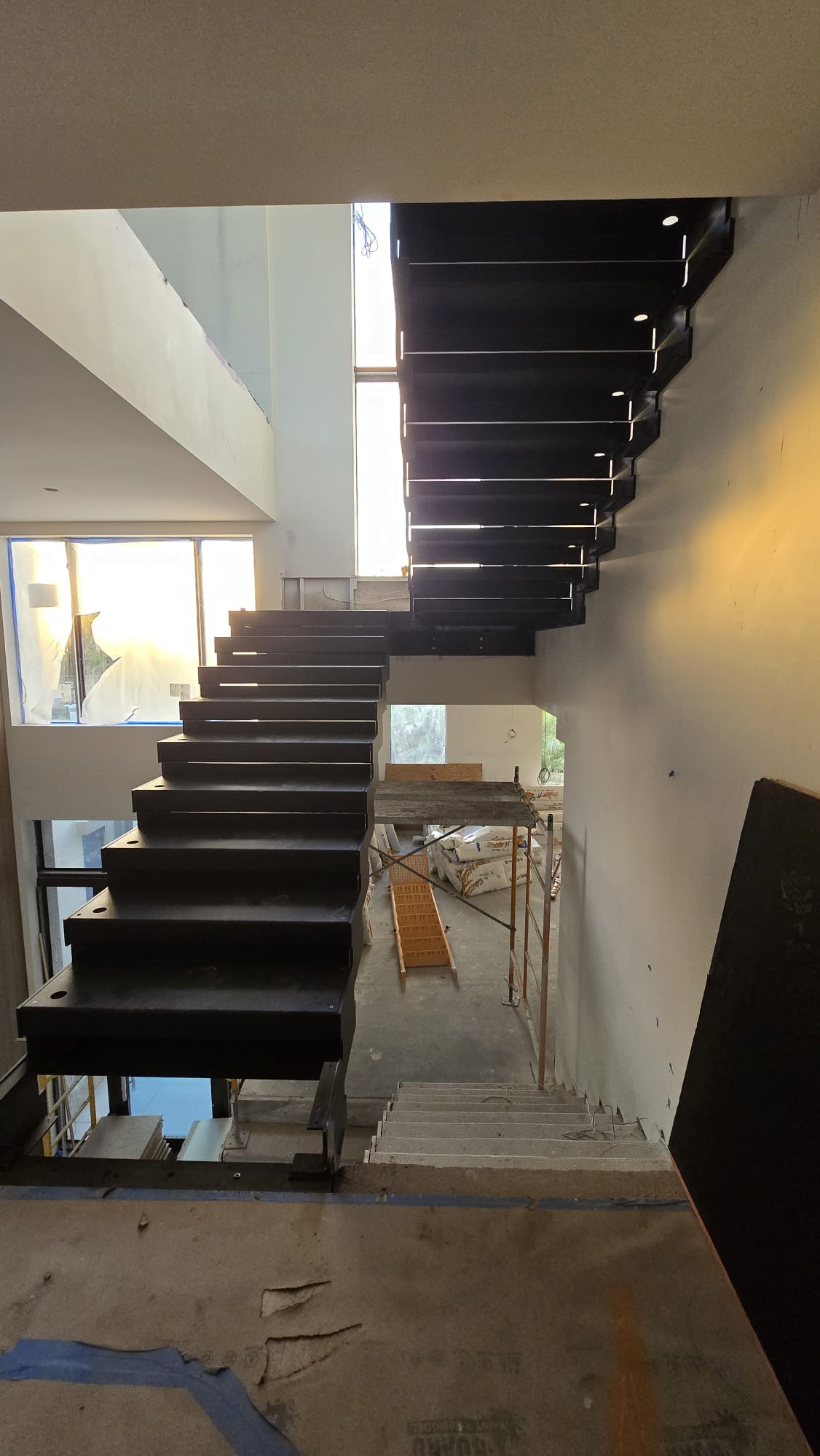
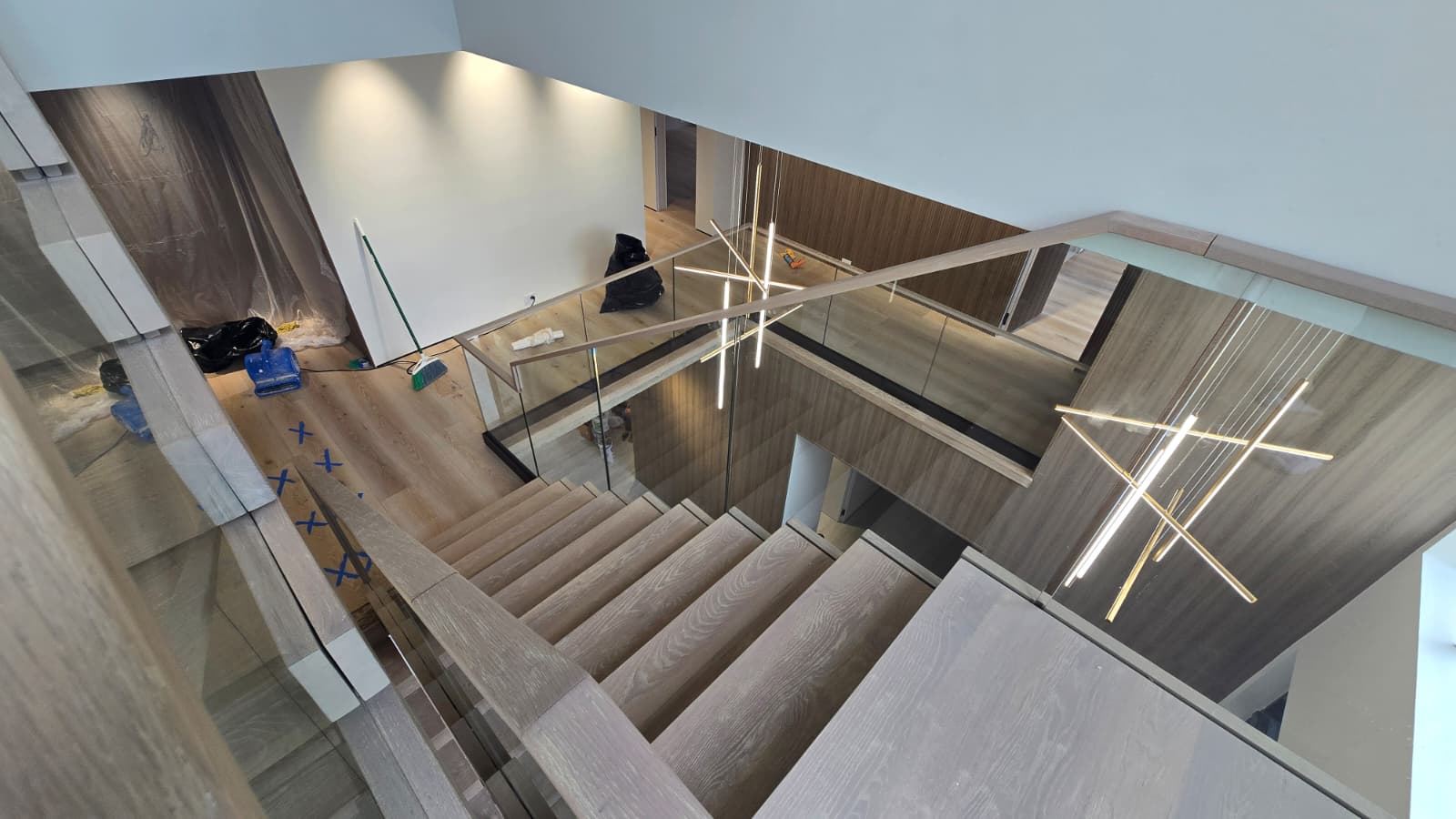
Seen from below: the steel tread plates carry the load back into the wall, with downlights set into the soffit of each step.
Code references for your engineer
Homes in the United States are built to the IRC, with the IBC used on many larger projects. We prepare the shop drawings to reference these standards for the stair geometry and the glass balustrade, so your engineer or inspector can review and sign off for permit. We make and document the parts; the local sign-off stays with your team.
From Drawing to Site
Drawing-First Coordination
Drawing-First Coordination means we draw the whole stair before we cut a thing. The owner sent plans and references. We turned them into shop drawings for the steel frame, the tread setting-out, the glass panel layout and the oak cap — then sent them back for sign-off. A switchback over open space leaves no room to guess, so nothing reached the workshop floor until the drawings were approved.
Trial Assembly Before Packing
Trial Assembly Before Packing means we build it once, in our own workshop, before it ever ships. We stood the steel frame up, hung the tread plates, and checked the rise and the line through the turn. We test-fitted the oak and laid the glass against the drawing. Any problem gets sorted in Guangdong, where we have the tools — not on a site in Florida.
Export-Ready Crating
Export-Ready Crating means we pack each part to survive the sea. The steel frame ships in braced timber crates. The matched oak treads travel wrapped and padded, kept in their numbered order. The glass goes in its own protected pack. We label every crate to the install sequence — frame first, then the wood, then the glass — so the parts come off the truck in the order the site needs them.
Double Building Materials makes, trial-assembles, crates and ships. On this project the owner’s own contractor handled fitting on site. We supply assembly drawings and a step-by-step guide, and where local installation is available we can help you find a vetted installer.
The Reveal
With the oak on, the heavy black steel disappears. The treads read as warm, solid steps stepping up through the light, and the glass all but vanishes against the windows. In the morning the sea and the palms sit right behind the climb, and the pale wood picks up the soft coastal light. The steel is now just a quiet shadow under each step.
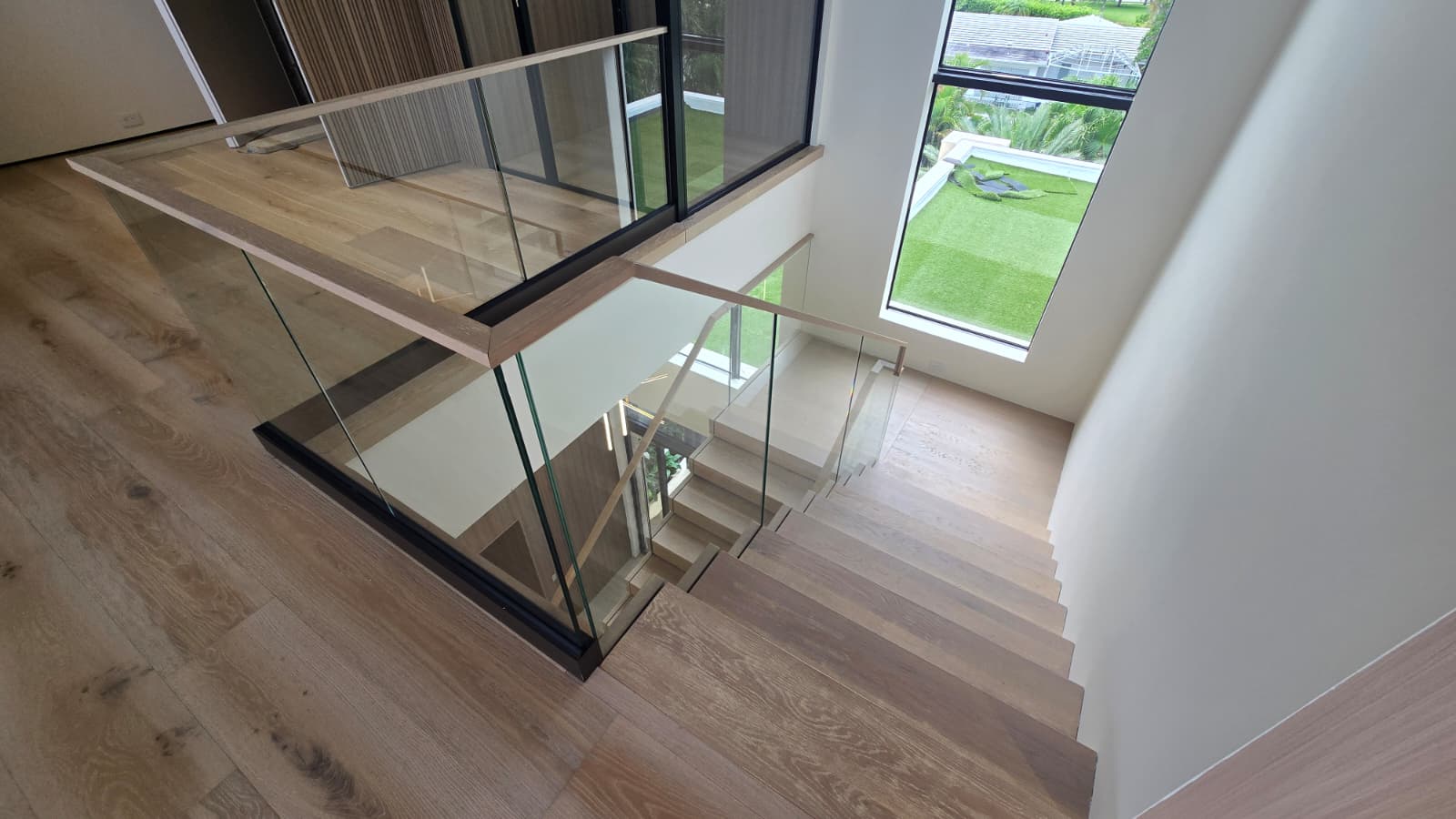
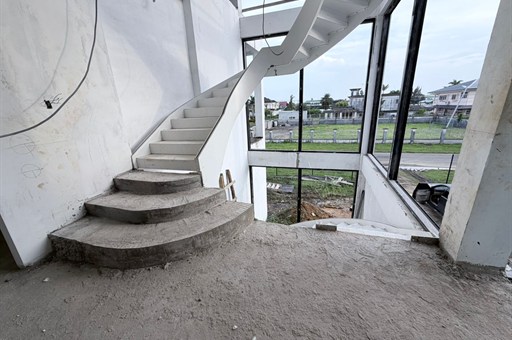
Looking down over the half-landing — the oak cap turns the corner with the glass, and the view stays open to the lawn beyond.
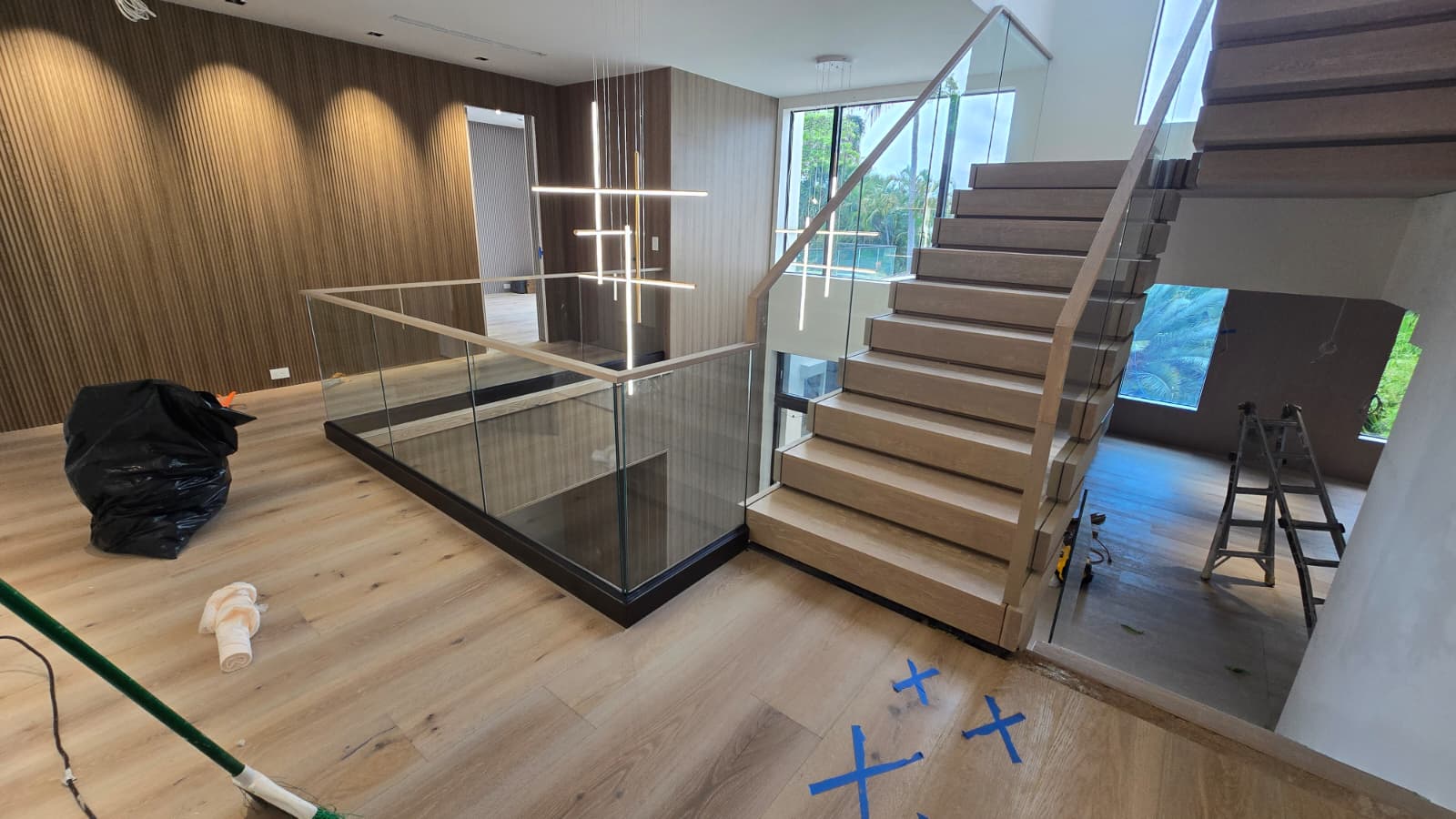
The finished stair answers the brief. Seen from the entry, the living floor or the level above, the oak flight lifts the eye toward the water rather than blocking it — and because the frameless glass all but vanishes, the sea stays in the frame the whole climb.
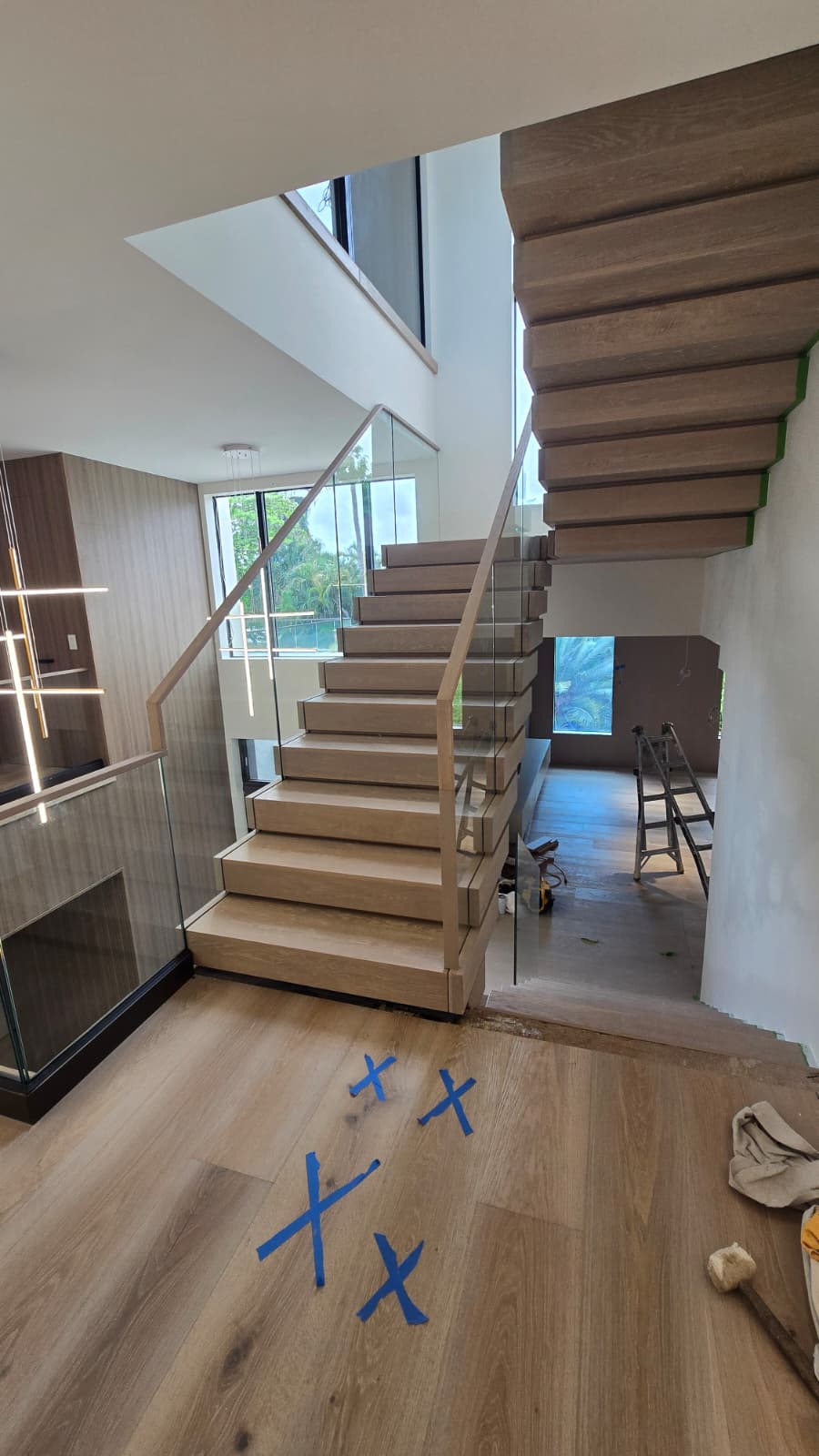
The finished switchback — two flights meeting at the half-landing, the oak slat wall and pendant light just beyond.
And it all matches. The treads, the oak cap and the slat wall share one wood and one tone, so the space feels finished rather than ordered in pieces. Because we drew and trial-built the steel, wood and glass together, they fit together once they reached the floor.
Specifications
| Stair type | Floating switchback with half-landing |
| Treads | White oak, natural finish, on steel cores |
| Structure | Hidden black steel frame, matte-black finish |
| Balustrade | Frameless glass in a base channel, oak cap rail |
| Feature wall | Vertical white-oak slats, matched to the stair |
| Dimensions | To architect’s drawing |
| Code reference | IRC · IBC (drawing reference) |
| Made in | DBM, Guangdong, China |
| Installed by | Owner’s local contractor |
Gallery
Frequently Asked Questions
How does a floating oak staircase stay up with no posts?
A hidden steel frame does the work. We weld a tread plate out at each step, then wrap it in white oak. The load travels back through the frame into the wall and floor, so the wood steps look like they float while the steel stays out of sight.
Will it meet United States building rules?
We prepare the shop drawings to reference the IRC, and the IBC where it applies, for the stair geometry and the glass balustrade. Your engineer or inspector then reviews and signs off for permit. We document the parts; the local sign-off stays with your team.
Who installs it when the crate arrives?
Your own contractor or installer fits it on site, as the owner’s did here. We send assembly drawings, a step-by-step guide, and crates labelled to the install order. Where local installers are available, we can help you find one.
Planning a floating staircase for a view like this?
Send Us Your Plans for a Drawing Review →Related Products
Other Products
More from the same factory — drawn, trial-assembled and export-crated the same way.